Choosing Agrochemical Pesticide Insecticides is not simply a matter of finding the lowest quoted price. Buyers need dependable crop protection, consistent product quality, and evidence supporting responsible use. In practical purchasing, a sealed container, readable label, batch number, and valid technical documentation matter as much as the active ingredient. These details reduce uncertainty when products move through warehouses, farms, and changing weather conditions. Field experience shows that a product performing well in one crop may disappoint elsewhere. Soil, pest pressure, application timing, and water quality can change results. Local advice remains essential.
Professional buyers compare efficacy data, resistance-management guidance, formulation stability, and supplier traceability. They also verify whether the product is registered for the intended crop and pest in the destination market. Compliance is not a formality. It protects workers, consumers, pollinators, and the reputation of the supply chain. Reliable suppliers should provide safety information, clear storage instructions, and responsive technical support. Independent trial results are valuable, although they may not mirror every farm. Numbers help. Judgment still matters.
The strongest purchasing decision balances performance, cost, and long-term stewardship. A cheaper product can become expensive when repeat applications, crop injury, or resistance follow. Buyers should consider integrated pest management, calibrated equipment, protective measures, and harvest intervals. No product is perfect. That is worth admitting. Even well-documented choices require monitoring after application and honest review of the outcome. By combining verified evidence with local agronomic experience, purchasers can select Agrochemical Pesticide Insecticides with greater confidence, clearer accountability, and a more sustainable approach to crop protection.
Why Choose Agrochemical Pesticide Insecticides for Buyers?
Agrochemical insecticides are crop-protection tools designed to disrupt specific biological processes in insects. Their value depends on fit, not simply strength. A buyer should ask three practical questions: Which pest is present? Which life stage is vulnerable? What crop conditions may reduce performance? Field scouting gives better answers than guesses based on leaf damage alone. Aphids cluster under tender leaves, while caterpillars often hide inside folded foliage. The evidence looks different.
Mode of action explains how an insecticide works. Some affect nerve signaling. Others interrupt feeding, growth, respiration, or egg development. Contact products need coverage on the pest. Ingested products require treated plant tissue or baited surfaces. This distinction matters after rain, during dense canopy growth, or when larvae stay inside stems. Target-pest fit also includes timing. A product aimed at chewing larvae may perform poorly against adult beetles or protected eggs. I have seen effective chemistry fail because application timing missed the pest’s exposed stage. That was not always a product defect.
Reliable purchasing includes label review, crop registration, dosage, pre-harvest intervals, worker protection, and storage requirements. Local regulations must guide every decision. Rotate insecticide groups where permitted, and combine them with monitoring and nonchemical controls. Repeated use of one mode of action can select resistant survivors. Resistance is quiet at first. Then control drops quickly. Record pest counts, weather, application quality, and treatment results. These notes reveal mistakes, including my own.
Agrochemical insecticides are selected according to their mode of action and target-pest fit. The chart shows representative active ingredients classified by IRAC mode-of-action group. IRAC group numbers identify the biological target and are not potency scores.
Buyer guidance: rotate insecticides with different IRAC groups to help reduce resistance pressure, and confirm that the active ingredient is approved for the crop and pest on the local product label. Target-pest fit may vary by formulation, application timing, and pest life stage.
Why Choose Agrochemical Pesticide Insecticides for Buyers?
The FAO reports that pests can destroy up to 40% of global crops each year. This figure shows why reliable crop protection matters to buyers. A damaged field means lower yields, unstable supply, and wasted labor. Insecticides can help protect vegetables, grains, fruits, and other valuable crops when pest pressure rises.
Timing matters greatly. Experienced growers scout leaves, stems, and soil before choosing a treatment. They look for feeding marks, larvae, eggs, and changes in plant growth. Buyers should check the active ingredient, target pest, application rate, and approved crop use. Clear labels and professional guidance support safer decisions. Protective equipment also deserves attention.
No product works perfectly. Overuse may encourage resistance, harm useful insects, or increase unnecessary costs. That is why responsible buyers should combine insecticides with field monitoring, crop rotation, sanitation, and biological controls where practical. A small trial area can reveal performance before wider use. Results may differ with weather, soil, pest stage, and application quality. I have seen a treatment appear weak when poor coverage was the real problem. Careful records help buyers learn from those mistakes and improve future choices.
Evidence-based purchasing considerations for selecting insecticide solutions responsibly, efficiently, and in accordance with local regulations.
| Buyer Consideration | Verified Data Point | What the Data Means | Why Insecticides May Be Needed | Reliable Reference |
|---|---|---|---|---|
| Crop-loss prevention | Up to 40% of global crops may be lost annually because of plant pests and diseases. | Pest pressure can significantly reduce harvested output and marketable quality. | Effective insecticides can help control damaging insect populations when monitoring confirms that treatment is justified. | FAO — International Year of Plant Health |
| Economic protection | Plant pests cause more than US$220 billion in annual losses to the global economy. | Pest damage affects farm income, food supply chains, storage, and downstream processing. | Timely pest management can protect crop value and reduce avoidable losses, particularly during vulnerable growth stages. | FAO — Plant Health and Food Security |
| Global pesticide demand context | Global agricultural pesticide use reached approximately 3.70 million tonnes of active ingredients in 2022. | Pesticides remain an important agricultural input, but use must be targeted and carefully managed. | Buyers should compare active ingredients, application rates, crop approvals, resistance-management guidance, and environmental precautions. | FAOSTAT — Pesticides Use |
| Yield and quality protection | FAO identifies pests as a threat to the quantity, quality, and safety of plant-based food production. | Insect damage may cause direct yield loss or reduce product grade through blemishes, contamination, and weakened plants. | Insecticides may protect saleable quality when used according to the approved crop, pest, dose, and pre-harvest interval. | FAO — Plant Health |
| Integrated pest management | FAO promotes Integrated Pest Management, combining biological, cultural, physical, and chemical measures. | Chemical control is one component of a wider pest-management strategy rather than an automatic first response. | Buyers can prioritize products that fit scouting programs, economic thresholds, crop rotation, sanitation, and biological-control practices. | FAO — Integrated Pest Management |
| Resistance management | Repeated use of the same mode of action can increase selection pressure and contribute to insecticide resistance. | Resistance can reduce field performance and increase production costs over time. | Buyers should select products with clearly identified modes of action and follow rotation or mixture recommendations from recognized resistance-management guidance. | IRAC — Insecticide Resistance Action Committee |
| Residue compliance | Food-export markets use maximum residue limits, or MRLs, for approved pesticide residues. | Products that are not approved for the target crop or are applied incorrectly can create compliance and market-access risks. | Buyers should verify national registrations, MRL requirements, application intervals, and pre-harvest intervals before purchase and use. | FAO/WHO Codex Alimentarius — Pesticide Residues |
| Worker and environmental safety | WHO recommends pesticide risk reduction through proper product selection, labeling, personal protective equipment, and safe handling. | Hazard and exposure depend on the active ingredient, formulation, dose, application method, and user practices. | Responsible buyers should require official labels, safety data sheets, approved packaging, training information, and clear disposal instructions. | WHO — Classification of Pesticides by Hazard |
| Pollinator protection | FAO recognizes pollinators as essential contributors to food production and ecosystem health. | Some insecticide applications can pose risks to bees and other beneficial organisms if used improperly. | Buyers should check pollinator warnings, avoid unnecessary applications during bloom, and follow label restrictions on timing and drift control. | FAO — Global Action on Pollination Services |
Note: The figures are global estimates and may vary by crop, region, pest species, weather, and production system. Insecticides should be purchased and used only for legally approved crops and target pests, following the product label and local regulatory requirements.
Why Choose Agrochemical Pesticide Insecticides for Buyers?
For buyers, value means more than a low purchase price. Effective insecticides can protect leaves, fruit, and harvest quality during critical pest pressure. Field experience shows that fast knockdown is useful, but lasting control often matters more. A product requiring fewer applications may reduce labor, water, fuel, and equipment wear. Still, performance can change with rainfall, temperature, pest resistance, and application timing. No product wins every season.
Residue limits deserve equal attention. Buyers should check the permitted maximum residue level for each target crop and market. The pre-harvest interval must match the harvest schedule. A cheaper option can become costly if residues exceed buyer requirements or delay shipment. Cost per hectare should include the dose, spray volume, labor, protective equipment, and possible repeat treatments. For example, a higher-priced treatment may offer better value when it protects a two-hectare block with one reliable application. The calculation is not always perfect.
Tips: Compare products by controlled field data, not advertising claims alone. Confirm local registration, crop approval, application rates, and residue requirements. Keep spray records with dates, weather, dosage, and harvest intervals. Test a small area first when conditions are uncertain. Rotate approved modes of action to support resistance management. Ask an agronomist to review the plan, especially for export crops.
Choosing agrochemical pesticide insecticides safely begins with evidence, not price. The WHO Recommended Classification of Pesticides by Hazard, 2019 edition, groups products by acute toxicity. Buyers should check the WHO class, signal words, active ingredient, and formulation before ordering. A lower hazard class is not a free pass. It reflects acute risk, not every environmental or chronic effect.
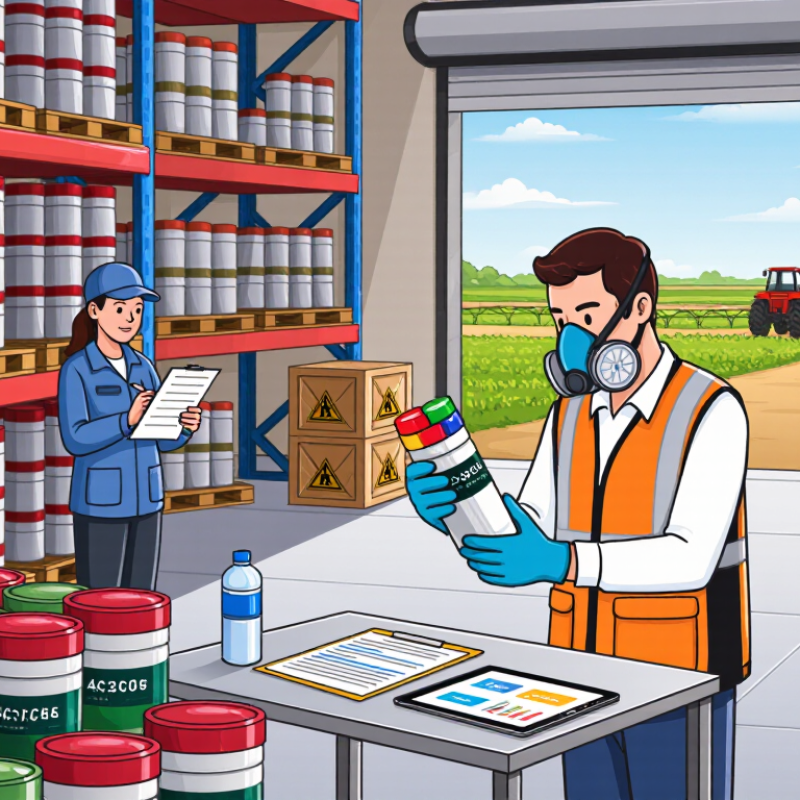
PPE must match the product label and Safety Data Sheet. Gloves, eye protection, coveralls, and suitable respiratory protection may be required during mixing and application. Fit matters. Damaged gloves offer false confidence. The FAO/WHO International Code of Conduct stresses responsible handling, training, storage, and disposal throughout the pesticide life cycle. In practical purchasing, these details are easy to skip, especially when delivery deadlines dominate decisions.
Resistance management protects both crop performance and investment. FAOSTAT reported approximately 3.70 million tonnes of pesticides used worldwide in 2022, showing the scale of selection pressure on pests. Buyers should select insecticides by mode of action, following IRAC resistance-management guidance. Rotate different modes of action across pest generations, avoid repeated applications from one group, and use monitoring to confirm treatment need. Integrated pest management can reduce unnecessary spraying. It is not always convenient. However, a product that fails after repeated misuse is a poor purchase, regardless of its initial price. Records of pest levels, weather, application rates, and control results make future decisions more reliable.
Why Choose Agrochemical Pesticide Insecticides for Buyers?
Reliable sourcing begins with registration, not attractive packaging. Buyers should confirm that the product is registered for the intended crop, pest, formulation, and destination market. The registration number should match the product label and official records. Labels must state dosage, application timing, safety intervals, and approved uses clearly. Paper is not enough. A neat certificate can still hide an outdated registration or mismatched formulation. Checking directly with the relevant authority is slower, but it prevents expensive mistakes.
IRAC group information also deserves careful review. It identifies the insecticide’s mode of action and supports responsible resistance management. Buyers should avoid selecting repeated products from the same group without a rotation plan. A group number is not a quality badge. It is a technical reference. In practical purchasing work, comparing labels, technical documents, and supplier answers can reveal small inconsistencies. Sometimes the information is incomplete. That is a warning, not an inconvenience.
Batch traceability connects each container to its production history. Request the batch number, manufacturing date, certificate of analysis, storage records, and transport documents. The batch code should appear consistently on cartons, labels, invoices, and test reports. Keep a retained sample when company procedures allow it. Small gaps matter. A missing document may reflect poor administration, or a deeper supply problem; buyers cannot assume which one. Clear records make complaints, quality checks, and recall decisions more controlled.
Pests can destroy up to 40% of global crops annually. Insecticides may protect vegetables, grains, fruits, and other valuable crops. They are not automatic solutions.
Check the active ingredient, target pest, application rate, approved crop use, formulation, and clear instructions. A cheap product can become expensive.
Inspect leaves, stems, and soil carefully. Look for feeding marks, eggs, larvae, and unusual plant growth. Look closely.
Pest stage, weather, soil, and crop condition can affect performance. Applying too early or too late may waste money and effort.
Follow the product label and Safety Data Sheet. Gloves, eye protection, coveralls, and respiratory protection may be required. Fit matters. Damaged gloves provide false confidence.
No. It mainly reflects acute toxicity. Environmental effects, long-term concerns, handling errors, and exposure still require attention.
Rotate different modes of action across pest generations. Avoid repeated treatments from one group. Monitor pest levels before repeating applications. One mode repeatedly is risky.
A small trial can reveal coverage problems or poor performance before wider use. I have seen weak results caused by poor coverage, not weak chemistry.
Yes. Combine field monitoring, crop rotation, sanitation, and biological controls where practical. It is not always convenient. Still, unnecessary spraying raises costs and risks.
Record pest levels, weather, application rates, crop stage, coverage quality, and control results. Records expose mistakes. They also improve future purchasing decisions.
Agrochemical Pesticide Insecticides give buyers a practical way to protect crops from damaging insect populations when selected according to the target pest, crop, and mode of action. Their value should be judged by more than purchase price: reliable efficacy, application rate, cost per hectare, crop safety, residue limits, and harvest requirements all influence the total return. Used appropriately, they can help reduce losses and support stable agricultural production, especially as pests may destroy up to 40% of crops according to the FAO.
Responsible purchasing also requires careful attention to safety and supply verification. Buyers should review WHO hazard classifications, follow label instructions, use suitable personal protective equipment, and rotate products across different IRAC mode-of-action groups to slow resistance development. Confirming local registration, checking batch numbers and traceability records, and purchasing through legitimate suppliers can further support quality, compliance, and safer handling throughout the product’s use.

Awiner Biotech