Explore our high-efficacy insecticidal solutions engineered specifically for fruit trees, citrus groves, and intensive horticultural ecosystems.
The global market for fruit tree pest management has entered a transformative era driven by strict maximum residue limits (MRLs), shifting environmental regulations, and the escalation of pesticide-resistant insect populations. Modern commercial orchards—producing high-value crops such as apples, pears, citrus, stone fruits, grapes, and tropical varieties—require advanced crop protection strategies that combine immediate biological control with persistent eco-efficiency. As orchard managers move away from broad-spectrum organophosphates, the demand for specialized, low-toxicity chemical agents and biological compounds has surged significantly.
China has emerged as the global nexus for agrochemical research, raw active ingredient (AI) synthesis, and high-performance formulation processing. Chinese manufacturers produce over 70% of the world's technical-grade insecticide actives, enabling international buyers, formulators, and distributors to secure robust supply chains and customized chemical formulations. However, navigating the global market requires looking beyond initial price quotes. Enterprise procurement teams must evaluate key metrics: active constituent purity, surfactant technology, physical suspension stability, regulatory dossier support (such as FAO/WHO specifications), and long-term environmental sustainability.
In response to rigorous environmental standards such as the European Union’s Green Deal and North American EPA guidelines, Chinese chemical enterprises have invested heavily in green chemistry and novel delivery systems. Modern formulations such as Water Dispersible Granules (WDG), Suspension Concentrates (SC), and Microemulsions (ME) are systematically replacing legacy Emulsifiable Concentrates (EC) containing aromatic solvents. This shift minimizes worker exposure, reduces phytotoxicity on delicate fruit blossoms, and ensures zero residue accumulation in harvested fruit shipments destined for international markets.
Understanding the cost structures and commercial drivers behind fruit tree insecticide procurement is critical for agricultural commercial buyers, government tenders, and multi-national agrochemical brands. B2B transactions for crop protection agents differ substantially from standardized retail distribution; pricing is heavily governed by raw material price indexes, synthesis steps, formulation complexity, and custom packaging requirements.
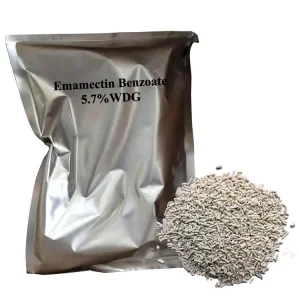
Selecting the optimal formulation type significantly influences both freight economics and bio-efficacy. High-concentration solid formulations like Emamectin Benzoate 5.7% WDG optimize shipping weights and eliminate container corrosion, lowering freight cost per hectare treated compared to liquid EC variants.
From 100mL fluorinated HDPE bottles for small-holder orchard spray kits to 200L steel drums for commercial farm operations, custom branding, multi-language regulatory labelling, and anti-counterfeiting QR codes form standard quotes from tier-one factories.
Tier-one Chinese producers supply full GLP toxicological reports, efficacy trial data, Certificate of Analysis (COA), and Material Safety Data Sheets (MSDS), drastically reducing registration timelines for international buyers in local ministries of agriculture.
When evaluating quotes for fruit tree pesticides, enterprise purchasers should insist on transparent cost breakdowns across the following key drivers:
The modernized Chinese chemical sector represents a sophisticated ecosystem integrating automated continuous flow synthesis, green engineering, and strict compliance with national safety regulations. Industrial hubs located across Northern China—specifically chemical clusters in Hebei, Shandong, and Jiangsu—benefit from direct access to raw raw chemical feedstocks, advanced energy infrastructure, and streamlined logistics networks connecting factories directly to major container seaports like Tianjin and Qingdao.
Industry 4.0 automated control systems (DCS) ensure micro-precision during chemical reactions, maintaining batch-to-batch consistency for active constituent purity. Specialized fluid-bed granulators for WDG production and high-shear homogenizers for SC formulations guarantee that the end-user receives uniform particle size distributions, optimizing suspension stability when mixed in orchard blast spray rigs.
| Formulation Code | Formulation Name | Key Manufacturing Advantage | Physical / Chemical Performance Standards |
|---|---|---|---|
| WDG / SG | Water Dispersible Granules | Fluidized-bed granulation with minimal binder dust. | Dispersibility > 95% in 30s; Wet sieve test < 45µm. |
| SC | Suspension Concentrate | Ultrafine wet bead-milling process down to sub-micron levels. | Suspension percentage > 90%; No phase separation at 54°C storage. |
| EC | Emulsifiable Concentrate | Optimized bio-based solvent blending with multi-component emulsifiers. | Emulsion stability grade A in 342ppm hard water; zero crystallization. |
| CS | Capsule Suspension | Interfacial polymerization encapsulating volatile actives. | Controlled release profile; UV protection for light-sensitive compounds. |
Furthermore, supply chain resilience is bolstered by strategic raw material stockpiling and dual-sourcing architectures for key chemical precursors. This insulates global customers from localized supply shocks, market volatility, or seasonal production spikes, ensuring that seasonal agricultural sprays are delivered well ahead of pest emergence windows.
The evolution of fruit tree insecticides focuses on resolving two fundamental agronomic challenges: resistance management and targeted delivery efficiency. Continuous application of single-mode-of-action chemicals induces target-site mutations in pests such as Spider Mites (Tetranychidae), Codling Moth (Cydia pomonella), and Asian Citrus Psyllid (Diaphorina citri). Modern crop protection technology relies on multi-site mode of action combinations, bio-rationals, and physical delivery enhancements.
By co-formulating or sequentially applying active ingredients from distinct IRAC classes—such as combining Avermectins (Group 6) with Neonicotinoids (Group 4A) or Pyrethroids (Group 3A)—growers disrupt metabolic detox pathways, effectively extending active chemical longevity in orchard environments.
Advanced delivery systems protect photodegradable active molecules from intense ultraviolet radiation in high-altitude or tropical orchard zones. Microencapsulated active ingredients provide extended residual control over 21–28 days, reducing annual spray application frequencies.
Fruit tree leaves often possess thick waxy cuticles or dense trichomes (pubescence). Incorporating trisiloxane alkoxylate super-spreaders reduces surface tension below 22 mN/m, enabling complete canopy wetting, stomatal flooding, and elimination of hidden pests inside dense foliage.
A success-driven insect control strategy must be customized to the unique anatomical and phenological stages of specific fruit crops. Integrated Pest Management (IPM) incorporates selective chemical interventions, biological control protection, and optimal pre-harvest intervals (PHI) to guarantee minimal chemical residue on harvested produce.
Primary Pest Vectors: Asian Citrus Psyllid (vectors Huanglongbing / Citrus Greening), Citrus Rust Mite, Scale Insects (Coccus hesperidum), and Leafminers.
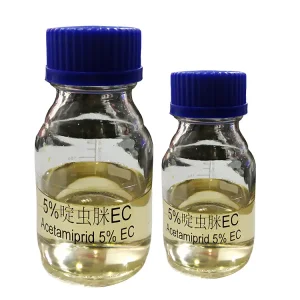
Recommended Protocol: Early spring flush applications using systemic neonicotinoid blends (e.g., Acetamiprid) coupled with targeted ovicides/acaricides (e.g., Etoxazole 30% SC). Etoxazole selectively targets mite eggs, larvae, and nymphs while sparing beneficial predatory mites (Phytoseiidae), maintaining ecological equilibrium.
Primary Pest Vectors: Codling Moth (larvae burrowing into fruit cores), Pear Psylla, Woolly Apple Aphid, and San Jose Scale.
Recommended Protocol: High-potency biological derivatives such as Emamectin Benzoate 5.7% WDG applied during egg-hatch and early larval instar stages. Emamectin Benzoate acts primarily through glutamate-gated chloride channel activation, providing immediate feeding cessation while exhibiting rapid translaminar absorption into foliage.
Primary Pest Vectors: Thrips, Oriental Fruit Moth, Two-Spotted Spider Mite, and Leafhoppers.
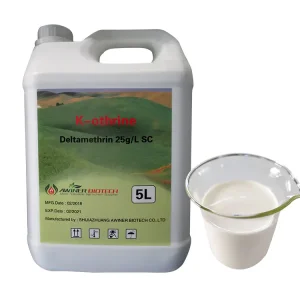
Recommended Protocol: Combination therapy utilizing broad-spectrum pyrethroids (e.g., Bifenthrin 5% SC or Lambda-Cyhalothrin) for rapid knock-down combined with chitin synthesis inhibitors. Strict adherence to Pre-Harvest Intervals (PHI > 14 days) guarantees full compliance with international MRL standards.
Commercial success in international agrochemical trade depends on meeting rigorous legal, environmental, and safety regulations in destination markets. Navigating local Ministries of Agriculture requires detailed technical packages and strict chemical purity standardizations.
Demonstrating Expertise, Experience, Authoritativeness, and Trustworthiness through ISO 9001 quality management, ISO 14001 environmental safety compliance, and full analytical verification via High-Performance Liquid Chromatography (HPLC) and Gas Chromatography-Mass Spectrometry (GC-MS).
All commercial formulations strictly align with Food and Agriculture Organization (FAO) and World Health Organization (WHO) specification standards, capping hazardous impurities (such as nitrosamines or free chloride ions) well below maximum allowable thresholds.
Safe export of hazardous goods (Class 6.1 Toxic or Class 9 Environmentally Hazardous Substances) is conducted under strict UN-approved packaging certifications, complete with IMDG code compliance and certified Material Safety Data Sheets in multiple languages.
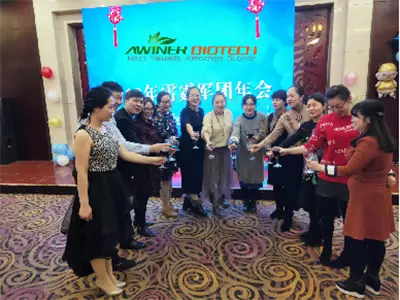
Up to now, we have won customers from Iraq, Iran, Afghanistan, Pakistan, India, Libya, Syria, Turkey, Yemen, Ukraine, Russia, Kazakhstan, Uzbekistan, Chile, Bolivia, Mexico, Brazil, Paraguay, Nigeria, Djibouti, Rwanda, Somalia, Malaysia, Cambodia, Nepal, Myanmar and so on.
Our countries participating in the exhibition are Turkey, Iran, Pakistan, Nigeria, Russia, Cambodia, Malaysia, Uzbekistan, etc. We regularly meet with global agricultural leaders to showcase our latest formulation technologies.
We go directly to the customer's country to conduct market inspections, analyze local pest pressures, and solve operational problems. We evaluate product usage under native climate conditions, and welcome customers to visit our modern chemical synthesis facilities in China.
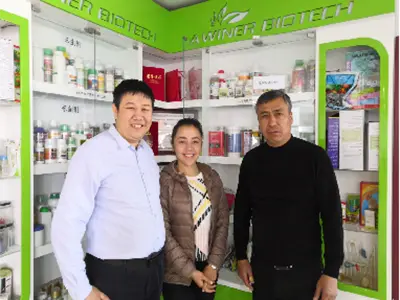
With near two decades of dedicated agrochemical export expertise, Awiner Biotech has constructed a seamless trade ecosystem bridging technical synthesis with field-level agricultural applications. Our localized technical representatives assist regional distributors with registration dossier approval, custom packaging design, and field efficacy trial verification.
Explore additional high-performance formulations, public health pesticides, technical ingredients, and systemic solution combinations.
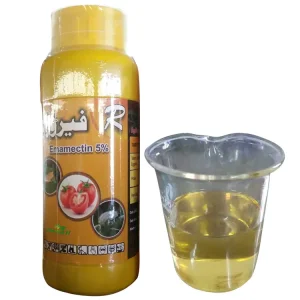
Emamectin Benzoate 5.7% WDG offers superior stomach toxicity and translaminar activity against leaf-miners, codling moth, and fruit borers. The micro-granule formulation rapidly penetrates leaf cuticle layers, forming an active reservoir inside plant tissues while preventing degradation under UV light. It exhibits exceptional selectivity, causing minimal disruption to beneficial predatory insects when applied according to strict IPM guidelines.
Phytotoxicity is primarily controlled by upgrading formulation carriers. Chinese factories utilize green, plant-derived methyl ester solvents or water-based suspension suspensions (SC/WDG) that eliminate harsh aromatic hydrocarbons like xylene or toluene. Additionally, ultra-pure technical active ingredients (> 98.5% purity) minimize phytotoxic manufacturing impurities.
Key cost factors include the spot market price of precursor raw materials, active concentration (e.g., Emamectin Benzoate 2% EC vs. 5.7% WDG), specialized emulsifier package selection, custom packaging materials (fluorinated bottles, soluble pouches), order volume (MOQ), and laboratory registration dossier requirements.
Etoxazole is a diphenyloxazoline chitin synthesis inhibitor (IRAC Group 10B). Unlike broad-spectrum adulticides, it specifically targets mite eggs, larvae, and early nymphal stages, rendering adult female mites sterile. It provides long-lasting residual control (up to 40–50 days) on citrus rust mites and spider mites without harming beneficial predatory mites.
Standard regulatory dossiers include a Certificate of Free Sale (CFS), Certificate of Analysis (COA) issued by ISO 17025 accredited labs, 5-batch analysis data, GLP toxicological summary reports, active ingredient MSDS, and product stability data stored at elevated temperatures (54°C for 14 days) and cold conditions.
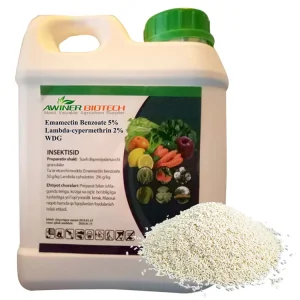
Yes. Co-formulations combine two distinct modes of action (Neonicotinoid Group 4A + Avermectin Group 6). Acetamiprid delivers systemic neurotoxic action via nicotinic acetylcholine receptors, while Abamectin causes chloride channel activation. This dual attack disrupts resistant populations of thrips, aphids, and leafminers simultaneously.
Standard formulation shelf life is guaranteed for 2 years under tropical storage conditions. Automated accelerated thermal stability testing ensures active breakdown remains strictly below 3.0%, with zero phase separation, hard-caking, or granule breakdown.
Awiner Biotech offers comprehensive private-label OEM/ODM services, including structural bottle design, high-barrier COEX layer materials, UV-resistant labeling, customized anti-counterfeiting tracking codes, and multi-language packaging compliant with local country regulations.
Cytokinin 6BA is a plant growth promoter that stimulates cell division, improves blossom set, and accelerates physiological recovery following insect damage or biotic stress. Integrating plant growth regulators into post-pest recovery treatments restores canopy photosynthetic efficiency and protects overall yield performance.
Standard production lead times range from 15 to 25 days following label artwork confirmation and purchase order deposit. Direct access to nearby export shipping lanes via Tianjin or Qingdao ports guarantees efficient ocean freight transit to global agricultural destinations.
 Awiner Biotech