Direct B2B quotes and bulk export technical availability for enterprise agricultural distributors.
The global cotton defoliant market is undergoing a paradigm shift driven by accelerated mechanical harvesting adoption, climate variability, and stringent quality benchmarks set by international textile mills. Chemical defoliation is no longer viewed merely as a pre-harvest option; it is a critical agronomic management protocol designed to optimize lint grade, minimize trash content, prevent trash staining, and manage harvest timing efficiently.
Rapid conversion from manual picking to machine harvesting in South Asia, Central Asia, and Latin America has increased demand for high-efficiency plant growth regulators like Thidiazuron (TDZ) and Ethephon. Machine harvesters require over 90% leaf drop and 80%+ boll opening to operate without clogging equipment or discoloring lint.
Ultra-low volume (ULV) aerial drone spraying demands specialized tank-mix adjuvant compatibility and refined liquid suspensions (SC/OD). Modern defoliants must maintain droplet stability, resist drift, and demonstrate fast foliar absorption under micro-volume water carriers.
Global regulatory agencies (EU REACH, EPA, Brazil MAPA) are tightening maximum residue limits (MRLs) for harvest aids. Suppliers providing low-toxicity, green-formulated defoliants with optimized active ingredient ratios gain a distinct competitive edge in international commercial tenders.
Successful defoliation requires triggering physiological leaf abscission rather than leaf desiccation ("freezing" dead leaves on the stalk). When foliage desiccates without forming a proper abscission layer, dry leaf fragments become trapped in the cotton fiber during mechanical picking, lowering the lint grade and reducing wholesale commercial value.
Thidiazuron (TDZ 50% WP / 500g/L SC) acts as a potent plant growth regulator that stimulates ethylene synthesis while suppressing auxin transport in petiole tissue. This dual mechanism induces natural cell wall degrading enzymes (cellulase and pectinase) in the leaf petiole abscission layer.
To achieve uniform defoliation under varying climate regimes, chemical synergies are engineered into custom tank-mixes or premix formulations:
| Defoliant Chemical Active | Primary Physiological Function | Optimal Application Temp. | Ideal Tank Mix Companion | Regrowth Control Rating |
|---|---|---|---|---|
| Thidiazuron (TDZ 50% WP) | Hormonal Abscission Layer Induction | 21°C - 35°C | Diuron SC / Ethephon 66% | Exceptional |
| Diuron (500g/L SC) | Photosystem II Inhibitor / Synergist | 15°C - 30°C | TDZ 50% WP | Moderate |
| Ethephon (480-720g/L SL) | Boll Opener & Ethylene Generator | 18°C - 38°C | TDZ + Diuron Premix | N/A (Boll Ripener) |
| Tribufos / Defoliant Oils | Foliar Organophosphorus Desiccant | 12°C - 28°C | Ethephon | Low |
Navigating large-scale agrochemical procurement requires transparent cost breakdowns, active ingredient purity guarantees, and agile supply chain logistics. International cotton plantations, commercial distributors, and government tenders demand strict adherence to technical parameters.
Wholesale unit pricing for cotton defoliants (FOB/CIF) fluctuates based on raw material upstream chemical prices (e.g., TDZ technical purity grade ≥ 98%), solvent pricing, customization of emulsifiers, and container volume scale (e.g., 200L drums vs. 1L bottles).
High-grade WP and SC formulations must pass stringent CIPAC testing for tropical storage stability (54°C for 14 days), dispersion stability, suspendability (>90%), and anti-caking properties to survive multi-month maritime transit and long storage cycles.
Flexible packaging solutions—from UN-certified HDPE drums, coex bottles, to soluble bag inner liners—ensure zero chemical degradation during handling. Specialized palletization and container loading optimize freight costs per metric ton.
Awiner Biotech was founded in 2006, located in the north of China—Shijiazhuang, Hebei Province. The city is close to our capital Beijing, with convenient transportation infrastructure. Awiner Biotech is dedicated to the research, synthesis, formulation production, and global distribution of agrochemicals. We specialize in high-efficiency insecticides, herbicides, fungicides, plant growth regulators (PGRs), and public health pest control solutions.
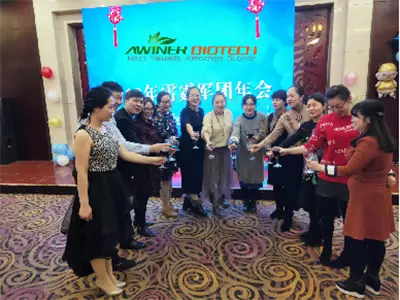
Up to now, we have earned the trust of agricultural partners and enterprise buyers across:
Asia & Middle East: Iraq, Iran, Afghanistan, Pakistan, India, Syria, Turkey, Yemen, Kazakhstan, Uzbekistan, Malaysia, Cambodia, Nepal, Myanmar.
Americas: Chile, Bolivia, Mexico, Brazil, Paraguay.
Africa & Europe: Libya, Nigeria, Djibouti, Rwanda, Somalia, Ukraine, Russia.
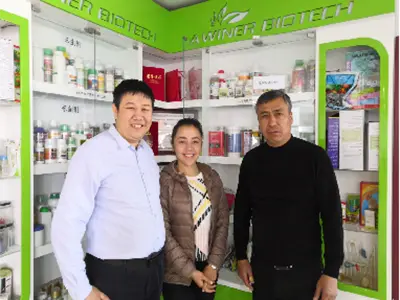
Customer Market Survey: We routinely conduct on-site agronomic market inspections in target customer countries. By analyzing real-world crop conditions, understanding regional pest pressures, and evaluating application equipment, we optimize product performance directly in the field.
Exhibition Leadership: Awiner Biotech actively participates in top-tier global chemical and agricultural trade shows in Turkey, Iran, Pakistan, Nigeria, Russia, Cambodia, Malaysia, Uzbekistan, and beyond.
Exporting agrochemicals requires strict regulatory compliance. We provide full regulatory backing to ensure seamless customs clearance and local registration approval for foreign importers.
Provision of full GLP analytical reports, acute toxicity studies, and environmental fate documentation tailored to regional regulatory authorities.
Official Certificates of Analysis (COA), ICAMA registration certificates, and free sale certificates validated by embassies.
Customized dosage protocol recommendations based on microclimate, crop canopy density, and humidity conditions of local farming zones.
Dedicated cargo tracking, real-time temperature-monitored shipments, and guaranteed fulfillment timelines during peak cotton harvest seasons.
As agrochemical engineering moves toward sustainable, high-efficiency chemistry, our R&D team is driving pioneering advancements in harvest aid formulations to solve longstanding agricultural challenges:
Development of sub-micron droplet formulations that dramatically increase leaf cuticle penetration speed, cutting required active ingredient doses by up to 25% while maintaining 95%+ leaf abscission rates.
Replacing traditional petroleum-based solvents with eco-friendly plant-derived methyl ester derivatives. This reduces phytotoxicity risks to developing bolls while improving rainfastness during unexpected autumn showers.
Innovating novel chemical synergists that lower the activation temperature threshold for Thidiazuron down to 12°C, extending the viable harvest window in northern cotton-growing regions.
Explore our complete spectrum of plant protection and growth regulation portfolio.
 Awiner Biotech