High-purity chemical agents optimized for broad-spectrum crop protection, defoliation support, and vector management in commercial farming networks.
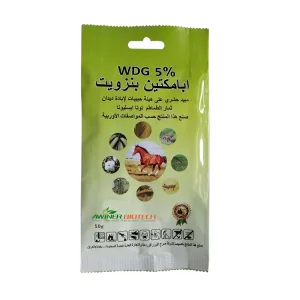
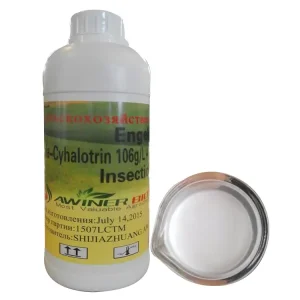
In large-scale commercial cotton production across major agricultural hubs—such as Xinjiang (China), Mato Grosso (Brazil), Texas (USA), and the Punjab region—the transition to 100% mechanized spindle harvesting demands rigorous pre-harvest canopy management. Chemical defoliation is no longer merely a field drying process; it is a critical, ROI-driving agronomy protocol that directly determines fiber grade quality, seed cotton moisture level, and ginning efficiency.
Global agrochemical procurement directors for corporate farming conglomerates face complex operational parameters. Achieving complete leaf abscission while suppressing secondary regrowth requires high-stability active ingredients, precise adjuvants, and flexible tank-mix compatibility. As B2B buyers transition from generic active ingredient sourcing to complete harvest-aid solution kits, partner factories must supply high-purity formulations engineered to perform under unpredictable microclimatic conditions.
Rapid synthesis of ethylene in leaf petiole tissues to induce natural leaf drop without desiccation freezing.
Synchronized mature boll dehiscence allowing single-pass mechanical harvester operation.
Long-term hormonal inhibition of juvenile vegetative leaf development before harvest completion.
Minimizing green leaf fragment contamination to secure Classer's Grade 31/41 lint pricing premiums.
Advanced dual-mode leaf drop systems and boll-opening formulations engineered for broad thermal stability and drone/aerial delivery systems.
Functions as a potent plant growth regulator. At physiological defoliation dosages, TDZ stimulates endogenous ethylene synthesis while suppressing auxin transport from the leaf blade to the petiole. This triggers natural abscission zone formation without destroying cell walls, preventing stuck "frozen" dry leaves.
Acts as a Photosystem II (PSII) inhibitor. Combined in precise ratios with TDZ (e.g., TDZ 360g/L + Diuron 180g/L SC), it accelerates light-dependent stress signaling in mature leaves. This dual mechanism ensures rapid defoliation under lower ambient temperature regimes (<18°C) where standalone TDZ activity slows.
Converts directly into ethylene gas inside carpel wall tissues upon cellular absorption. It speeds up the maturation rate of unopened, mature bolls, breaking carpel sutures uniformly across the lower, middle, and upper cotton canopy to permit a single-pass mechanical harvest run.
“Agronomic Efficiency Insight: Precision defoliation requires adjusting active ingredient ratios based on canopy density and heat units (DD60). Tank-mixing non-ionic organosilicone penetrants reduces surface tension, enabling ultra-low volume (ULV) aerial applications to achieve uniform underside leaf coverage.”
Standardized chemical specifications for bulk supply, customized packaging, and global crop protection compliance.
| Formulation Type | Active Ingredient Synergy | Recommended Target Stage | Optimal Thermal Window | Rainfastness Window |
|---|---|---|---|---|
| TDZ + Diuron 500g/L SC | Thidiazuron 330g/L + Diuron 170g/L | 60-70% Open Bolls, Upper Bolls Mature | 18°C – 35°C (High Efficiency) | 24 Hours Post-Spraying |
| Ethephon 720g/L SL | Ethephon 6Sign/L Aqueous Solution | Boll Cross-Section Seed Coat Darkened | > 20°C (Requires Ambient Warmth) | 4-6 Hours Post-Spraying |
| Sodium Chlorate 600g/L Liquid | Desiccant Contact Action | Late-season Emergency Desiccation | 12°C – 22°C (Low Temperature Capable) | 2 Hours Post-Spraying |
| TDZ 50% WDG High-Tech | Thidiazuron 500g/kg Water Dispersible | Dense Canopy Aerial / Drone Spraying | 15°C – 32°C | 12 Hours Post-Spraying |
Securing stable supply chains for large-scale agricultural operations requires factory-direct reliability. As a primary manufacturer and B2B export partner, our synthetic and formulation facilities operate under strict ISO 9001 and ISO 14001 quality and environmental management protocols.
We provide enterprise cotton farms, regional distributors, and government agricultural bodies with custom tailormade options. From custom concentration ratios and localized tank-mix adjuvants to private labeling in 1L, 5L, 20L HDPE drums up to 1000L IBC totes, our supply chain ensures timely delivery ahead of seasonal harvest windows in both Northern and Southern hemispheres.
Pioneering Agrochemical Innovation, Global Compliance, and Dedicated Technical Support Since 2006.
Awiner Biotech was founded in 2006, located in northern China—Shijiazhuang, Hebei Province. Situated close to China's capital Beijing, our logistics and transportation networks provide efficient, fast export routes through major international sea ports.
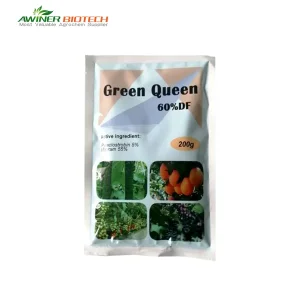
Awiner Biotech is committed to research, production, and worldwide distribution of agrochemicals. We specialize in high-grade defoliants, insecticides, herbicides, fungicides, plant growth regulators, and public health pest control solutions.
Up to now, we have established distribution partnerships across over 30 countries: Iraq, Iran, Afghanistan, Pakistan, India, Libya, Syria, Turkey, Yemen, Ukraine, Russia, Kazakhstan, Uzbekistan, Chile, Bolivia, Mexico, Brazil, Paraguay, Nigeria, Djibouti, Rwanda, Somalia, Malaysia, Cambodia, Nepal, Myanmar and beyond.
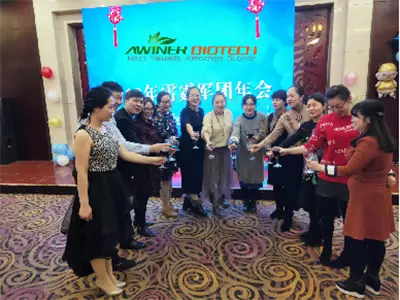
We actively participate in international agricultural exhibitions in key markets such as Turkey, Iran, Pakistan, Nigeria, Russia, Cambodia, Malaysia, and Uzbekistan. Beyond trade shows, our dedicated technical team conducts local field trials and market surveys across client territories.
By inspecting local canopy structures, analyzing soil-climate variables, and understanding regional sprayer setups, we assist enterprise clients in resolving application issues on-site. We regularly host client delegations at our headquarters for technical exchanges and supply chain audits.
Expert insights on chemical timing, ambient temperatures, and tank-mixing protocols for large-scale operations.
Defoliant application should be timed when 60% to 70% of bolls are open and the uppermost harvestable boll is mature (determined by slicing the boll open: seeds have fully developed dark seed coats and cotyledons are folded without excess jelly). Applying too early reduces seed weight and micronaire grade, while applying too late exposes open bolls to adverse weather contamination.
Thidiazuron relies on plant hormonal signaling, which slows down when nighttime temperatures drop below 16°C (60°F) or daytime temperatures fall below 21°C (70°F). For cold-wave conditions, we recommend utilizing a premix formulation of TDZ + Diuron or adding an organosilicone surfactant to maintain chemical absorption and leaf drop efficiency.
Yes. A common practice in commercial farming is tank-mixing TDZ/Diuron with Ethephon (for accelerated boll opening) and targeted insecticides (such as Emamectin Benzoate or Beta-cypermethrin) to control late-season bollworms or aphids. Always conduct a small jar compatibility test and verify pH levels before filling large tractor or aerial spray tanks.
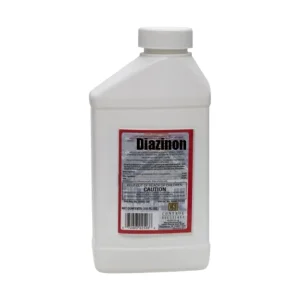
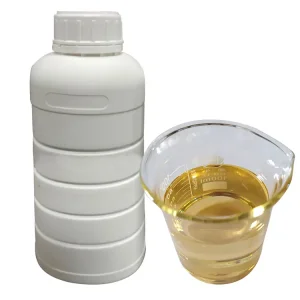
We supply standard B2B packaging including 200L fluorinated HDPE drums and 1000L IBC totes for bulk industrial buyers. For retail distribution, we provide 1L and 5L custom-printed bottles with security induction seals and multi-language chemical safety labels complying with GHS and FAO specifications.
Explore our export-grade pesticides, fungicides, and plant health solutions manufactured for global agriculture markets.
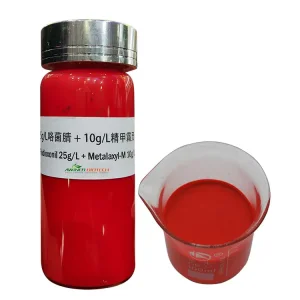
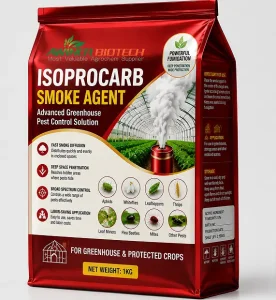
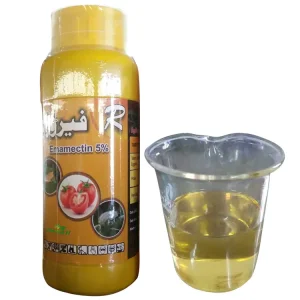
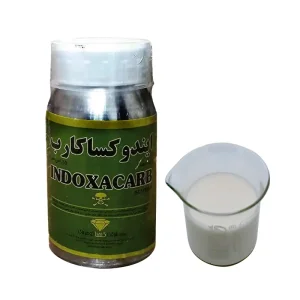
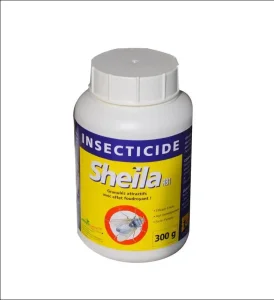
 Awiner Biotech