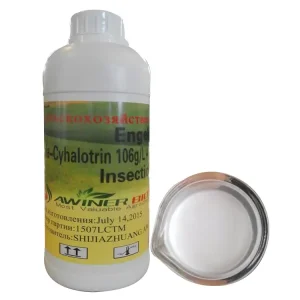
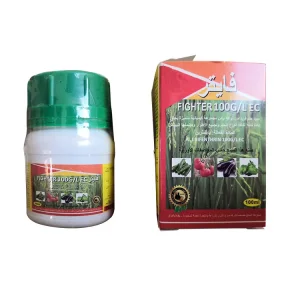
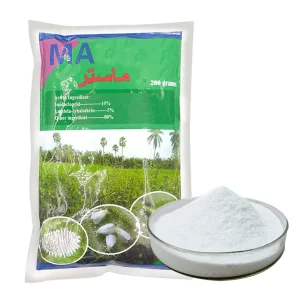
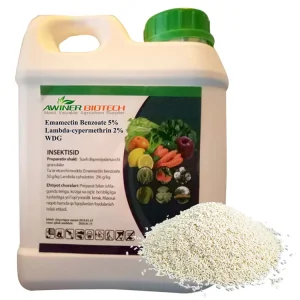
Explore our high-efficacy active ingredients, combination formulations, and crop protection portfolios
Deciphering the biochemical pathways, global commercial benchmarks, and manufacturing dynamics of the world's premier lepidopteran bio-insecticide.
In modern commercial agriculture, securing high-yield crop production while mitigating severe pest resistance requires high-potency, targeted chemistries. Emamectin Benzoate—a semi-synthetic derivative of the naturally occurring macrolide antibiotic avermectin B1 (produced by the soil actinomycete Streptomyces avermitilis)—represents a critical technological leap in biological pest control. Formulated as a benzoate salt (specifically 4''-deoxy-4''-epi-methylamino avermectin B1a/B1b benzoate), this active ingredient demonstrates unprecedented larvicidal activity against economic threats belonging to the order Lepidoptera, as well as select Thysanoptera and Coleoptera species.
Understanding how Emamectin Benzoate works requires evaluating both its molecular mode of action (MoA) within the insect central nervous system and its bio-kinetic behavior upon plant foliage. By binding selectively to glutamate-gated chloride channels (GluCls) and gamma-aminobutyric acid (GABA) receptors, Emamectin Benzoate triggers an irreversible influx of chloride ions, inducing immediate paralysis and feeding cessation. For wholesale buyers, commercial agricultural operations, distributors, and formulators, optimizing the procurement and application of Emamectin Benzoate involves analyzing technical grade purity, photolytic stabilization, formulation innovations (such as WDG, EC, and ME), and global manufacturer pricing architecture.
A neuro-physiological breakdown of target-site binding, ion channel gating, and pest mortality kinetics.
Emamectin Benzoate acts as a potent allosteric activator of invertebrate-specific glutamate-gated chloride channels (GluCls) and GABA receptors situated at the neuromuscular junctions and interneurons of insects. Unlike synthetic pyrethroids or organophosphates that target sodium channels or acetylcholinesterase, Emamectin Benzoate binds specifically to the hydrophobic transmembrane domains of the channel proteins, locking them into a permanently open configuration.
Once the chloride ion channels are locked open by the Emamectin Benzoate molecule, an uncontrolled, continuous flow of negatively charged chloride ions (Cl⁻) surges into the post-synaptic nerve cells and muscle fibers. This massive ion influx causes rapid hyperpolarization of the cell membrane potential, completely dampening electrical excitability and preventing the propagation of action potentials across the insect's nervous system.
As nerve signal conduction fails entirely, the target larva suffers irreversible neuromuscular paralysis within 1 to 4 hours of ingestion or contact. Although ultimate insect mortality occurs between 24 to 72 hours due to dehydration and metabolic collapse, crop damage stops almost instantly because the larva loses the ability to contract its mouthparts and consume plant tissue.
One of the major agronomic advantages of Emamectin Benzoate is its exceptional translaminar movement. Upon foliar application, the chemical rapidly penetrates the leaf cuticle, moving from the upper adaxial surface into the inner mesophyll tissue.
While surface residues of Emamectin Benzoate degrade rapidly under natural ultraviolet light (UV half-life < 24 hours), the active ingredient absorbed inside the leaf mesophyll is completely shielded from sunlight degradation.
Because the chemistry creates a localized reservoir within the leaf parenchyma, rainfall or overhead irrigation occurring as quickly as 1 to 2 hours post-spray does not wash away the active ingredient.
Leaf-mining and stem-boring larvae (such as Tuta absoluta, Spodoptera frugiperda, and Chilo suppressalis) ingest the localized chemical reservoir while feeding from inside the leaf tissue, ensuring maximum toxic action.
Once surface residues dry and degrade, predatory insects, honeybees, and beneficial parasitoids that walk over the leaf surface experience minimal exposure, making it ideal for Integrated Pest Management (IPM).
Analyzing key commercial pest pressures driving multi-ton B2B purchasing decisions worldwide.
Global demand for Emamectin Benzoate active ingredient (AI) and finished formulations has expanded significantly over the past decade. Enterprise agrochemical importers, wholesale distributors, and state agricultural corporations procure hundreds of metric tons annually to manage destructive, highly resistant insect populations across broadacre field crops, high-value horticulture, and forestry sectors.
Primary Targets: Spodoptera frugiperda (Fall Armyworm), Helicoverpa zea, Chrysodeixis includens in Soybeans, Maize, and Cotton.
Market Driver: LATAM buyers, particularly in Brazil, Paraguay, and Bolivia, require high-concentration formulations (such as Emamectin Benzoate 5% WDG and 10% WDG) to combat intense multi-generation caterpillar outbreaks in extensive monoculture production systems where pyrethroid resistance is widespread.
Primary Targets: Tuta absoluta (Tomato Leafminer), Lobesia botrana (Grape Berry Moth), Cydia pomonella.
Market Driver: Vegetable and fruit producers across Southern Europe, North Africa, and the Middle East rely on Emamectin Benzoate for low-residue, high-selectivity pest suppression under strict European Union Maximum Residue Limit (MRL) and eco-compliance frameworks.
Primary Targets: Chilo suppressalis (Rice Stem Borer), Plutella xylostella (Diamondback Moth), Thrips palmi.
Market Driver: Intense cropping cycles in China, India, Pakistan, Vietnam, and Indonesia demand high-volume 1.9% EC and 5% WDG procurement to defend paddy rice, brassica crops, and tea plantations against persistent, pyrethroid-resistant borers and thrips.
From Technical Grade (TC) Active Ingredient to Market-Ready Commercial Formulations.
To maximize bio-availability, extend physical shelf life, and overcome environmental degradation, chemical manufacturers utilize distinct formulation matrices. Selecting the correct formulation grade depends on climatic conditions, spray equipment types, target pest biology, and regulatory requirements in the destination country.
| Formulation Type | Active Ingredient (AI) Conc. | Physical Appearance | Key Technical Advantages | Typical Applications |
|---|---|---|---|---|
| Emamectin Benzoate Technical (TC) | 90% Min - 95% Min TC | Off-white to light yellow powder | High purity raw material for chemical synthesis, formulation blending, and custom compounding. | Agrochemical manufacturing factories & formulating facilities. |
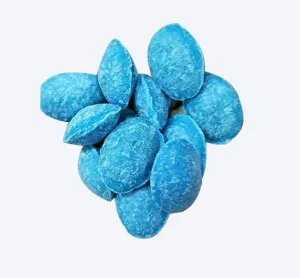
| Water Dispersible Granule (WDG/SG) | 5% WDG / 10% WDG / 30% WDG | Light brown micro-granules | Dust-free, superior storage stability, rapid disintegration in water, zero organic solvents, safer transport. | Broadacre field crops (Corn, Cotton, Soybeans), Fruit orchards. |
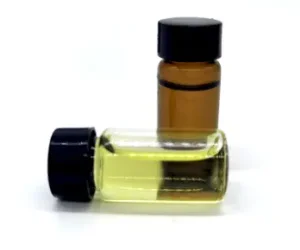
| Emulsifiable Concentrate (EC) | 1.9% EC / 5% EC / 50g/L EC | Clear yellow to amber liquid | High foliar cuticular penetration, rapid initial knock-down, excellent leaf spreading capabilities. | Vegetables (Tomatoes, Cabbage), Horticulture, Forestry. |
| Microemulsion (ME) / Suspo-emulsion (SE) | 2% ME / 5% ME | Translucent liquid | Eco-friendly water-based formulation, low volatile organic compound (VOC) profile, high rainfastness. | Export-oriented greenhouse crops, sensitive floral crops. |
Combines rapid neuronal knockdown (Emamectin) with Chitin Synthesis Inhibition (Lufenuron). Provides dual action by destroying existing feeding larvae while sterilizing eggs and disrupting larval molting cycles.
Merges GABA receptor modulation with Ryanodine receptor activation. Delivers dual-site biochemical pressure, extending residual protection up to 28 days while preventing target resistance build-up.
Pairs deep translaminar larvicidal activity with fast-acting surface contact contact/repellency pyrethroid dynamics. Ideal for severe mixed pest infestations (Lepidoptera + Hemiptera).
Combines neurotoxin paralysis with Ecdysone Receptor Agonism, forcing premature lethal molting in young instars across orchards and vineyard canopy structures.
Inside the industrial production process: From fermentation to pure Emamectin Benzoate salt.
The industrial synthesis of Emamectin Benzoate is a complex, multi-stage chemical engineering process that requires strict temperature control, specialized catalytic hydrogenations, and rigorous analytical quality assurance. Below is an overview of the industrial chemical pathway from microbial fermentation to the final active compound:
Deep-tank liquid aerobic fermentation of Streptomyces avermitilis yields crude Avermectin B1 (a mixture of Avermectin B1a ≥ 80% and B1b ≤ 20%). The macrocyclic lactone crude broth undergoes solvent extraction, filtration, and crystallization to yield high-purity Abamectin technical grade substrate.
The 4''-hydroxyl group of Abamectin B1 undergoes selective catalytic oxidation (utilizing oxalyl chloride/DMSO or metal catalysts) to form the 4''-oxo-avermectin intermediate. Subsequent reductive amination with methylamine introduces the methylamino functional group at the 4'' position with specific epi-stereochemistry configuration (4''-deoxy-4''-epi-methylamino avermectin B1).
The purified 4''-deoxy-4''-epi-methylamino avermectin B1 free base is reacted with benzoic acid in a specialized solvent matrix (such as ethyl acetate or isopropanol) to yield Emamectin Benzoate salt. The product is spray-dried or recrystallized under vacuum, yielding 95% TC powder compliant with FAO standard specifications.
Key economic factors determining bulk chemical pricing, MOQ structures, and market fluctuations.
Commercial procurement directors and agrochemical purchasing managers evaluating Emamectin Benzoate pricelists must navigate complex upstream raw material markets and production economics. Wholesale pricing fluctuates based on six primary operational variables:
Because Emamectin Benzoate is synthesized directly from Abamectin B1 crude, fluctuations in biological fermentation media costs (corn starch, soybean meal, glucose) and energy tariffs directly impact technical grade pricing.
95% TC material commands a premium price over 90% or 92% grades due to lower residual impurities (such as unreacted 4''-oxo intermediate or 4''-epi-avermectin isomers), resulting in superior formulation stability and reduced phytotoxicity.
Emamectin 5% WDG prices depend heavily on the quality of disperants (e.g., sodium lignosulfonate, polycarboxylate) and UV stabilizers added during extrusion, which prevent rapid breakdown under harsh sunlight.
Bulk 25kg fiber drums or 200L UN-approved steel drums offer optimal price-per-kilogram ratios. Small-pack customization (e.g., 100g aluminum foil bags, 1L HDPE bottles with embossed anti-counterfeit logos) adds packaging labor and material overhead.
Emamectin Benzoate technical and concentrated liquid formulations are classified under UN 3077 / UN 3082 (Environmentally Hazardous Substances, Class 9). Dangerous Goods (DG) maritime freight compliance influences total CIF landed cost.
Wholesale orders requiring complete GLP (Good Laboratory Practice) data packages (five-batch analysis, eco-toxicity reports, mutagenicity studies) for national registration support may carry technical service licensing adjustments.
Navigating global registration requirements, environmental safety profiles, and resistance management.
Adhering to Google’s E-E-A-T principles (Experience, Expertise, Authoritativeness, and Trustworthiness), verified agrochemical manufacturers must supply comprehensive quality control credentials and environmental stewardship guidelines alongside physical shipments.
Every production batch undergoes high-performance liquid chromatography (HPLC) testing using UV/VIS detection to verify active ingredient content, water content (Karl Fischer), and pH limits according to FAO/WHO specifications.
Direct contact with wet spray droplets is toxic to honeybees (Apis mellifera). Spray applications should strictly occur during late evening or night when bees are not actively foraging. Once foliage dries completely, toxicity drops significantly.
Emamectin Benzoate exhibits high toxicity to aquatic invertebrates (Daphnia magna LC50 < 1.0 ppb). Applicators must maintain strict 15 to 30-meter buffer zones away from natural waterways, rivers, and aquaculture facilities.
Emamectin Benzoate belongs to IRAC Mode of Action Group 6 (Avermectins, Milbemycins). To prevent target insect resistance, applications should not exceed 2 consecutive sprays per cropping season before rotating to different MoA groups.
A premier Chinese agrochemical manufacturer dedicated to global crop protection excellence since 2006.
Awiner Biotech was founded in 2006, located in the north of China—Shijiazhuang, Hebei Province. The city is close to China's capital Beijing, ensuring convenient transportation and streamlined logistics to major international export ports. Awiner Biotech is deeply committed to researching, producing, and distributing high-grade agrochemicals. We specialize in comprehensive crop protection solutions including insecticides, herbicides, fungicides, plant growth regulators, and public health pesticides.
Up to now, Awiner Biotech has built strong, long-term partnerships with customers across more than 30 nations worldwide. Our dedicated teams regularly conduct international market surveys, participate in premier agrochemical exhibitions, and deliver localized technical assistance.
Expert technical and commercial answers addressing common B2B buyer & agronomy queries.
Browse our extended range of active technical powders, pre-mix insecticides, rodenticides, and plant growth regulators.
 Awiner Biotech