Chili pepper cultivation (*Capsicum annuum* and *Capsicum frutescens*) forms a cornerstone of global high-value horticulture, driving multi-billion-dollar agricultural economies across Asia-Pacific, Latin America, the Middle East, and Africa. However, commercial chili production faces unprecedented economic risks due to complex insect pest complexes, rapidly developing chemical resistance, and escalating consumer safety regulations worldwide. Crop loss attributed to unmanaged pest infestation can range from 30% to complete harvest failure, directly threatening commercial farming ROI and downstream food processing supply chains.
Modern chili enterprise operations require a paradigm shift from traditional, broad-spectrum chemical sprays to target-specific, low-toxicity, and resistance-managed crop protection protocols. Major phytophagous species—including Chili Thrips (*Scirtothrips dorsalis*), Two-Spotted Spider Mites (*Tetranychus urticae*), Green Peach Aphids (*Myzus persicae*), Fruit Borers (*Helicoverpa armigera*), and Whiteflies (*Bemisia tabaci*)—act not only as direct tissue feeders but also as vectors for devastating viral epidemics such as Chili Leaf Curl Virus (ChLCV) and Tomato Spotted Wilt Virus (TSWV).
To overcome field resistance and minimize active ingredient dosages, B2B agrochemical buyers must analyze mode-of-action classifications established by the Insecticide Resistance Action Committee (IRAC). The table below outlines technical formulations engineered for targeted chili pest mitigation:
| Target Pest Species | Active Ingredient (AI) Formulations | IRAC MoA Group | Physiological Mechanism | Application & Synergy Advantage |
|---|---|---|---|---|
| Chili Thrips (Scirtothrips dorsalis) |
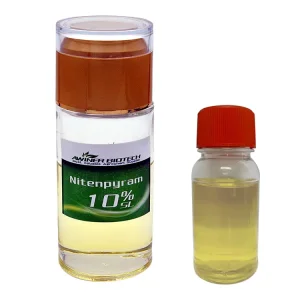
Flonicamid 50% WDG Nitenpyram 10% SL |
Group 29 / Group 4A | Selective homopteran feeding blocker; Nicotinic acetylcholine receptor (nAChR) agonist. | Immediate cessation of feeding; protects leaves from leaf-curl necrosis; zero cross-resistance with pyrethroids. |
| Fruit Borer / Caterpillars (Helicoverpa armigera) |
Emamectin Benzoate 5% WDG Abamectin + Chlorbenzuron SC |
Group 6 / Group 15 | Glutamate-gated chloride channel allosteric modulators; Chitin synthesis inhibitor. | Translaminar larvicidal action; disrupts larval molting cycles; low impact on beneficial predatory mites. |
| Aphids & Whiteflies (Myzus persicae / B. tabaci) |
Imidacloprid 20% SL Acetamiprid 32g/L + Abamectin 18g/L EC |
Group 4A + Group 6 | Systemic neurotoxicity via nAChR binding combined with chloride channel activation. | Rapid knockdown with extended residual root/stem systemic translocation; prevents viral transmission. |
| Red Spider Mites (Tetranychus urticae) |
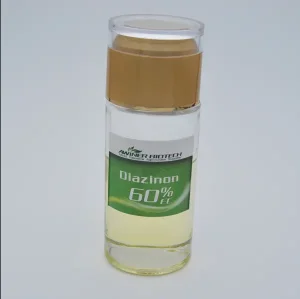
Abamectin 0.5% + Chlorbenzuron 24.5% SC Diazinon 60% EC |
Group 6 / Group 1B | Neuromuscular paralysis coupled with acetylcholinesterase (AChE) inhibition. | Controls adults, nymphs, and egg stages simultaneously; effective under high ambient temperature conditions. |
| Phytophthora & Anthracnose (Colletotrichum spp.) |
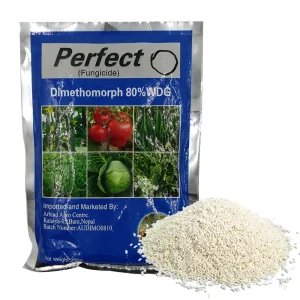
Dimethomorph 50% WP | FRAC Group 40 | Cell wall phospholipid biosynthesis disruption in oomycete fungi. | Curative and anti-sporulant action; critical for preventing fruit rot and foliar dieback during rainy seasons. |
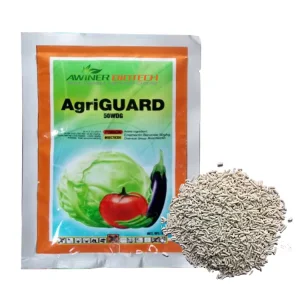
Modern chili farming requires advanced formulation technology. Water Dispersible Granules (WDG) and Suspension Concentrates (SC) eliminate dust hazards, optimize active ingredient dispersion in sprayer tanks, and enhance leaf adhesion. Our factory utilizes high-efficiency surfactants and wetting agents that reduce surface tension, ensuring maximum leaf coverage and rainfastness within 2 hours of application.
Repeated application of single-site chemical classes leads to rapid resistance, particularly in *Scirtothrips dorsalis*. We engineer custom dual-active pre-mixes (e.g., Acetamiprid + Abamectin EC) and design structured chemical rotation schedules. Alternating neonicotinoids with chordotonal organ modulators (Flonicamid) and avermectins ensures multi-generational pest suppression without triggering target-site mutation resistance.
As global agricultural trade faces supply chain volatility, raw material fluctuations, and stringent environmental compliance standardizations, Chinese agrochemical manufacturing has transformed through Industry 4.0 integration. Located in Shijiazhuang, Hebei Province—adjacent to China’s capital Beijing and major northern shipping hubs—Awiner Biotech represents the benchmark of modern agrochemical synthesis and formulation processing.
Our automated SC, WDG, EC, and SL processing units leverage AI-driven PLC monitoring systems to control temperature, pressure, particle size micronization (down to 2-5 microns), and emulsification stability. This guarantees batch-to-batch consistency and active ingredient purity exceeding 98%.
Proximity to Tianjin Port and Qingdao Port enables seamless containerized shipping with optimized ocean freight transit times. Direct access to major transport corridors mitigates supply chain delays, ensuring seasonal agricultural shipments arrive well ahead of pest outbreak windows.
Every batch undergoes High-Performance Liquid Chromatography (HPLC) and Gas Chromatography (GC) validation. We provide complete dossiers including FAO specs, Certificate of Analysis (COA), SDS, and ICAMA documentation required for national agricultural registrations.
International importers, commercial farm operations, and regional distributors face distinct commercial and regulatory hurdles when sourcing pesticides for high-value export crops like chili. Enterprise purchasing decisions require strict alignment with international quality standards and destination-market import regulations.
Global buyers exporting processed chili (dry powder, oleoresin, or fresh chili) to the European Union, North America, or Japan must adhere to strict MRL thresholds (often set at 0.01 mg/kg). Sourcing low-residue chemistry such as Flonicamid 50% WDG and Emamectin Benzoate 5% WDG allows enterprise growers to maintain short Pre-Harvest Intervals (PHI) without risking consignment rejection at international borders.
Chemical degradation during ocean transit can compromise product efficacy. We implement multi-layer co-extruded fluorinated bottles, UV-resistant HDPE containers, and high-barrier aluminum foil sachets to prevent oxidation, moisture ingress, and volatilization. Packaging is fully customizable with multi-lingual labelling, GHS hazard pictograms, and anti-counterfeiting tracking codes.
Agro-ecological conditions dictate distinct pest pressure profiles. Awiner Biotech's agronomic field teams have conducted extensive regional market evaluations to tailor product delivery to specific climate zones:
High ambient humidity during monsoon transitions causes rapid surges in Scirtothrips dorsalis and fungal anthracnose. Field protocols emphasize alternating Nitenpyram 10% SL and Flonicamid 50% WDG combined with protective tank-mixes of Dimethomorph 50% WP to preserve foliage integrity.
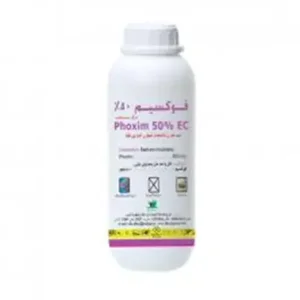
Arid climates and high temperatures accelerate spider mite (T. urticae) population cycles and whitefly proliferation. Strategic deployments of heat-stable Abamectin + Chlorbenzuron SC and Phoxim 50% EC provide prolonged residual control while minimizing photo-degradation.
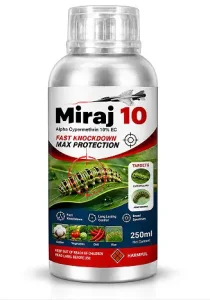
Large-scale industrial farming demands cost-effective broad-spectrum pest suppression. Formulations such as Alpha Cypermethrin and Imidacloprid 20% SL are widely utilized for early-stage seedling protection, while plant growth regulators like Cytokinin 6BA boost stress recovery and flower retention.
Awiner Biotech was founded in 2006, located in northern China—Shijiazhuang, Hebei Province. Situated close to Beijing, our corporate headquarters and manufacturing operations benefit from world-class transportation and logistical connectivity. Awiner Biotech is dedicated to the research, synthesis, formulation, and global distribution of advanced agrochemicals, specializing in high-efficacy insecticides, herbicides, fungicides, plant growth regulators, and public health pesticides.
Through non-negotiable product quality, direct factory pricing, and expert regulatory support, Awiner Biotech has earned the trust of agricultural partners in over 30 countries worldwide. Our export markets include:
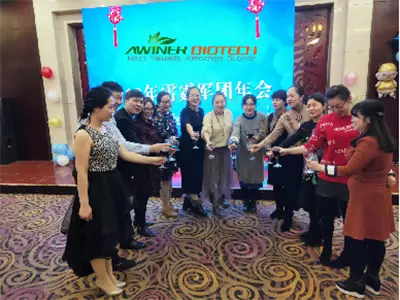

True expertise comes from boots-on-the-ground research. Awiner Biotech regularly participates in major global chemical expos across Turkey, Iran, Pakistan, Nigeria, Russia, Cambodia, Malaysia, and Uzbekistan.
Our senior technical directors conduct in-person market inspections across client territories—analyzing real-world pest pressure, diagnosing crop application bottlenecks, evaluating local tank-mix habits, and providing tailored solutions directly to regional distributors and farmers.
For controlling resistant chili thrips (*Scirtothrips dorsalis*), we recommend an integrated rotation strategy alternating between Flonicamid 50% WDG (IRAC Group 29) and Emamectin Benzoate 5% WDG or Nitenpyram 10% SL (IRAC Group 4A). Rotating distinct IRAC chemical classes every 14-21 days breaks insect reproductive cycles and prevents target-site receptor mutation.
We perform comprehensive batch HPLC laboratory testing to ensure active ingredient purity and precise release profiles. Additionally, our agronomic team provides detailed Pre-Harvest Interval (PHI) protocols tailored to destination market import thresholds (such as EU or FDA guidelines), ensuring zero detectable violative residues in processed or fresh chili products.
Yes, Dimethomorph 50% WP is highly compatible with most non-alkaline insecticides, including Emamectin Benzoate WDG and Acetamiprid + Abamectin EC. Combining targeted fungicides with systemic insecticides reduces labor passes while controlling fungal leaf blight and sucking insects simultaneously. Jar testing for physical compatibility is always recommended prior to broad field mixing.
Awiner Biotech provides full OEM/ODM manufacturing. We customize chemical concentrations, formulation types (WDG, SC, EC, SL, WP), inner packaging (100ml to 1000ml bottles, 10g to 1kg aluminum bags), outer master cartons, and custom private label designs complete with country-specific regulatory translations and barcodes.
Standard formulation and packaging lead times range from 15 to 25 days following label approval and deposit receipt. Logistics from our Shijiazhuang production facility to Tianjin or Qingdao ports take under 24 hours, ensuring fast export dispatch to global destination ports.
 Awiner Biotech