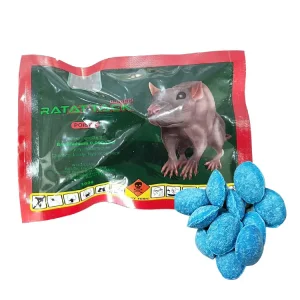
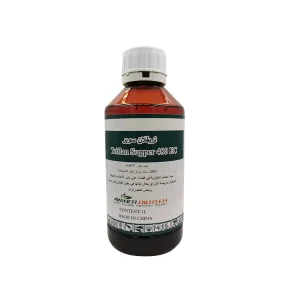
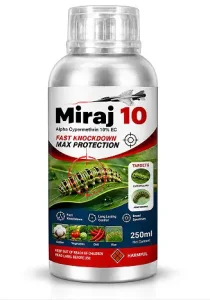
Explore our factory-direct wholesale catalogue engineered for professional pest control operators, municipal sanitation projects, and agricultural distributors worldwide.
In modern commercial agriculture, urban vector management, and industrial logistics, rodent infestation presents a systemic risk threatening food security, structural integrity, and public hygiene. Commercial buyers seeking Wholesale Rat Bait Block Quotes & Manufacturer partners encounter a complex technical landscape where active ingredient toxicity profiles, matrix palatability, weatherization, and environmental compliance intersect.
According to global public health metrics, commensal rodents—specifically Rattus norvegicus (Norway rat), Rattus rattus (roof rat), and Mus musculus (house mouse)—cause billions of dollars in structural damage and crop loss annually. Industrial entities require high-potency rodenticidal bait blocks that offer rapid knock-down capabilities while adhering to local environmental protection standards. Sourcing directly from an established chemical manufacturer guarantees batch-to-batch consistency, verified active ingredient concentrations (e.g., 0.005% Brodifacoum, Bromadiolone, or Diphacinone), and customized physical extruded shapes designed for maximum gnawing motivation.
Poultry houses, swine units, and grain storage facilities require moisture-resistant wax bait blocks engineered to resist fungal degradation in high-humidity environments without compromising bait acceptance.
Container terminals and distribution hubs demand single-feed rodenticides that prevent vector transport across international trade corridors, backed by stringent EU and EPA toxicity documentation.
Extruded paraffin-wax block formulations designed with central securing holes allow municipal operators to anchor blocks in subterranean sewer lines to maintain long-term efficacy under continuous water exposure.
Professional rodent bait blocks rely on advanced chemical formulation techniques to balance palatability, structural stability, and fatal efficacy. Second-generation anticoagulant rodenticides (SGARs) represent the pinnacle of commercial vector management, functioning via the inhibition of the vitamin K1 epoxide reductase enzyme, which prevents prothrombin synthesis.
| Active Ingredient | Generation / Class | Standard Concentration | Lethal Feed Requirement | Optimal Deployment Matrix |
|---|---|---|---|---|
| Brodifacoum | 2nd Gen Anticoagulant | 0.005% (50 ppm) | Single Feed (High Potency) | High-resistance zones, sewers, commercial warehouses |
| Bromadiolone | 2nd Gen Anticoagulant | 0.005% (50 ppm) | Single / Dual Feed | Agricultural fields, grain storage, residential perimeters |
| Flocoumafen | 2nd Gen Anticoagulant | 0.005% (50 ppm) | Single Feed | Industrial complexes, food processing perimeters |
| Diphacinone | 1st Gen Anticoagulant | 0.005% - 0.01% | Multiple Feed | Low-risk environments, sensitive ecosystem borders |
The binder matrix is critical to block performance. Our extrusion process utilizes high-grade, food-quality paraffin wax blended with coarse food grains, seeds, and aromatic attractants. This micro-encapsulation technique ensures that the active chemical compound remains uniform throughout the block, protecting it from moisture absorption, oxidation, and extreme temperature fluctuations ranging from -10°C to +50°C.
Repeated use of first-generation anticoagulants has led to widespread genetic resistance in urban rodent populations (VKORC1 gene mutations). Formulating with high-purity Brodifacoum 0.005% ensures that even resistant strains of Norway rats and house mice are neutralized following a single feeding event, providing a reliable solution for persistent infestations.
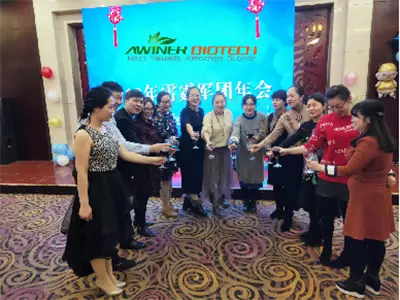
Awiner Biotech was founded in 2006, located in the north of China—Shijiazhuang, Hebei Province. The city is conveniently situated near China's capital, Beijing, ensuring efficient logistics and export capabilities. Awiner Biotech is deeply committed to the research, production, and international distribution of advanced agrochemicals and public health pest control solutions. Our primary product portfolio encompasses high-performance pesticides, herbicides, fungicides, plant growth regulators (PGR), and public health rodenticides.
Up to now, we have established robust trade partnerships and won long-term customers across Iraq, Iran, Afghanistan, Pakistan, India, Libya, Syria, Turkey, Yemen, Ukraine, Russia, Kazakhstan, Uzbekistan, Chile, Bolivia, Mexico, Brazil, Paraguay, Nigeria, Djibouti, Rwanda, Somalia, Malaysia, Cambodia, Nepal, Myanmar, and beyond.
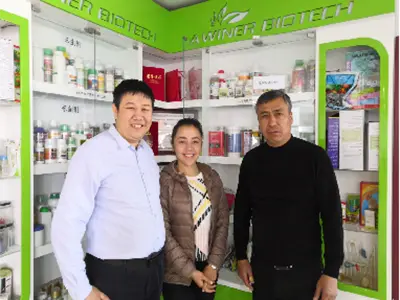
Our commitment to E-E-A-T (Experience, Expertise, Authoritativeness, and Trustworthiness) is demonstrated through our active participation in global industry exhibitions across Turkey, Iran, Pakistan, Nigeria, Russia, Cambodia, Malaysia, and Uzbekistan. Furthermore, our technical teams regularly conduct on-site market surveys within client countries—analyzing localized pest control challenges, inspecting regional micro-climates, and optimizing formulation performance for regional buyers.
As global regulatory frameworks (such as the EU Biocidal Products Regulation and US EPA compliance directives) tighten restrictions on environmental persistency and non-target primary/secondary poisoning, the manufacturing roadmap for wholesale rat bait blocks is undergoing significant technical evolution.
Next-generation research focuses on replacing synthetic petroleum wax binders with fully biodegradable, plant-based wax polymers. These matrices maintain moisture stability during storage while degrading safely in soil after active chemical depletion.
By analyzing rodent pheromone profiles and flavor-preference receptors, factory chemists synthesize target-specific semiochemical blends. These additives increase bait block uptake speed by up to 40% compared to standard cereal-grain lures.
Designing block dimensions and securing channels to interface seamlessly with IoT-enabled bait stations. Sensor-equipped stations record rodent gnawing activity, providing real-time data to municipal vector management systems.
Comprehensive responses for procurement directors, distributors, and pest control operators considering bulk bait block imports.
Browse our extended line of high-purity technical pesticides, fungicides, PGRs, and public health control agents available for direct factory shipment.
 Awiner Biotech