Public Health Pest Control Factory & Supplier for the Korea Market

Engineered Biocidal Formulations & Precision Rodenticides Tailored for South Korean Urban, Industrial, and Agricultural Disease Vector Management

Send Inquiry Now

Core Vector Control Formulations for South Korea

High-potency, regulatory-aligned rodenticides and pest control solutions engineered for high-density Korean urban networks and agricultural sectors.

18+
Years Manufacturing Mastery
100%
K-REACH & Regulatory Alignment
45+
Global Export Markets
0.005%
Precision Micro-Active Dose

Strategic Overview: Public Health Vector Management in South Korea

The Korean peninsula presents a unique epidemiological and structural landscape for vector control. South Korea's hyper-dense metropolitan areas—such as the Seoul National Capital Area housing over 25 million people—intersect with rapidly modernizing industrial zones, intensive agricultural valleys in Jeolla and Gyeongsang provinces, and major global maritime logistics hubs like Busan Port and Incheon Port. Managing public health risks in this environment requires advanced chemical formulations, rapid supply chain responsiveness, and uncompromising adherence to safety and environmental standards set by the Ministry of Food and Drug Safety (MFDS) and the Ministry of Environment (K-REACH regulations).

Information Gain Insight: Vector management in Korea is shifting from broad-spectrum reactive spraying to targeted, micro-encapsulated formulations and low-toxicity bait systems designed to prevent secondary poisoning in urban ecosystems while mitigating vector resistance to classic organophosphates.

1. Key Epidemiological Targets in the Korean Market

Public health authorities and professional pest control operators (PCOs) across Korea face specific vector-borne challenges:

  • Scrub Typhus (Tsutsugamushi Disease): Caused by Orientia tsutsugamushi and transmitted by chigger mites, this remains a significant seasonal public health concern during autumn in rural and semi-urban Korean regions. Specialized residual insecticides like high-purity Permethrin and EW formulations are vital for perimeter barrier defense.
  • Severe Fever with Thrombocytopenia Syndrome (SFTS): Spread by the hard tick Haemaphysalis longicornis, SFTS presents high mortality rates in Korea. Controlling tick populations along hiking trails, military demilitarized zones (DMZ), and suburban parks demands persistent, rain-fast liquid concentrates (e.g., Imidacloprid SC and Permethrin EC formulations).
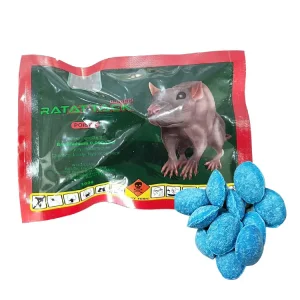
  • Urban Rodent Vectors (Rattus norvegicus & Rattus rattus): Rapid urbanization and subterranean utility networks (subways, underground commercial complexes) create ideal harbors for Norway rats. Second-generation single-feed anticoagulants (SGARs) such as Brodifacoum and Bromadiolone block baits are essential to overcome bait shyness and achieve fast population suppression.
  • Flies & Mosquitoes (Culex pipiens & Aedes albopictus): Urban heat islands enable year-round mosquito breeding in basement sumps and high-rise drainage systems. Larvicides like Temephos 1% SG offer targeted aquatic vector control without disrupting civic water infrastructure.

2. Regulatory Framework & Compliance (K-REACH & MFDS)

Importing public health chemicals into South Korea requires stringent adherence to national regulations. Korea's Chemical Control Act and Consumer Chemical Products and Biocides Safety Act (K-BPR) demand absolute chemical purity, standardized Active Ingredient (AI) assay verification, and detailed toxicological dossiers. As a direct chemical synthesis factory and supplier, our products are engineered to meet precise analytical grade purity levels, facilitating seamless registration and authorization for commercial importers, government municipal tenders, and regional distributors across Korea.

Advanced Manufacturing & Chemical Synthesis Superiority

Leveraging China's Premier Chemical Industrial Clusters for High-Precision Formulations Delivered to Korea

Micro-Encapsulation & EW Tech
Our Emulsion in Water (EW) and Suspension Concentrate (SC) formulation lines eliminate toxic organic solvents (VOCs), ensuring low odor and high stability—ideal for indoor applications in Seoul's commercial food service zones and residential complexes.
Precision Molecular Assay QC
Utilizing High-Performance Liquid Chromatography (HPLC) and Gas Chromatography (GC), every production batch undergoes strict quality controls to ensure active ingredient variance remains below ±0.1%, ensuring targeted lethality without over-application.
Weather-Resistant Matrices
Korea experiences extreme seasonal variations, from humid monsoonal summers to freezing winters. Our paraffin-wax block rodenticides and UV-stabilized gel baits resist melting up to 60°C and maintain palatability under severe frost.

Localized Application Scenarios Across South Korea

Deploying public health pest control chemicals in Korea demands specific application strategies adapted to regional infrastructure and economic activities:

A. Metropolitan Logistics Hubs & Grain Silos (Incheon & Busan)

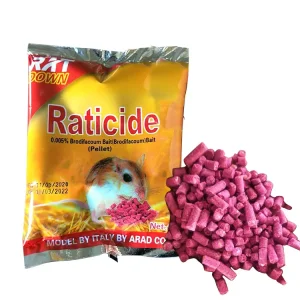
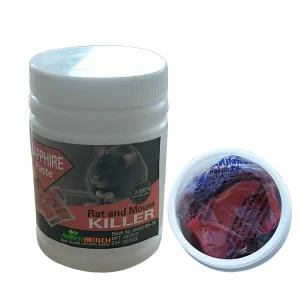
Global shipping ports receive vast quantities of agricultural imports. Grain stores are highly susceptible to rodent invasion and stored product insects. The deployment of Brodifacoum 0.005% Gel Raticide and Rice-Shape Bait Formulations inside perimeter bait stations creates an impenetrable barrier against rat colony establishment, preventing millions of dollars in commodity contamination.

B. Livestock & Agricultural Belts (Jeollanam-do, Gyeongsangbuk-do)

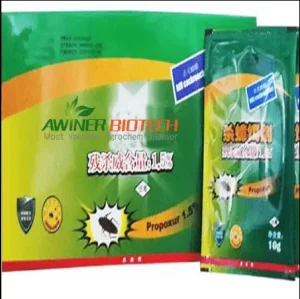
Intensive poultry and swine farms face persistent fly infestation (Musca domestica) and darkling beetle outbreaks. Utilizing Thiamethoxam 1% + Tricosene 0.1% Fly Attractant Bait provides target-specific suppression by combining systemic neonicotinoids with sex pheromones. This drastically lowers adult fly populations while mitigating pesticide runoff into local rice paddies.

C. Urban Hospitality & Smart Commercial Complexes (Seoul & Gyeonggi Province)

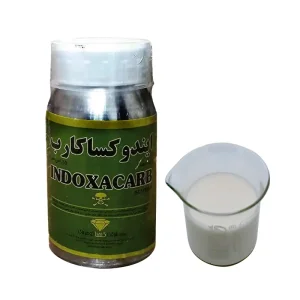
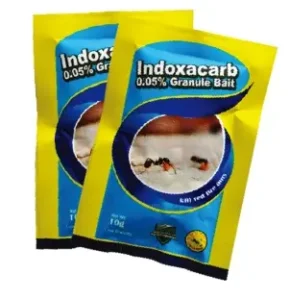
South Korea’s stringent food sanitation laws require commercial kitchens and restaurants to maintain zero-pest tolerance. Non-sprayable gels such as Indoxacarb 0.05% Cockroach Bait Gel provide low-toxicity bio-efficacy. Indoxacarb operates via metabolic activation within the pest's gut, offering continuous cascade-effect kill throughout cockroach harborages without contaminating food preparation surfaces.

Partner with China’s Leading Biocide Manufacturer for Korea

We provide full technical documentation, COA, MSDS, and custom OEM/ODM packaging featuring bilingual Korean-English labeling for rapid customs clearance.

Request Korea Market Procurement B2B Quote

Company Overview & Manufacturing Legacy

Awiner Biotech — Pioneering High-Performance Public Health Biocides Since 2006

Strategic Industrial Base & Direct Supply Chain

Awiner Biotech was founded in 2006, located in the north of China—Shijiazhuang, Hebei Province. The city is strategically close to our capital Beijing, ensuring fast logistics, efficient export access through Qingdao and Tianjin ports, and convenient international communication.

Awiner Biotech is committed to high-level research, state-of-the-art production, and global distribution of advanced agrochemicals. Our comprehensive product portfolio covers broad-spectrum pesticides, selective herbicides, biological fungicides, plant growth regulators, and dedicated high-potency public health pesticides engineered for global health initiatives and urban sanitary pest management.
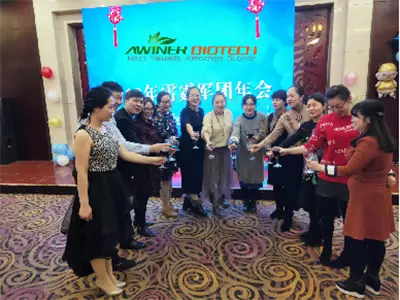
Awiner Biotech Global Footprint and Manufacturing Hub
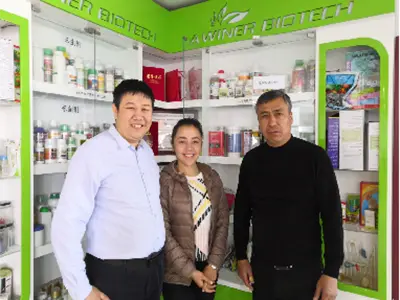
Awiner Biotech International Exhibitions and Client Market Survey

Our Global Reach, Exhibitions & Field Market Surveys

Up to now, we have won trusted long-term partnerships and enterprise customers across major global markets including South Korea, Iraq, Iran, Afghanistan, Pakistan, India, Libya, Syria, Turkey, Yemen, Ukraine, Russia, Kazakhstan, Uzbekistan, Chile, Bolivia, Mexico, Brazil, Paraguay, Nigeria, Djibouti, Rwanda, Somalia, Malaysia, Cambodia, Nepal, Myanmar, and beyond.

International Exhibitions: Our enterprise actively participates in global agrochemical and public health summits across Turkey, Iran, Pakistan, Nigeria, Russia, Cambodia, Malaysia, Uzbekistan, and other strategic chemical trade hubs.

Customer Field Market Inspections: We regularly dispatch field agronomy and chemical engineering teams directly to customer countries to conduct on-site market inspections. We analyze pest resistance levels, optimize specific formulation applications, solve technical hurdles, and ensure high operational performance for local distributors.

Complete Public Health Biocide Product Catalog

Full Spectrum Formulation Portfolio Ready for Bulk Procurement & Distribution in Korea
Frequently Asked Questions & B2B Procurement Insights

Technical, Regulatory, and Supply Chain Questions for Importing Biocides into South Korea
What chemical documentation do you supply to comply with South Korean K-REACH / MFDS regulations?
We provide complete B2B compliance dossiers for every shipment destined for South Korea. This includes Certificate of Analysis (COA) for active ingredient purity, GHS-compliant Material Safety Data Sheets (MSDS) in Korean and English, Batch Synthesis Reports, and toxicological stability certificates required by K-REACH and the Ministry of Food and Drug Safety.
Why are Brodifacoum and Bromadiolone block baits preferred for urban rodent control in Seoul?
Brodifacoum and Bromadiolone are potent second-generation anticoagulant rodenticides (SGARs). In high-density urban areas like Seoul, rodents have developed resistance to first-generation anticoagulants. Our wax block formulations require only a single feeding dose to achieve lethal efficacy, and their high paraffin content protects the active ingredient from degradation in damp sewer networks.
Can you supply custom private label (OEM) packaging in Korean for local PCO distributors?
Yes. We offer complete OEM/ODM service including custom packaging size (5g syringe gel tubes, 100g sachets, 1kg block buckets, 200L drums) with fully compliant Hangul printing, emergency contact information, and barcode integration according to South Korea's biocide labeling laws.
How does Temephos 1% SG function in municipal mosquito vector control projects?
Temephos is an organophosphate larvicide applied to non-potable water, urban storm drains, and standing water. It targets mosquito larvae (*Culex* and *Aedes* species) prior to adult emergence. Its slow-release sand granule (SG) carrier delivers sustained larvicidal concentration without harming beneficial adult aquatic organisms when applied at recommended dosages.
What is the delivery lead time from Shijiazhuang manufacturing plants to Korean ports?
Our factory in Shijiazhuang, Hebei Province is located close to Qingdao and Tianjin ports. Sea freight transit time to Incheon Port or Busan Port is exceptionally short, typically taking only 2 to 4 days after port vessel departure. Standard production lead times range from 10 to 15 days depending on packaging customisation.
How do you ensure formulation shelf-life stability during monsoonal humidity and freezing Korean winters?
All our liquid formulations utilize specialized emulsifier systems and anti-freezing agents (e.g., bio-glycols) tested under accelerated thermal storage trials (54°C for 14 days and cold storage at 0°C). Granular and wax bait matrices utilize moisture-impermeable barrier packaging to ensure a guaranteed 2-year shelf life.

Initiate Strategic Public Health Chemical Procurement Today

Connect directly with our chemical engineering team to evaluate technical specifications, request samples, or obtain bulk export quotations tailored to South Korea.

Send Inquiry Now