Botrytis cinerea, commonly known as gray mold or noble rot depending on agronomic context, represents one of the most destructive necrotrophic fungal pathogens affecting over 1,400 plant species worldwide. Responsible for over $10 billion in annual economic losses across global horticulture, commercial viticulture, and protected greenhouse agriculture, effective control of Botrytis cinerea is a cornerstone requirement for modern commercial crop production. Global agricultural distributors, commercial farm conglomerates, and municipal government procurement units increasingly turn to leading chemical synthesis hubs in China to secure high-efficiency, cost-effective, and resistance-managed fungicide formulations.
As a premier China Botrytis cinerea control supplier and manufacturer, specialized agrochemical enterprises like Awiner Biotech have evolved beyond basic active ingredient (AI) synthesis into high-end formulation physics, micro-encapsulation, and multi-target resistance management chemistry. Managing Botrytis requires an intricate understanding of airborne conidia dispersion, latent fungal infection windows during flowering, and rapid mutation genetics under intensive fungicide spray regimes.
The commercial imperative for international buyers lies in balancing maximum biological efficacy with strict maximum residue limits (MRLs) and environmental sustainability. Chinese manufacturing facilities now leverage fully integrated supply chains, starting from base petro-chemical precursors to advanced water-dispersible granules (WDG), suspension concentrates (SC), and microemulsions (ME). This comprehensive guide analyzes technical modes of action, manufacturing protocols, global compliance frameworks, and long-term procurement strategies for commercial crop protection against Botrytis cinerea.
Botrytis cinerea exhibits an exceptionally aggressive infection cycle driven by cell wall-degrading enzymes (CWDEs), reactive oxygen species (ROS) induction, and phytotoxic metabolite secretion. Because the pathogen readily develops resistance to single-site systemic fungicides, modern chemical control strategies engineered by Tier-1 Chinese manufacturers prioritize multi-site combination products and dual-active systemic formulas.
| Active Ingredient Class | FRAC Code | Target Enzyme / Mechanism | Systemic Activity | Resistance Risk Level |
|---|---|---|---|---|
| SDHI (e.g., Boscalid) | FRAC 7 | Succinate dehydrogenase inhibition in fungal mitochondrial Complex II | Translaminar & Acropetal Systemic | Medium to High |
| Strobilurins / QoI (e.g., Pyraclostrobin) | FRAC 11 | Inhibition of cytochrome bc1 complex at mitochondrial Qo site | Translaminar & Localized Systemic | High |
| Anilinopyrimidines (e.g., Cyprodinil) | FRAC 9 | Inhibition of methionine biosynthesis & cell wall enzyme secretion | Systemic & Vapor Action | Medium |
| Phenylpyrroles (e.g., Fludioxonil) | FRAC 12 | Disruption of osmotic signal transduction (MAP kinase pathway) | Contact & Residual Surface Shield | Low to Medium |
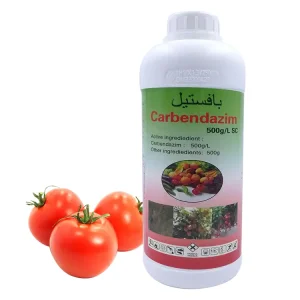
| Benzimidazoles / MBC (e.g., Benomyl, Carbendazim) | FRAC 1 | Inhibition of beta-tubulin assembly during mitosis | High Acropetal Systemic | High (Requires Tank-Mix) |
Advanced adjuvants engineered into WDG and SC formulations allow active molecules like Boscalid and Pyraclostrobin to cross the leaf cuticle, forming an internal reservoir resistant to heavy rain wash-off.
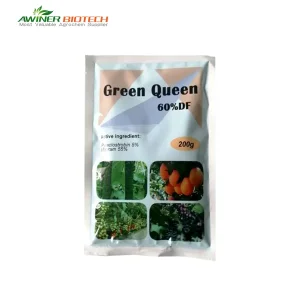
By blending complementary MOAs—such as Boscalid 25.2% + Pyraclostrobin 6.7% WDG—the chemical matrix targets both cellular respiration and energy synthesis simultaneously, blocking conidial germination.
Protective contact chemistry creates a micro-crystalline film on floral tissues and fruit epidermis, neutralizing fungal germ tubes prior to leaf pore penetration.
Modern agrochemical manufacturing in China has undergone a paradigm shift from traditional high-solvent EC (Emulsifiable Concentrates) to eco-friendly, highly bioavailable carrier systems. Below is the operational technology roadmap utilized in our state-of-the-art facilities for producing high-yield Botrytis cinerea control solutions.
Ultra-fine wet grinding reduces active ingredient particle sizes down to D90 < 2.0 microns, maximizing leaf coverage surface area.
Translating liquid suspensions into dust-free WDG particles with instant dispersion speed (< 30 seconds in standard water).
Incorporating organosilicone wetters and cuticular wax softeners to reduce droplet surface tension from 72 mN/m to < 28 mN/m.
Subjecting final packaged lots to 54°C accelerated storage for 14 days to guarantee 2-year shelf stability without phase separation.
Furthermore, integrated pest management (IPM) demands that synthetic chemistry operates in harmony with biological controls. Leading Chinese manufacturers are developing hybrid application protocols where low-residue synthetics (such as Fludioxonil or Cyprodinil) are rotated with biological agents (*Bacillus subtilis*, *Trichoderma harzianum*) during late-stage fruit development, minimizing chemical harvest residues below global EU and US EPA regulatory thresholds.
Global B2B agrochemical procurement requires navigating complex supply chain variables, raw material precursor pricing, and international shipping logistics. China maintains over 70% of global active ingredient synthesis capacity for key anti-botrytis actives including Boscalid, Benomyl, Carbendazim, and Chlorfenapyr intermediates.
Direct sourcing from Chinese factories bypasses secondary distributor markups, securing primary technical grade (TC) purity levels up to 98.5%+ directly at the synthesis reactor stage.
Export-grade packaging options engineered for tropical shelf stability: UN-certified fluorinated HDPE containers, soluble PVA water bags, and aluminum foil laminate barrier pouches.
Every commercial lot undergoes High-Performance Liquid Chromatography (HPLC) and Gas Chromatography (GC) validation to verify active concentration, wet-sieve residue, and emulsification stability.
Registering agricultural chemicals in target import destinations demands rigorous toxicological and ecotoxicological documentation. Premier suppliers provide end-to-end dossier packages compliant with FAO (Food and Agriculture Organization) and WHO standards.
| Compliance Dossier Component | Standard Applied | B2B Importer Strategic Advantage |
|---|---|---|
| GLP Efficacy & Residue Trial Data | OECD / EPA Guidelines | Accelerates local Ministry of Agriculture registration timelines by 6 to 12 months. |
| GHS SDS & Multilingual Labeling | GHS Revision 8 / CLP Protocol | Ensures immediate customs clearance compliance across Latin America, EU, CIS, and Africa. |
| 5-Batch Chemical Analysis | GLP Certified Laboratories | Guarantees active impurities remain strictly below international hazard safety thresholds. |
| Stability Under Tropical Conditions | CIPAC MT 46.3 (Zone IVb) | Verifies formulation physical integrity under extreme humidity and temperature (40°C / 75% RH). |
Awiner Biotech was founded in 2006, located in the north of China—Shijiazhuang, Hebei Province. The city is close to our capital Beijing, with highly convenient transportation and industrial connectivity. Awiner Biotech is deeply committed to researching, producing, and distributing agrochemicals, primarily specializing in high-grade pesticides, herbicides, fungicides, plant growth regulators, and public health pesticides.
Up to now, our dedication to quality and field agronomy support has earned us long-standing partnerships with commercial importers and agchem distributors across the globe. Our established market footprint spans across:
Iraq, Iran, Afghanistan, Pakistan, Syria, Turkey, Yemen, Kazakhstan, Uzbekistan.
Ukraine, Russia, and surrounding regional agricultural trade networks.
Chile, Bolivia, Mexico, Brazil, Paraguay.
Libya, Nigeria, Djibouti, Rwanda, Somalia.
India, Malaysia, Cambodia, Nepal, Myanmar.
Regular technical presence in Turkey, Russia, Nigeria, Uzbekistan, Pakistan, and client-site agronomy audits.
Our international business philosophy centers on conducting thorough customer market surveys. We visit our customers' home countries to conduct on-site market inspections, analyze real-world agronomic and fungal pressure challenges, optimize crop-specific application protocols, and evaluate product performance under local soil and climate conditions.
Effective Botrytis management relies on preventative sprays during key high-susceptibility growth stages: (1) Early to full bloom (when fungal spores infect senescing floral parts), (2) Pre-bunch closure in grapes, (3) Fruit veraison/touching, and (4) Pre-harvest protection based on the specific Pre-Harvest Interval (PHI) of the formulation.
Resistance management strategies include: rotating chemical classes with distinct FRAC codes (e.g., alternating Boscalid [FRAC 7] with Fludioxonil [FRAC 12]), limiting single-active applications to a maximum of 2 times per season, and utilizing co-formulated tank-mix products containing multi-site or dual-systemic actives.
WDG formulations eliminate organic solvent vapor hazards, offer zero phytotoxicity risks caused by solvent burn on delicate petals, provide superior physical stability during hot climate storage, and reduce freight costs due to 100% concentrated dry solid handling.
Yes. Our R&D facility customizes active concentrations, adjuvant packages, colorants, and particle sizes tailored to client specifications, regional regulatory limits, and specific target crop profiles.
Botrytis cinerea thrives in relative humidity above 90% and temperatures between 15°C and 25°C. High-performance surfactants in our formulations lower surface tension to ensure rapid leaf film formation before ambient moisture triggers spore germination.
We supply complete Dangerous Goods (DG) documentation, including UN-certified packaging certificates, SDS in multiple languages, COA (Certificate of Analysis), Bill of Lading, and GLP-certified analytical assay reports.
 Awiner Biotech