Explore our industrial-grade, regulatory-compliant pesticides, herbicides, fungicides, and plant growth regulators manufactured in our state-of-the-art China chemical production hubs.
Cereal crops—including wheat (*Triticum aestivum*), maize (*Zea mays*), rice (*Oryza sativa*), barley (*Hordeum vulgare*), sorghum, and oats—form the absolute cornerstone of global food security. With the global population projected to reach 9.7 billion by 2050, maximizing yield per hectare while mitigating crop loss due to weed competition is a critical agronomic priority. Weeds compete directly with cereal crops for soil moisture, macro- and micronutrients, sunlight, and canopy spatial envelope, causing yield reductions ranging from 15% to over 60% if left unmanaged.
The global demand for **China cereal crop herbicide quotes and specialized manufacturing partner technical integration** has accelerated rapidly over the past decade. As global agricultural supply chains navigate raw material price volatility, stringent environmental regulations, and evolving weed resistance phenotypes, agrochemical importers, distributors, and large-scale farming enterprises require more than just commodity chemicals. They require technical clarity, reliable Active Ingredient (AI) supply stability, custom formulation engineering, and transparent manufacturing economics.
China produces over 70% of the world's agrochemical active ingredients. Selecting a direct synthesis and formulation partner in major industrial agrochemical hubs like Hebei Province provides international buyers with direct access to upstream chemical intermediates, reduced cost per hectare, advanced formulation stability (SC, WDG, OD, CS), and full international regulatory dossier support (FAO/WHO compliance).
Targeting broadleaf weeds (*Kochia*, *Chenopodium album*, *Sinapis arvensis*) and tough grassy weeds (*Avena fatua*, *Alopecurus myosuroides*, *Lolium spp.*) with selective pre- and post-emergence chemistries.
Managing aggressive broadleaf weeds and annual grasses (*Echinochloa crus-galli*, *Setaria spp.*) using high-selectivity HPPD inhibitors, Triazines, and Chloroacetanilides formulated for crop safety.
Preventing yield breakdown from sedges (*Cyperus difformis*) and resistant barnyard grass through specialized systemic and contact herbicidal regimes adapted to flooded or dry-seeded conditions.
Achieving total weed control while maintaining maximum crop safety requires a thorough understanding of the biochemical Mode of Action (MoA) classification specified by the Herbicide Resistance Action Committee (HRAC). China's leading agrochemical synthesis facilities utilize high-purity active ingredient synthesis coupled with advanced surfactant package integration to overcome target-site and non-target-site weed resistance.
| HRAC Group / MoA | Active Ingredient Examples | Primary Target Weed Spectrum | Cereal Crop Compatibility | Formulation Types |
|---|---|---|---|---|
| Group 2 (ALS Inhibitors) | Pyroxsulam, Florasulam, Thifensulfuron-methyl, Tribenuron-methyl | Broadleaf weeds (*Stellaria media*, *Mustard*), key annual grasses | Wheat, Barley, Triticale | WDG, SC, OF, WP |
| Group 1 (ACCase Inhibitors) | Clodinafop-propargyl, Pinoxaden, Fenoxaprop-P-ethyl | Selective grassy weeds (*Avena fatua*, *Phalaris minor*) | Wheat, Rye, Barley (with Safener) | EC, OD, EW |
| Group 27 (HPPD Inhibitors) | Mesotrione, Isoxaflutole, Tembotrione, Topramezone | Broadleaf weeds and difficult annual grasses (*Amaranthus*, *Chenopodium*) | Maize / Field Corn, Sorghum | SC, OD, WDG |
| Group 4 (Synthetic Auxins) | 2,4-D Acid/Ester/Amine, MCPA, Dicamba, Fluroxypyr-meptyl | Perennial and annual broadleaf weeds (*Convolvulus arvensis*, *Gallium aparine*) | Wheat, Barley, Maize, Sorghum | SL, EC, Low-Volatile Ester |
| Group 5 (PS II Inhibitors) | Atrazine, Simazine, Metribuzin, Isoproturon | Pre-emergence grass & broadleaf control, synergistic combination partner | Maize, Sorghum, Select Wheat varieties | SC, WP, WDG |
Modern cereal farming requires formulations that perform reliably across diverse environmental conditions. Standard emulsifiable concentrates (EC) are increasingly replaced by safer, environmentally stable, and high-bioavailability technologies:
Milled down to sub-micron particle sizes (1–3 microns), offering superior leaf canopy coverage, rainfastness, and prolonged residual activity without organic solvent phytotoxicity risks.
Dust-free, highly concentrated dry flowable formulations that dissolve rapidly in water tanks. Excellent shelf-life stability under extreme tropical or arid storehouse conditions.
Co-formulating active ingredients with crop safeners (such as Cloquintocet-mexyl for wheat or Benoxacor / Mefenpyr-diethyl for corn/barley) accelerates herbicide metabolic detoxifying pathways within the crop while leaving target weeds vulnerable.
China’s crop protection industry has transitioned from high-volume basic chemical production to advanced, environmentally compliant, highly integrated chemical manufacturing. Strategic chemical synthesis clusters located in northern China benefit from direct pipelines to basic petrochemical and chlorine-alkali raw materials, automated multi-stage reaction vessels, and closed-loop environmental protection systems.
Founded in 2006, Awiner Biotech is located in Shijiazhuang, Hebei Province, northern China—strategically adjacent to China's capital, Beijing, with seamless logistical access to Tianjin and Qingdao deep-water container ports. For nearly two decades, Awiner Biotech has dedicated its resources to the research, development, formulation synthesis, and global distribution of professional agricultural chemicals.
Specializing comprehensively in herbicides, insecticides, fungicides, plant growth regulators (PGR), and public health vector controls, Awiner Biotech operates rigorous quality assurance protocols from raw technical material (TC) testing to final product packaging inspections.
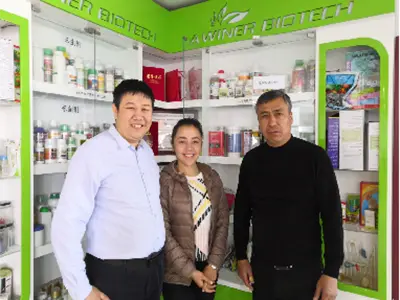
Awiner Biotech's dedicated manufacturing facilities adhere to strict environmental safety standards and ISO-certified quality management protocols.
Weed management strategies cannot adopt a "one-size-fits-all" approach. Microclimates, soil pH, organic matter content, tillage practices, and crop rotation schedules vary greatly across global agricultural zones. Below is an agronomic framework tailored to key cereal-growing regions served by Chinese chemical exports:
Primary Markets: Iraq, Iran, Afghanistan, Pakistan, Syria, Yemen, Libya, Djibouti, Somalia.
Key Challenges: Severe water stress, high temperatures, alkaline soils rapid active ingredient breakdown, hard-to-wet leaf cuticles.
Agronomic Solutions: Oil Dispersions (OD) and specialized surfactant-loaded SC formulations (e.g., Clodinafop-propargyl + Safener) ensuring systemic absorption despite thick waxy plant cuticles.
Primary Markets: Russia, Ukraine, Kazakhstan, Uzbekistan, Turkey.
Key Challenges: Massive land plots, short spring window for pre-planting treatment, heavy winter wheat herbicide carryover risks.
Agronomic Solutions: High-concentration tank-mixable WDG formulations (Tribenuron-methyl, Florasulam) allowing low water volume aerial and wide-boom tractor spraying.
Primary Markets: Brazil, Chile, Bolivia, Mexico, Paraguay, India, Malaysia, Cambodia, Myanmar, Nepal, Nigeria, Rwanda.
Key Challenges: High humidity, frequent rainfall (wash-off risk), year-round broadleaf weed seedbank viability, glyphosate-resistant weeds.
Agronomic Solutions: Synergistic dual-mode pre-emergence residuals (Atrazine + Mesotrione / Metolachlor) with quick-rainfast organosilicone adjuvants.
The global agrochemical manufacturing landscape is undergoing a profound paradigm shift driven by digital agriculture, drone application technology, precision chemistry, and biological integration. Chinese manufacturers are pioneering several key technological advances:
Development of specialized Ultra-Low Volume (ULV) spray liquids and anti-evaporation SC formulations engineered specifically for aerial application via agricultural UAV drones (e.g., DJI Agras, XAG systems).
Polymeric shell microencapsulation (CS) protecting volatile active ingredients against UV degradation, enabling controlled zero-order release over extended 45-to-60 day crop cycles.
Replacing toxic aromatic solvents (xylene, toluene) with biodegradable bio-based fatty acid methyl esters (FAME) and vegetable oil methyl esters, lowering ecotoxicity and occupational risk.
Combining low-dose synthetic herbicides with biostimulants, amino acid complexes, and microbial bio-inoculants to boost cereal crop abiotic stress tolerance during chemical exposure.
As a responsible agrochemical exporter adhering to Google’s E-E-A-T principles (Experience, Expertise, Authoritativeness, and Trustworthiness), Awiner Biotech ensures every batch of active ingredients and finished formulations meets stringent international benchmarks set by the Food and Agriculture Organization (FAO) and the World Health Organization (WHO).
We provide global importers with complete regulatory documentation required for registration with national Ministries of Agriculture:
We provide end-to-end private labeling services tailored to regional market preferences and language requirements:
Procuring cereal crop herbicides directly from Chinese factories requires clear evaluation of commercial trade parameters. Below are key recommendations to optimize your purchasing power and secure competitive quotes:
When requesting quotes, clearly indicate required active ingredient concentration (e.g., 97% TC raw vs. 480g/L SC finished product) and target crop application to receive precise pricing breakdowns.
Full Container Load (FCL) shipments significantly reduce per-unit ocean freight costs. Our logistics team coordinates sea freight, dangerous goods (DG) declerations, and multimodal land transport.
Agrochemical intermediate prices fluctuate based on seasonal raw material availability. Partnering with Awiner Biotech allows buyers to hedge price risks through strategic forward contracts.
Awiner Biotech was founded in 2006, located in the north of China—Shijiazhuang, Hebei Province. The city is close to our capital Beijing, and transportation is exceptionally convenient. Awiner Biotech is committed to the research, production, and distribution of high-performance agrochemicals, mainly dealing with pesticides, herbicides, fungicides, plant growth regulators, and public health pesticides.
Up to now, we have won trusted customers across 35+ countries, including: Iraq, Iran, Afghanistan, Pakistan, India, Libya, Syria, Turkey, Yemen, Ukraine, Russia, Kazakhstan, Uzbekistan, Chile, Bolivia, Mexico, Brazil, Paraguay, Nigeria, Djibouti, Rwanda, Somalia, Malaysia, Cambodia, Nepal, Myanmar, and beyond.
We actively participate in leading agrochemical trade exhibitions in Turkey, Iran, Pakistan, Nigeria, Russia, Cambodia, Malaysia, Uzbekistan, and other key agricultural nations. Furthermore, our senior technical experts regularly conduct field market inspections in our customers' countries—analyzing localized weed species, testing product performance under real-world soil conditions, and providing technical support directly to local farming communities.
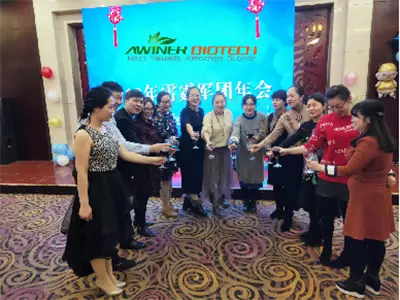
We welcome international partners to visit our chemical synthesis facilities in Hebei, China, while sending our agronomy teams overseas to solve real-world field challenges.
Direct answers to crucial technical, logistical, and commercial inquiries for global agrochemical buyers.
Explore our additional broad-spectrum crop protection solutions, fungicides, PGRs, and public health vector control formulations.
 Awiner Biotech