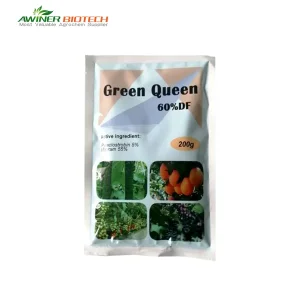
Direct supply of high-purity technical grade actives and advanced crop protection solutions from certified Chinese manufacturing facilities.
An in-depth evaluation of global sourcing patterns, resistance management strategies, and China's dominance in broad-spectrum fungicide manufacturing.
Cyprodinil (CAS No. 121552-61-2) has emerged as a cornerstone active ingredient in global integrated pest management (IPM) programs. As a high-efficiency anilino-pyrimidine fungicide, it exhibits exceptional preventative and curative control against key fungal pathogens, particularly Botrytis cinerea (gray mold), Venturia inaequalis (apple scab), and Monilinia spp. in high-value horticulture.
International agricultural buyers—spanning North America, the European Union, Latin America, and Southeast Asia—increasingly rely on China cyprodinil pesticide factories and manufacturers for reliable scale, cost-competitive technical grade (TC) material, and customized water-dispersible granule (WDG) formulations.
Driven by strict environmental compliance standards and vertical integration, leading Chinese agrochemical enterprises have optimized the synthesis of cyprodinil. Local manufacturers provide:
Understanding how Cyprodinil disrupts fungal cell metabolism at the molecular level to deliver long-lasting crop protection.
Cyprodinil belongs to the FRAC Group 9 (Anilino-pyrimidines). Its targeted mode of action involves inhibiting the biosynthesis of methionine, an essential amino acid required for fungal fungal growth and tissue penetration. By interfering with cystathionine beta-lyase, it arrests germ tube elongation and mycelial growth instantly.
Once applied to plant foliage, Cyprodinil demonstrates rapid acropetal (upward) systemic redistribution through xylem tissues, as well as translaminar movement across leaf surfaces. This guarantees total coverage, protecting newly emerging tissue and untreated underside leaves against rain-washout.
To widen the antimicrobial spectrum and combat single-site mutation risks, Chinese chemical producers excel at formulating dual-action blends. Combining Cyprodinil (methionine inhibitor) with Fludioxonil (osmotic signal transduction inhibitor) provides dual-site protection against Botrytis with zero cross-resistance.
Primary Target Pathogens: Botrytis cinerea (Gray Mold), Venturia inaequalis (Apple Scab), Monilinia fructicola (Brown Rot), Blumeria graminis (Powdery Mildew in Cereals), and Pyrenophora teres (Net Blotch).
Key Crops: Table & Wine Grapes, Pome Fruit (Apples, Pears), Stone Fruit (Peaches, Plums), Strawberries, Blueberries, Tomatoes, Cucurbits, and Small Grain Cereals.
Rigorous analytical testing according to FAO/WHO specifications ensures optimal batch-to-batch consistency and international compliance.
| Property / Parameter | Technical Grade (98% TC) Specification | Finished Formulation (50% WDG / WG) | Analytical Test Method |
|---|---|---|---|
| Active Ingredient Purity | ≥ 980 g/kg (98.0% Min) | 500 g/kg ± 25 g/kg | Reverse-Phase HPLC (Internal Standard) |
| Appearance | Off-white to light beige powder/granules | Free-flowing beige cylinder granules | Visual / Colorimetric Inspection |
| Moisture Content / Loss on Drying | ≤ 0.5% max | ≤ 1.5% max | Karl Fischer Titration / Oven Method |
| pH Range (1% aqueous solution) | 5.0 – 8.0 | 6.0 – 9.0 | CIPAC MT 75.3 Standard pH Meter |
| Wet Sieving Test (75µm sieve) | N/A | ≥ 99% passing through 75µm | CIPAC MT 185 Wet Sieve Analysis |
| Dispersibility & Suspensibility | N/A | Dispersibility: ≥ 90% | Suspensibility: ≥ 85% | CIPAC MT 174 / CIPAC MT 184 |
| Persistent Foaming | N/A | Maximum 20 mL after 1 min | CIPAC MT 47.2 Standard Test |
Delivering high-performance agrochemical solutions, tailored supply chain support, and rigorous regulatory compliance worldwide since 2006.
Awiner Biotech was founded in 2006, located in the northern chemical manufacturing heartland of Shijiazhuang, Hebei Province, China. Positioned in close proximity to the national capital Beijing, our facility benefits from robust multimodal transportation logistics, direct railway corridors, and fast access to Tianjin Port for efficient global export dispatch.
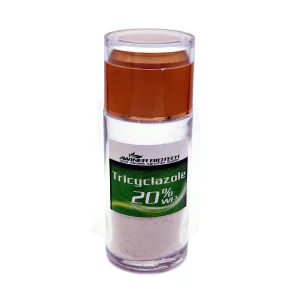
Awiner Biotech specializes in the comprehensive research, synthesis, formulation development, and international distribution of a broad range of agricultural chemicals. Our core focus spans advanced fungicides (such as Cyprodinil, Metalaxyl, Mancozeb, and Tricyclazole), high-potency insecticides, broad-spectrum herbicides, biological pest controls, and precision plant growth regulators.
Up to now, Awiner Biotech has successfully established strong commercial partnerships and secured product registrations across more than 30 nations worldwide, including:
Active Footprint: Iraq, Iran, Afghanistan, Pakistan, India, Libya, Syria, Turkey, Yemen, Ukraine, Russia, Kazakhstan, Uzbekistan, Chile, Bolivia, Mexico, Brazil, Paraguay, Nigeria, Djibouti, Rwanda, Somalia, Malaysia, Cambodia, Nepal, Myanmar, and beyond.
Our commitment extends far beyond direct exports. We regularly participate in international agrochemical exhibitions in Turkey, Iran, Pakistan, Nigeria, Russia, Cambodia, Malaysia, and Uzbekistan. Furthermore, our agronomists perform hands-on customer market surveys—visiting client fields directly to inspect crop performance, analyze regional disease strains, optimize spray timing, and resolve localized resistance issues.
A technical look at chemical engineering pathways, catalytic processes, and sustainable zero-emission manufacturing protocols.
Condensation of cyclopropanecarboxamidine hydrochloride with ethyl acetoacetate in the presence of sodium methoxide to synthesize the key heterocyclic pyrimidine intermediate with over 95% yield.
Chlorination using phosphorus oxychloride (POCl3) yields 4-chloro-6-methyl-2-cyclopropylpyrimidine, followed by targeted nucleophilic substitution with aniline under controlled heat and pressure.
Recrystallization using eco-friendly solvent systems (toluene/isopropanol) under automated temperature control to achieve high chemical purity (>98% TC) while eliminating hazardous structural isomers.
Co-milling technical cyprodinil with specialty lignosulfonate dispersants and wetting agents, followed by fluid-bed spray granulation for dust-free, instant-dispersing 50%/75% WDG formulations.
Why international distributors and formulators partner with specialized Chinese agrochemical manufacturers for Cyprodinil production.
| Evaluation Vector | Chinese OEM/ODM Factories (e.g., Awiner Biotech) | Multinational Innovator Brands | Commercial Value Impact for Buyers |
|---|---|---|---|
| Cost Structure | Highly competitive (Direct raw material synthesis & integrated supply chains) | Premium pricing (High overhead & patent recovery margins) | 35% – 50% margin improvement for regional importers and distributors. |
| Formulation Flexibility | Tailored multi-active mixtures (e.g., Cyprodinil + Fludioxonil / Tebuconazole / Difenoconazole) | Standardized, fixed single or dual-active branded mixtures | Enables local brand owners to solve localized disease resistance challenges. |
| Packaging & Labeling | Customized retail packaging (10g foil sachets up to 25kg fiber drums) with local language artwork | Fixed standardized corporate packaging design | Full compliance with local ministry regulations and buyer brand positioning. |
| Dossier & Registration Support | Complete ICAMA data, GLP toxicology reports, 5-batch analysis, and stability studies | Proprietary data locked within multi-national legal divisions | Accelerates national product registration timelines in target export markets. |
| Lead Time & Agility | Flexible batch sizes, fast production scheduling (15-25 days turnaround) | Long lead times tied to centralized multi-regional allocation planning | Enhanced ability to react swiftly to localized disease outbreaks and seasonal surges. |
Expert insights covering procurement specifications, application techniques, and regulatory compliance for international buyers.
Explore our wider range of high-efficiency insecticides, broad-spectrum fungicides, herbicides, and plant growth regulators manufactured for global delivery.
 Awiner Biotech