Gray mold, caused by the necrotrophic fungal pathogen Botrytis cinerea, represents one of the most economically devastating phytopathological threats in commercial viticulture worldwide. Responsible for annual global yield losses exceeding $2 billion across table grape, raisin, and fine wine sectors, this polyphagous fungus presents unique management hurdles due to its high genetic plasticity, prolific conidial production, and latent infection capabilities.
Botrytis cinerea infects grape clusters primarily during bloom (flowering), entering through senescent floral parts and remaining quiescent within immature berries. As sugar accumulation increases and organic acids drop during veraison, the fungus breaks dormancy, causing rapid cell wall degradation via pectinases and cellulases, resulting in catastrophic cluster rot right before harvest.
Over-reliance on single-site systemic fungicides has led to widespread multi-drug resistance (MDR) phenotypes. Strains exhibiting target-site mutations in the CYP51 gene (DMIs), SDHB gene (SDHIs), and Cytb gene (QoIs) are now prevalent in European, North American, and Asian vineyards, rendering conventional spray regimes inefficient.
Beyond physical volume loss, Botrytis contamination introduces laccase enzymes that oxidize phenolic compounds, destroying color stability and aromatic complexity in wine grapes. In table grapes, post-harvest nest rot during cold storage drastically reduces shelf life and commercial export value.
To overcome fungal mutation and guarantee field efficacy, modern grape gray mold management relies on co-formulated active ingredients and next-generation delivery tech. Chinese agrochemical manufacturing has evolved from basic technical active ingredient (TC) synthesis to high-end suspension concentrates (SC), water-dispersible granules (WDG), and nano-emulsions.
| Active Ingredient / Combination | FRAC Code | Primary Mode of Action | Formulation Type | Optimal Application Timing |
|---|---|---|---|---|
| Fludioxonil + Cyprodinil | FRAC 12 + 9 | Signal transduction disruption & Methionine biosynthesis inhibition | 62.5% WDG | 80% Bloom Off (BBCH 68) & Pre-Bunch Closure (BBCH 77) |
| Boscalid + Pyraclostrobin | FRAC 7 + 11 | Complex II Succinate Dehydrogenase & Complex III Qo site inhibition | 38% SC / 50% WDG | Veraison Berry Softening (BBCH 81) |
| Pyrimethanil | FRAC 9 | Inhibition of secretion of enzymes necessary for infection | 400g/L SC | Early Flowering & Touch Phase |
| Fenhexamid | FRAC 17 | 3-keto-reductase inhibition in C14-demethylation during sterol biosynthesis | 50% WDG | 3-4 weeks prior to harvest (BBCH 85) |
| Bacillus amyloliquefaciens (Strain QST 713 / D747) | FRAC BM02 | Bacterial lipopeptides disruption of fungal cell membranes | 1x10^10 CFU/g WP | Pre-harvest interval window (PHI 0 Days) |
Modern Chinese factories leverage polymeric microencapsulation (CS) technology. By controlling the release rate of actives such as Pyrimethanil or Boscalid, crop safety is enhanced while residual persistence on grape cuticles is extended by up to 35% under heavy rainfall conditions. Additionally, organosilicone surfactants are integrated to lower surface tension, ensuring complete canopy penetration into tight grape bunches.
The future of Botrytis management lies in double-stranded RNA (dsRNA) biopesticides. SIGS targets essential virulence genes in Botrytis cinerea (such as DCL1 and DCL2) without chemical residue or environmental toxicity. Chinese bio-manufacturing centers are currently scaling up fermentative production of dsRNA to make this eco-friendly technology commercially viable for global vineyards by 2026.
Viticulture microclimates dictate fungal epidemiology. A one-size-fits-all spray program fails under varying humidity, rainfall, canopy density, and cultivar susceptibility. Chinese pesticide manufacturers work closely with international distributors to engineer localized application protocols adapted to specific viticultural topographies.
Target Regions: Bordeaux (France), Willamette Valley (USA), East Coast China (Yantai/Shandong), Southern Chile.
Risk Profile: Frequent spring rains, fog, high relative humidity (>80%) during bloom and harvest.
Recommended Protocol: Preventative tank mixes at BBCH 65 (Fludioxonil + Cyprodinil WDG) combined with bio-fungicides (Bacillus amyloliquefaciens) near harvest to stay within strict EU MRL limits.
Target Regions: Turpan Basin (Xinjiang, China), Mendoza (Argentina), Central Valley (California), Murray-Darling (Australia).
Risk Profile: Low rainfall but high micro-humidity inside dense canopy under flood or drip irrigation.
Recommended Protocol: Targeted canopy spraying focused strictly on fruit zones during Bunch Closure (BBCH 77) and Berry Softening (BBCH 81) using systemic SDHI fungicides (Boscalid) combined with strict canopy leaf pulling.
Target Regions: Yunnan Plateau (China), Nashik (India), Northern Thailand, Rio Grande do Sul (Brazil).
Risk Profile: Summer monsoon overlapping with ripening phase, intense rain wash-off, rapid fungal spore proliferation.
Recommended Protocol: High-adhesion chemical formulations incorporating organosilicone penetrants and rainfast polymers. Dual-action combinations (Pyrimethanil + Triadimenol) every 10–12 days during wet spells.
China produces over 70% of the world's agrochemical technical active ingredients (TC). The integration of upstream basic chemical synthesis, specialized intermediate refining, and advanced formulation plants creates an unmatchable supply chain backbone for global crop protection distributors.
Chinese synthesis chemical parks manufacture core intermediates (e.g., 4,6-dimethylpyrimidin-2-amine for Pyrimethanil or 2-chloronictinic acid for Boscalid) domestically. This eliminates reliance on international raw material imports, insulating global clients from supply chain disruptions.
Massive multi-thousand-ton automated reactors allow Chinese original equipment manufacturers (OEMs) to offer competitive FOB/CIF unit pricing while maintaining strict ISO 9001 and ISO 14001 quality and environmental compliance standards.
From 100ml HDPI bottles for smallholders to 1000L IBC totes and customized aluminum foil bags for industrial aerial spraying, flexible automated filling lines ensure rapid order fulfillment within 15–20 days from order confirmation.
Navigating Maximum Residue Limits (MRLs), Import Tolerances, and Environmental Protection Agency (EPA/EU REACH) registrations is critical for viticulture chemical exports. Modern Chinese manufacturers provide complete GLP (Good Laboratory Practice) dossier packages and batch Certificate of Analysis (CoA) verifications.
Comprehensive toxicological, eco-toxicological, and physical-chemical studies produced by GLP-certified laboratories to assist international registration partners in acquiring ICAMA, EU REACH, and national pesticide registrations.
Every batch undergoes High-Performance Liquid Chromatography (HPLC) and Gas Chromatography-Mass Spectrometry (GC-MS) testing to verify active ingredient concentration, moisture content, particle size distribution (for WDG/SC), and absence of forbidden impurities.
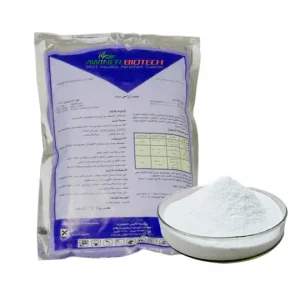
Awiner Biotech was founded in 2006, located in north of China—Shijiazhuang, Hebei Province. The city is close to our capital Beijing, transportation is convenient. Awiner Biotech is committed to research, produce and distribute agrochemicals, mainly dealing with pesticides, herbicides, fungicides, plant growth regulators, and public health pesticides.
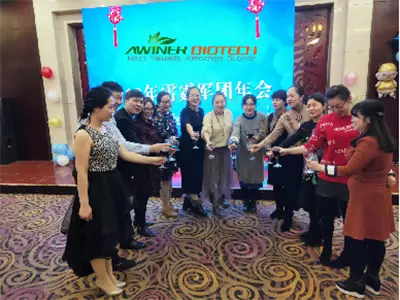
Up to now, we have won customers from Iraq, Iran, Afghanistan, Pakistan, India, Libya, Syria, Turkey, Yemen, Ukraine, Russia, Kazakhstan, Uzbekistan, Chile, Bolivia, Mexico, Brazil, Paraguay, Nigeria, Djibouti, Rwanda, Somalia, Malaysia, Cambodia, Nepal, Myanmar, and so on.
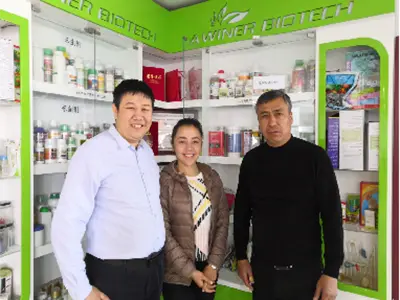
Our countries participating in exhibitions include Turkey, Iran, Pakistan, Nigeria, Russia, Cambodia, Malaysia, Uzbekistan, etc. We go directly to customer countries to conduct market inspections, analyze and solve agronomic challenges on site, understand localized product usage, and host customer visits at our state-of-the-art facilities in Hebei.
Detailed answers for viticulturists, agrochemical distributors, and commercial estate managers.
 Awiner Biotech