High-purity technical concentrates, synergistic defoliants, systemic fungicides, and broad-spectrum crop protection formulations optimized for global distribution.
Strategic analysis of chemical defoliation technology in modern industrialized cotton production and global B2B supply chains.
Modern commercial cotton farming relies overwhelmingly on spindle pickers and strippers. Mechanical harvesting requires total green leaf removal to eliminate fiber staining, lower trash content (leaf residue under 1.5%), prevent boll rot, and accelerate natural boll opening. Chemical defoliation is the critical operational link enabling uniform field drying and high-speed mechanical harvesting.
High-efficiency harvest aids do not merely shed leaves; they actively preserve High Volume Instrument (HVI) fiber parameters—specifically micronaire, staple length, and color grade (reflected by low leaf grade index). By triggering natural leaf petiolar abscission without desiccating leaves onto the stem, high-grade cotton maintains premium grade status in international spot markets.
Systemic defoliant tank mixes (such as Thidiazuron + Diuron or Thidiazuron + Ethephon) reduce picker field operation time by up to 35%, decrease fuel consumption per hectare, lower lint moisture content to below 8%, and eliminate secondary regrowth spikes that disrupt late-season harvesting schedules under unpredictable autumn frost windows.
| Active Ingredient / Mix | Mode of Action | Abscission Efficiency | Secondary Regrowth Control | Temperature Sensitivity Threshold | Recommended Application Window |
|---|---|---|---|---|---|
| Thidiazuron (TDZ) Pure 95% TC / 50% WP | Cytokinin mimic; triggers ethylene synthesis & petiolar abscission layer formation | 95% - 98% | Exceptional (Complete Regrowth Inhibition) | Requires average daily temp > 18°C | 60%–70% open bolls, green leaf canopy mature |
| Thidiazuron + Diuron (540g/L SC) | Dual-action: Hormone abscission + Photosynthetic Electron Transport Inhibitor | 96% - 99% | High (Synergistic physiological shock) | Effective down to 12°C–15°C | Cooler harvest conditions, dense canopy cotton |
| Ethephon 480g/L - 720g/L SL | Ethylene generator; forces accelerated boll dehiscence and maturity | 80% - 88% (Primarily boll opener) | Low (Does not inhibit terminal buds) | Requires temperature > 16°C | Late season boll ripening booster |
| Tribufos / Carfentrazone-ethyl | Contact herbicidal desiccant; rapid membrane damage | 85% - 90% (Risk of leaf sticking/burn) | Poor (Terminal buds remain active) | Low sensitivity to cool weather | Emergency freeze avoidance or quick desiccation |
Understanding how high-efficiency defoliants manipulate plant hormone pathways to induce rapid, clean leaf drop without leaf freezing or stem desiccation.
Thidiazuron (TDZ) acts as a synthetic phenylurea plant growth regulator that mimics cytokinin activity at low concentrations while stimulating ethylene synthesis in mature leaves. Upon foliar absorption, TDZ alters auxin transport within the leaf blade and petiole:
Combining Thidiazuron with low-dose Diuron overcomes the physiological limitations of single-component chemicals under suboptimal ambient conditions:
Why Chinese agrochemical manufacturing hubs provide unmatched cost-competitiveness, technical purity, and global export reliability.
China commands over 85% of global key intermediate synthesis capacity (such as phenyl isocyanate and 5-amino-1,2,3-thiadiazole). Complete vertical backward integration guarantees consistent raw material availability, zero intermediate supply-chain bottlenecks, and highly stable pricing for international B2B purchasers.
Modern Chinese manufacturing facilities utilize air-jet micronization systems to achieve ultrathin particle size distribution (D90 < 3.5 microns) in Thidiazuron 50% WP and 540g/L SC formulations. Fine particle sizing ensures optimal suspension stability (>95%), preventing nozzle clogging during high-speed tractor boom or aerial drone spraying operations.
High-capacity automated liquid filling and powder packaging lines handle everything from 100g foil pouches and 1L HDPE bottles to 200L drums and 1000L IBC totes. Flexible OEM/ODM customized branding and UN-certified dangerous goods (DG) export packaging meet all international shipping codes.
Tailored defoliation regimens for major cotton-growing regions based on climate, planting density, and harvesting equipment.
Planting System: High-density (180,000 to 220,000 plants/ha) drip-irrigated cotton under plastic mulch.
Defoliation Protocol: First application using TDZ 50% WP (150-220g/ha) + Ethephon 40% SL (600-900ml/ha) via unmanned aerial vehicles (UAVs) at 60% open bolls. Second application 7-10 days later to guarantee complete desiccation before machine stripping.
Result: Leaf defoliation rate >98%, boll opening rate >95%, zero leaf sticking, lint trash content below 1.2%.
Planting System: Large-scale rainfed cotton grown following soybean rotation in warm, humid conditions.
Defoliation Protocol: Tank mix of TDZ 540g/L SC (200-300ml/ha) + Diuron + oil-based adjuvant applied by broad-boom sprayers. High leaf vigor requires suppression of post-harvest regrowth prior to cotton stalk destruction.
Result: Controls aggressive terminal bud regrowth, prevents late-season boll rot in dense tropical canopies.
Planting System: Traditional furrow-irrigated medium-staple cotton facing rapid autumn temperature drop.
Defoliation Protocol: Temperature-tolerant dual formulations (Thidiazuron + Diuron 540g/L SC) applied early before temperatures dip below 15°C. Ensures rapid abscission layer initiation despite cold nights.
Result: Accelerates harvest maturity by 10-14 days, protecting crop value from early winter frosts.
Planting System: High-yield spindle picker fields requiring high micronaire retention and zero lint staining.
Defoliation Protocol: Low-dose sequential applications of TDZ WP mixed with organosilicone penetrants. Optimized spray droplet distribution (VMD 250-350 microns) guarantees canopy penetration down to lower fruiting branches.
Result: Maximizes first-pick yields, preserves fiber color grade 11/21, minimizes ginning cost penalties.
Innovations transforming defoliant synthesis, application efficiency, and environmental compliance.
Traditional tractor application uses 300-400 L/ha water volume. Modern drone spraying operates ultra-low volume (ULV) at 15-30 L/ha. China chemical engineering has developed anti-evaporation, drift-reducing SC and WDG defoliants that maintain perfect droplet dispersion and foliar retention at high concentrations without crystallization in drone nozzles.
Moving away from traditional EC (Emulsifiable Concentrates) containing aromatic hydrocarbons (xylene/toluene), modern Chinese factories focus on water-based SC (Suspension Concentrates), WDG (Water Dispersible Granules), and Micro-emulsions (ME). These zero-VOC formulations reduce chemical odor, enhance user safety, and lower shipping eco-tax burdens.
Standard Thidiazuron activity slows significantly below 18°C. Advanced bio-stimulants and nano-carrier surfactants integrated into next-gen defoliants stimulate active foliar uptake down to 10°C, extending the harvest window in northern cotton-growing latitudes.
Rigorous quality control processes and documentation support ensuring seamless chemical import and registration.
Every commercial batch undergoes rigorous High-Performance Liquid Chromatography (HPLC) testing to verify active ingredient content within ±0.5% of specification. Physical parameters—including wet sieving (<0.05% residue on 75μm sieve), suspensibility (>92%), persistent foaming, and pH range—are verified prior to shipment releasing.
To assist global importers with ministry of agriculture registrations, comprehensive technical dossiers are provided: GLP-accredited acute toxicity data, environmental fate studies, Certificate of Analysis (COA), Material Safety Data Sheets (MSDS/SDS), and FAO-spec chemical equivalence verification.
Complete handling of IMDG/IATA dangerous goods classifications, UN-approved drums and cartons, custom pallet wrapping, container moisture control, and flexible port departures from Qingdao, Tianjin, and Shanghai ports ensuring zero demurrage risk.
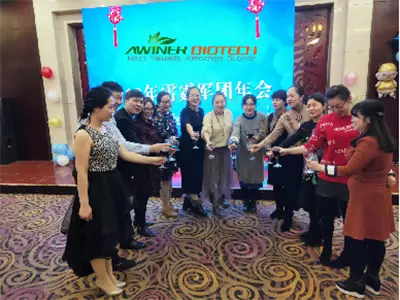
Awiner Biotech was founded in 2006, located in north of China—Shijiazhuang, Hebei Province. The city is close to our capital Beijing, transportation is convenient. Awiner Biotech is committed to research, produce and distribute agrochemicals, mainly dealing with pesticides, herbicides, fungicides, plant growth regulators, and public health pesticides.
Up to now, we have won customers from a wide range of international agricultural markets including:
International Exhibitions: Our representative countries participating in agrochemical exhibitions include Turkey, Iran, Pakistan, Nigeria, Russia, Cambodia, Malaysia, Uzbekistan, and more.
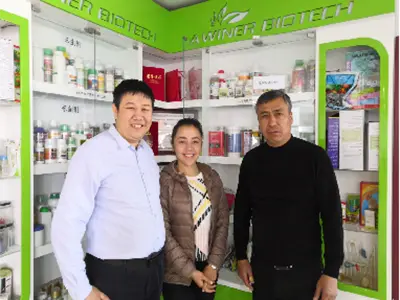
Customer Market Survey: We go directly to the customer's country to conduct field market inspections, analyze agronomic challenges, optimize localized product usage, and provide tailored chemical solutions. Customers also regularly visit our high-tech manufacturing center in Hebei.
Expert technical responses to key questions regarding cotton defoliant selection, application timing, tank mixing, and overseas ordering.
Explore our full line of specialized crop management, insect control, and agricultural active ingredients.
 Awiner Biotech