High-efficiency crop protection formulations synthesized and manufactured under ISO-certified laboratory and industrial standards.
Understanding the micro-environmental pathogen dynamics, economic thresholds, and global losses caused by Botrytis cinerea in controlled environment agriculture (CEA).
Botrytis cinerea is a necrotrophic fungal pathogen capable of infecting over 1,400 plant species. In protected crop production—such as solar greenhouses, Venlo glass structures, and high tunnels—gray mold attacks stems, leaves, flowers, and fruit, causing rot, structural collapse, and catastrophic post-harvest losses exceeding $10 billion annually worldwide.
Greenhouse environments foster high humidity (Relative Humidity > 85%) and moderate temperatures (15°C to 25°C), creating ideal condiopore germination conditions. Free moisture on leaf tissues for as few as 4 to 8 hours allows conidia to form appressoria and penetrate plant cuticles via cell-wall degrading enzymes (CWDEs).
Due to its high genetic variability, rapid reproduction cycle, and abundant sporulation, B. cinerea rapidly develops resistance to single-site targeted fungicides, including traditional Benzimidazoles (FRAC 1), Dicarboximides (FRAC 2), and Strobilurins (FRAC 11), necessitating sophisticated rotational active management.
A multi-faceted agronomic protocol combining environmental regulation, chemical intervention, and biological bio-rationals for zero-residue commercial production.
Managing the greenhouse microclimate is the primary defensive line against conidial germination and spore dispersal:
Eliminating multi-drug resistance requires strategic sequencing across distinct FRAC mode-of-action classifications:
| Active Ingredient | FRAC Code | Mode of Action | Optimal Dosage Form | Preventive / Curative | Residue & Pre-Harvest Interval (PHI) |
|---|---|---|---|---|---|
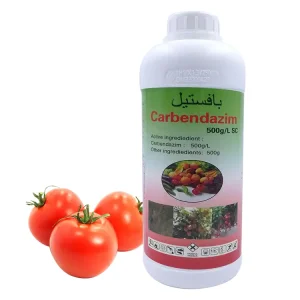
| Carbendazim | FRAC 1 | Beta-tubulin assembly inhibitor in mitosis | 50% SC / 50% WP | Preventive Systemic | 7-14 Days (Crop Dependent) |
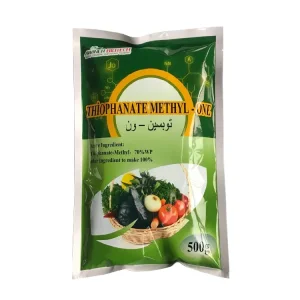
| Thiophanate-Methyl | FRAC 1 | Mitotic precursor conversion to carbendazim | 70% WP / 500g/L SC | Preventive & Early Curative | 7-10 Days |
| Pyrimethanil | FRAC 9 | Methionine biosynthesis inhibition & enzyme release | 400g/L SC / 70% WDGTranslaminar & Vapor Activity | 3-5 Days | |
| Fludioxonil | FRAC 12 | Osmotic signal transduction protein kinase disruption | 250g/L SC / 50% WDG | Protectant Contact | 1-3 Days |
| Picoxystrobin | FRAC 11 | QoI mitochondrial respiration cytochrome bc1 block | 22.5% SC | Systemic Preventive | 7-14 Days |
Unrivaled economies of scale, integrated chemical synthesis clusters, strict ISO regulatory compliance, and custom private-label solutions for global agricultural distributors.
China synthesizes over 70% of the world's agrochemical technical active ingredients (TC). Chemical industrial parks in Hebei and neighboring maritime provinces ensure seamless availability of raw intermediate precursors, eliminating supply chain friction and offering 30-40% cost efficiency over European sources.
Modern Chinese manufacturing facilities have migrated from traditional dust-prone Wettable Powders (WP) toward eco-friendly, high-suspension technologies: Suspension Concentrates (SC), Water Dispersible Granules (WDG/DF), and Micro-emulsions (ME) featuring sub-micron particle distributions (D90 < 3-5 µm).
Leading factories like Awiner Biotech offer complete OEM/ODM customization—ranging from 10ml foil sachets and 100ml HDPE bottles to 200L industrial drums—packed with anti-counterfeiting holographic seals, UN-certified hazardous materials shipping, and custom COA compliance.
Sourcing directly from verified Chinese agrochemical original equipment manufacturers (OEMs) guarantees adherence to standard FAO/WHO chemical specs, providing GLP (Good Laboratory Practice) registration dossiers, CIPAC analytical methods, and full batch traceability from batch reactor to destination port.
Specific field application parameters for major high-value greenhouse vegetable crops under varying geographic and climatic conditions.
Primary Vulnerability: Blossom end decay and stem drop lesions caused by infected senescent flower petals adhering to fruit stems.
Primary Vulnerability: High humidity canopy collapse, lesion development on stem nodes, and soft fruit end rot.
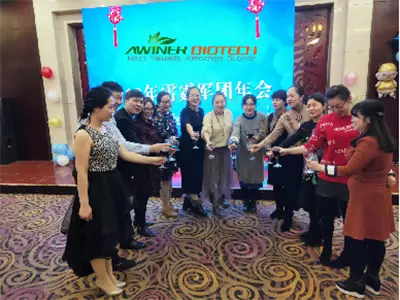
Awiner Biotech was founded in 2006, located in the north of China—Shijiazhuang, Hebei Province. The city is strategically positioned close to China's capital, Beijing, ensuring convenient logistics and transport infrastructure.
Awiner Biotech is deeply committed to researching, producing, and distributing premium agrochemicals worldwide. We specialize in comprehensive portfolio solutions across pesticides, herbicides, fungicides, plant growth regulators, and public health products.
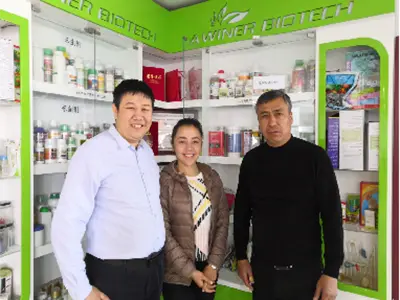
Up to now, we have established robust commercial partnerships with clients across over 30 countries: Iraq, Iran, Afghanistan, Pakistan, India, Libya, Syria, Turkey, Yemen, Ukraine, Russia, Kazakhstan, Uzbekistan, Chile, Bolivia, Mexico, Brazil, Paraguay, Nigeria, Djibouti, Rwanda, Somalia, Malaysia, Cambodia, Nepal, Myanmar, and more. Our technical team regularly conducts localized field investigations, analyzing crop protection challenges directly alongside regional agricultural importers.
Emerging technologies shaping the future of greenhouse disease suppression over the next decade.
Integration of IoT climate sensors and AI algorithms that compute dew-point proximity in real time, triggering automated micro-ventilation or preventative thermal fogging hours before spore release can occur.
Development of targeted sprayable RNA interference (RNAi) molecules designed to silence specific essential genes in Botrytis cinerea, operating with zero chemical residue profiles and infinite selectivity.
Autonomous compact indoor drones capable of executing targeted sub-canopy micro-dosing spray routines, lowering chemical consumption by up to 40% while ensuring complete leaf coverage.
Expert technical answers to high-intent questions regarding gray mold management, chemical resistance, and commercial sourcing from Chinese manufacturers.
Explore our complete range of certified insecticides, fungicides, and plant growth regulators available for worldwide bulk distribution.
 Awiner Biotech