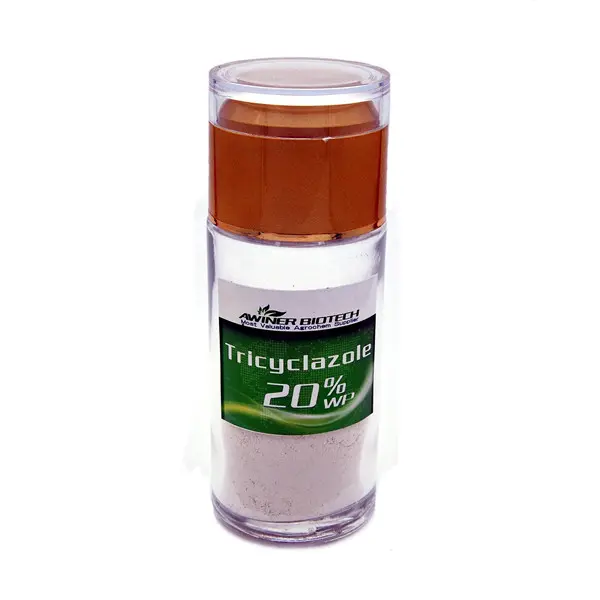
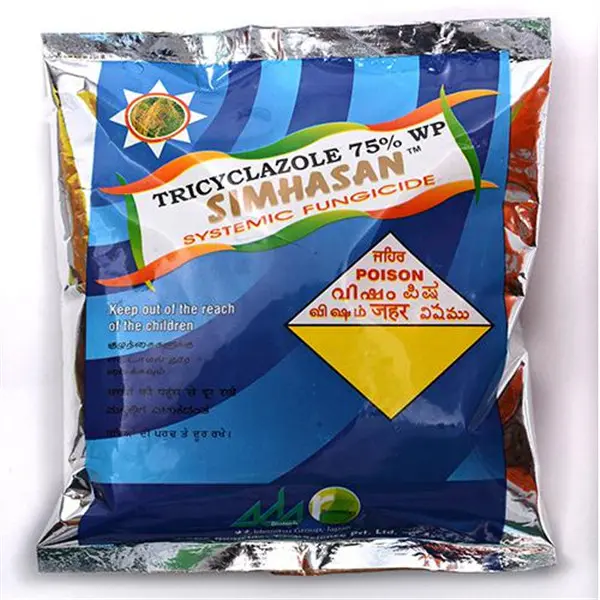
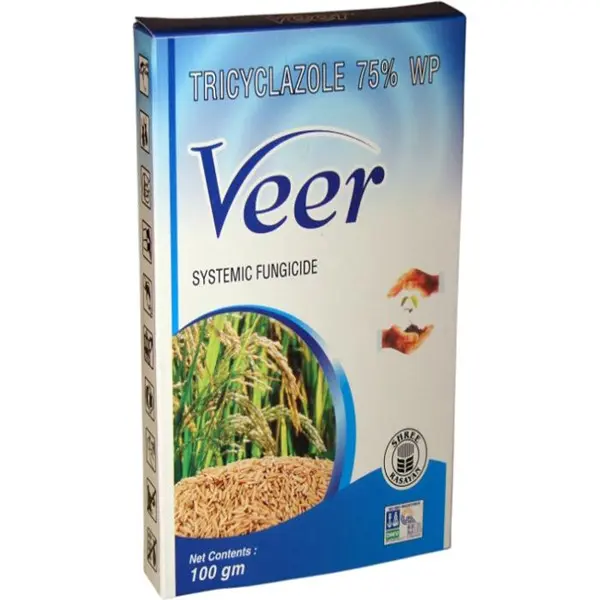
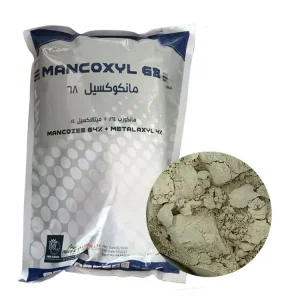
Tricyclazole is a special fungicide for controlling rice blast, belonging to thiazoles. The mechanism of bactericidal action is mainly to inhibit the formation of attached melanin, thereby inhibiting spore germination and adhesion sporulation, preventing pathogen invasion and reducing the production of rice blast fungus spores.
Classification
Fungicide
Other Names
tricyclazole
EINECS No
255-559-5
State
Powder
CAS No
41814-78-2
MF
C9H7N3S
Purity
98% TC, 40%SC, 75%WP/DF
Appearance
White or Light Beige Crystal
Boiling Point (°C)
501.1
Application
General Properties & Overview
Tricyclazole has strong systemic properties and can be quickly absorbed by rice roots and leaves and transported to various parts of rice plants. Generally, the absorbed amount of rice plants can reach saturation 2 hours after spraying. The product has 75% wettable powders.
Application Methods
Tricyclazole is mainly used for prevention and protection, and it is best used before the onset.
Spraying Method: Prevention and control of nursery: 50-75 grams of 20% wettable powder in the seedlings 3-4 leaf stage or 5 days before transplanting, spray on water.
Leafhopper & Ear Neck Control: In the early onset of Astragalus membranaceus or from the end of the booting stage to the beginning of the earing stage, spray water with 75-100 g of 20% wettable powder. When the panicle neck is severe, repeat application once every 10-14 days.
Seedling Dipping Method: Mix 20% tricycloazole wettable powder 750 times liquid in a bucket or shallow pit lined with plastic film. Bundled picked seedlings are immersed in the liquid for about 1 minute, then piled up for 0.5 hours before planting.
Instructions
Control of rice leafhoppers: In the 3-4 leaf stage of the seedlings, use 50-75 grams of WP per acre with 40-50 kg of water, and spray regularly. Alternatively, soak seeds with 0.1% active ingredient for 48 hours before germination for seed dressing.
Prevention and control of rice panicle stalks: At the end of the rice booting stage or the beginning of the break, spray evenly with 20% wettable powder at 75-100 grams.
Precautions & Safety Guidelines
Soaking seeds or seed dressing slightly inhibits sprouts but does not affect later growth.
When controlling the stem and stalk, the first medication must be applied before heading.
Do not mix with seeds, feed, or food. In case of poisoning, rinse with water or induce vomiting; there is no specific antidote.
Exhibits a certain level of fish toxicity; pay close attention to safety near aquatic areas and ponds.
Frequently Asked Questions
What primary disease does Tricyclazole target?
Tricyclazole is a specialized systemic fungicide belonging to the thiazole group, primarily formulated for preventing and controlling rice blast disease.
What is the mechanism of action of Tricyclazole?
It acts mainly by inhibiting the formation of attached melanin. This process prevents spore germination and adhesion sporulation, effectively blocking pathogen invasion and reducing spore production.
How fast is Tricyclazole absorbed by the crop?
Tricyclazole exhibits strong systemic properties and is quickly absorbed through rice roots and leaves. Absorption typically reaches saturation within 2 hours after application.
When is the best time to apply Tricyclazole for controlling rice panicle blast?
It is best used preventatively. For panicle stalks, application must be done at the end of the booting stage or the beginning of the break stage, strictly prior to heading.
Does seed soaking with Tricyclazole affect sprout growth?
Soaking seeds or seed dressing may slightly inhibit initial sprouts temporarily, but it will not affect the later development and growth of the crop.
What environmental precautions should be kept in mind during handling?
Avoid applying near fish ponds as the compound possesses toxicity to aquatic life. Ensure it is stored away from food, feed, and seeds.
 Awiner Biotech