Lepidopteran pests belonging to the genus Spodoptera—most notably Spodoptera frugiperda (Fall Armyworm) and Spodoptera exigua (Beet Armyworm)—represent one of the most critical threats to global food security. Capable of consuming over 80 distinct plant species including maize, rice, sorghum, sugarcane, cotton, and high-value horticultural crops, a untreated Spodoptera infestation can defoliate entire crop fields within 48 to 72 hours.
To achieve ultra-fast knockdown ("How to kill Spodoptera fast"), commercial growers and agricultural enterprise buyers can no longer rely on conventional single-mode pyrethroids or organophosphates due to widespread target-site resistance (such as mutations in the acetylcholinesterase and voltage-gated sodium channel genes). Fast action requires novel chemical classes that disrupt metabolic energy generation or neuromuscular transmission within minutes of ingestion or contact.
Adult moths travel up to 100 km per night on wind currents. Rapid reproduction vectors mean early detection must be paired with immediate chemical intervention.
Larvae burrow deep into corn whorls and plant stems, shielding them from surface contact sprays. High-translaminar systemic solutions are imperative.
Over-reliance on single actives leads to field resistance within 3-4 generations. Formulators must leverage dual-active tank mixtures to manage IRAC groups.
Achieving rapid death of Spodoptera requires precise selection of active ingredients (AIs) that bypass metabolic detoxification mechanisms. Below is a scientific breakdown of top-tier active chemicals supplied directly by leading Chinese chemical synthesis plants.
| Active Ingredient | IRAC Mode of Action | Primary Speed Mechanism | Recommended Formulations | Target Application |
|---|---|---|---|---|
| Chlorfenapyr | Group 13 (Uncoupler of oxidative phosphorylation) | Pro-insecticide converted by cellular enzymes; halts ATP production causing quick paralysis within 4 hours. | 360g/L SC, 240g/L SC, 96% TC | Corn whorl application, high-density leaf vegetable defense. |
| Emamectin Benzoate | Group 6 (GABA & glutamate-gated chloride channel activators) | Irreversible nerve stimulation; larva stops feeding within 2 hours, dead in 24-48 hours. | 5% WDG, 1.9% EC, 70% TC | Integrated pest management (IPM) for fruit borers & armyworms. |
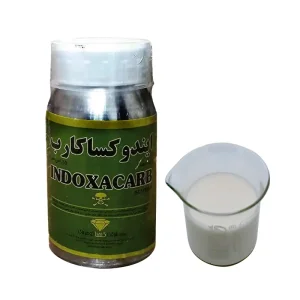
| Indoxacarb | Group 22 (Voltage-dependent sodium channel blockers) | Blocks sodium influx; rapid drop-off effect and cessation of crop feeding. | 150g/L SC, 30% WDG | Cotton leafworm, beet armyworm in soybean and vegetables. |
| Profenofos + Lambda-Cyhalothrin | Group 1B + Group 3A (Organophosphate + Pyrethroid synergism) | Direct contact knock-down effect combined with deep vapor action. | 300g/L + 15g/L EC mixture | Emergency knockdown during severe adult moth & larval outbreaks. |
| Pymetrozine | Group 9B (Chordotonal organ TRPV channel modulators) | Immediate feeding inhibition; ideal for controlling complex co-infestations. | 25% WP, 50% WDG | Sucking pest & secondary caterpillar suppression. |
Among all available solutions, Chlorfenapyr 360g/L Suspension Concentrate (SC) has emerged as the premier chemical tool for global buyers. Because Chlorfenapyr is a pro-insecticide, its toxicity is activated inside the insect's midgut via cellular monooxygenases. Once activated, it uncouples oxidative phosphorylation in the mitochondria, cutting off cellular respiration. Pests cannot generate ATP, leading to rapid muscular paralysis, immediate cessation of feeding, and death. Furthermore, because it does not share cross-resistance with pyrethroids, it effectively controls organophosphate-resistant strains.
China produces over 70% of the world's agrochemical technical grade (TC) active ingredients and formulated pesticide solutions. Sourcing Spodoptera control chemicals directly from Chinese manufacturers grants overseas distributors, government procurement departments, and large agro-holdings distinct structural advantages:
Integrated raw material synthesis lowers production cost per metric ton. Direct quotes remove intermediary margins, saving buyers 15% to 35% on procurement.
Modern Chinese factories utilize high-shear fluid bed granulators and laser particle size analyzers for SC, WDG, and EW formulations, delivering unmatched field stability.
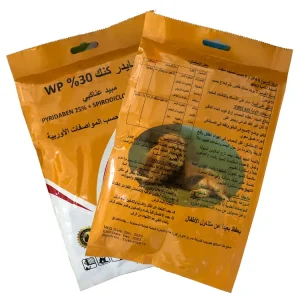
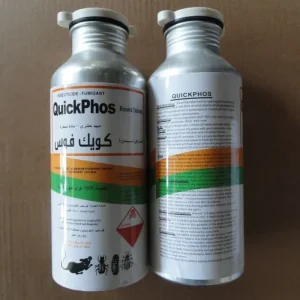
Fully customized bottle molds, multi-language label designs (Arabic, Russian, Spanish, French), and UN-certified hazardous materials packaging (COEX, HDPE, ALU).
Leading Chinese manufacturers implement strict Quality Assurance (QA) protocols alignment with FAO/WHO specifications. Active content is verified via High-Performance Liquid Chromatography (HPLC) and Gas Chromatography (GC). Physical parameters—such as suspension percentage (>90%), wet sieve residue (<0.5%), and emulsion stability—are tested under accelerated storage conditions (54°C for 14 days) to guarantee shelf life across tropical export destinations.
Navigating agricultural chemical imports requires strict adherence to local registration decrees and environmental compliance protocols. Professional Chinese factories serve as full-service supply partners rather than simple chemical vendors.
Provision of complete dossier packages including GLP toxicological reports, environmental fate studies, physical-chemical spectra (NMR, MS), and efficacy trials for ministry approvals.
Expert handling of Class 6.1 and Class 9 hazardous goods exports. Seamless coordination with international shipping lines, ensuring compliant dangerous goods (DG) declerations at Qingdao, Tianjin, and Shanghai ports.
Raw material hedging strategy ensures firm price stability during market volatility, protecting foreign buyers from abrupt price spikes during peak agricultural seasons.
To maximize spray efficacy and achieve rapid kill rates, application timing and water carrier calibration are just as critical as the chemical selection itself.
| Geographic Region | Dominant Crops | Key Pest Species | Field Application Guidelines |
|---|---|---|---|
| Southeast Asia (Vietnam, Myanmar, Cambodia) | Maize, Rice, Cassava | Spodoptera frugiperda | Apply Chlorfenapyr 36SC via low-volume aerial drone or backpack sprayer early morning or dusk when larvae emerge from whorls. Add organosilicone adjuvant (0.05%) for leaf penetration. |
| Middle East & Central Asia (Iraq, Iran, Uzbekistan) | Cotton, Tomato, Sugarbeet | Spodoptera exigua | Rotate Indoxacarb 150g/L SC with Profenofos + Lambda-Cyhalothrin EC. Maintain spray solution pH between 5.5 and 6.5 to prevent alkaline hydrolysis. |
| South America (Brazil, Paraguay, Bolivia) | GM Soybeans, Corn, Cotton | Spodoptera eridania / frugiperda | High-pressure tank mixes combining Emamectin Benzoate 5% WDG with chitin synthesis inhibitors. Target 1st and 2nd instar larvae before deep stem boring occurs. |
| Sub-Saharan Africa (Nigeria, Rwanda, Kenya) | Smallholder Corn, Sorghum | Spodoptera frugiperda | Directed whorl application using granular formulations or SC liquids targeting maize growth stages V3 to V8. Community-level IPM scouting protocol enforced. |
Modern agricultural enterprises increasingly deploy drones for pest control. When applying Chlorfenapyr 36SC or Emamectin Benzoate 5% WDG via UAV:
The global agrochemical landscape is undergoing rapid transformation driven by regulatory shifts, ecological considerations, and biological resistance evolution. As Spodoptera strains continue to adapt, the future of rapid pest eradication relies on three major industry innovations:
Transition from traditional Emulsifiable Concentrates (EC) containing xylene or toluene toward eco-friendly Water Dispersible Granules (WDG) and Microemulsions (ME) to minimize phytotoxicity and carbon footprint.
Combining synthetic molecules like Chlorfenapyr with biologicals such as Bacillus thuringiensis (Bt) or Nuclear Polyhedrosis Virus (NPV) to maintain high initial knockdown while retarding resistance development.
Chinese research institutes are leveraging machine learning to model target-site binding affinities, leading to novel diamide analogues with higher specificity and reduced toxicity to non-target pollinators.
Awiner Biotech was founded in 2006, located in the north of China—Shijiazhuang, Hebei Province. The city is close to our capital Beijing, and transportation is exceptionally convenient. Awiner Biotech is deeply committed to researching, producing, and distributing premium agrochemicals, mainly dealing with insecticides, herbicides, fungicides, plant growth regulators, and public health pesticides.
With over two decades of technical expertise, Awiner Biotech provides tailored Spodoptera eradication formulations alongside comprehensive customer support, international registration dossiers, and high-efficiency manufacturing capabilities.
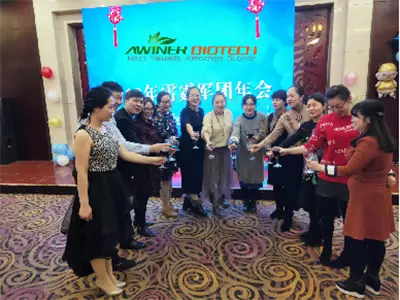
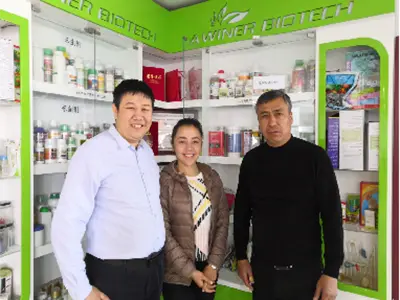
Up to now, we have won trusted customers from a wide spectrum of international agricultural markets, including:
Our countries participating in international exhibitions include Turkey, Iran, Pakistan, Nigeria, Russia, Cambodia, Malaysia, Uzbekistan, and more.
We regularly visit our customers' countries to conduct market inspections, analyze agronomic challenges, optimize field dosage usage, and host client delegations at our manufacturing center in Shijiazhuang.
 Awiner Biotech