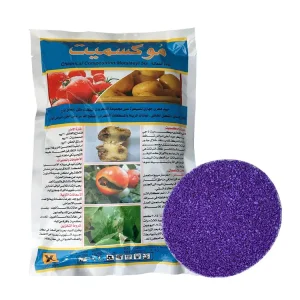
Wholesale Fungicide Triazolone 95%TC, 25%WP Factories, Supplier

Product Description

Product Display

Basic Information

Product Name Triadimefon
Formulation Triadimefon 97%TC 20%EC 25%WP
CAS 43121-43-3
MF C14H16ClN3O2
MW 293.75
EINECS 256-103-8
Product Categories Pharmaceutical intermediates; FUNGICIDE; 2000/60/EC; Alpha sort; Conazoles Method Specific; Endocrine Disruptors (Draft) Pesticides & Metabolites; EPA; European Community: ISO and DIN; Fungicides; Pesticides; Q-Z Alphabetic; TP - TZ Method Specific; Endocrine Disruptors (Draft) Alphabetic

Characteristics

  • High Efficiency & Systemic Property: Triadimefon is a triazole fungicide featuring low toxicity, low residue, long duration, and strong systemic properties.
  • Broad-Spectrum Disease Control: Conducts thoroughly within the plant body after absorption. Highly effective in preventing, eliminating, and treating rust and powdery mildew, as well as corn roundspot, wheat moire, wheat leaf blight, pineapple black rot, and corn head smut.
  • Eco-Friendly Safety Profile: Safer for fish and birds, and completely harmless to bees and natural predatory enemies.
  • Advanced Sterilization Mechanism: Mainly inhibits the biosynthesis of ergosterol, thereby inhibiting or interfering with the development of thallus attachment spores, haustorium, mycelium growth, and spore formation.

Application Guidelines

1

Wheat Diseases

Smut: Mix 100 kg of seeds with 30g active ingredients (200g of 15% WP).

Rust, Powdery Mildew & Moire: Apply 8.75g active ingredient (35g of 25% EC) per mu at initial onset. Increase to 15g active ingredient (60g of 25% EC) diluted with 75-100kg water for spraying in severe cases.

2

Corn & Sorghum Head Smut

Corn Head Smut: Dress 100 kg of seeds with 533g of 15% WP.

Sorghum Head Smut: Dress 100 kg of seeds with 266-400g of 15% WP.

3

Melons & Beans

Melon Powdery Mildew: Spray 25% WP diluted 5,000 times in open fields (1-2 times) or 1,000 times in greenhouses (1-2 times).

Bean Rust: Spray 1-2 times with 25% WP diluted 2,000 times during early onset or reinfection.

Precautions

Can be mixed with non-alkaline and non-copper preparations. Seed dressing may delay seed emergence by 1-2 days without affecting final emergence rate or late growth. Store in a dry, well-ventilated place. There is no specific antidote; treat symptomatically if ingested or exposed.
Frequently Asked Questions (FAQ)

1. What is Triadimefon used for in agriculture?
Triadimefon is a systemic triazole fungicide primarily used to prevent and treat fungal diseases such as rust, powdery mildew, smut, leaf blight, and black rot across various crops including wheat, corn, sorghum, melons, and beans.
2. What formulations of Triadimefon are commonly available?
Triadimefon is available in multiple formulations including Technical Material (97% TC), Emulsifiable Concentrate (20% EC), and Wettable Powder (15% WP and 25% WP).
3. How does Triadimefon control fungal diseases?
It works by inhibiting the biosynthesis of ergosterol inside the fungus, which interferes with and prevents the development of mycelium growth, spore formation, and thallus attachment.
4. Is Triadimefon safe for beneficial insects and wildlife?
Yes, Triadimefon has low toxicity and is safer for fish and birds. It is harmless to bees and natural predatory enemies when applied according to recommendations.
5. Can Triadimefon be mixed with other pesticides?
Triadimefon can be mixed with most standard agricultural preparations, except for alkaline formulations and copper-based fungicides.
6. Does seed dressing with Triadimefon affect germination speed?
Seed dressing with Triadimefon may delay seed emergence by 1-2 days, but it does not negatively impact the overall emergence rate or late-stage plant growth.

Related Products