Explore our certified active ingredients and targeted crop protection solutions manufactured under strict ISO quality controls.
Deep-dive research into insect biology, resistance mitigation, and systemic synthesis for global agricultural procurement.
Aphids (family Aphididae), including major economic vector species such as the Green Peach Aphid (Myzus persicae), Cotton/Melon Aphid (Aphis gossypii), and Cabbage Aphid (Brevicoryne brassicae), represent one of the most critical threats to modern vegetable crop production. Beyond direct phloem sap depletion—which causes leaf curling, stunting, and necrosis—aphids act as primary vectors for over 100 devastating plant viruses, including Cucumber Mosaic Virus (CMV), Potato Virus Y (PVY), and Turnip Mosaic Virus (TuMV).
The global market for insecticide for aphids in vegetables has undergone significant structural transformations driven by strict regulatory shifts, environmental stewardship directives, and the rapid emergence of insecticide resistance. Historically reliant on broad-spectrum organophosphates and carbamates, the international agrochemical sector has shifted toward targeted systemic chemistries, novel neonicotinoids, pyridine carboxamides, and lipid biosynthesis inhibitors (LBIs). Modern integrated pest management (IPM) frameworks demand zero-residue potential, high selectivity for beneficial arthropods (such as Coccinellidae and Syrphidae), and rapid knockdown efficacy to safeguard crop yields in greenhouse and field operations.
Repeated mono-chemical applications have led to widespread target-site mutations (e.g., kdr, M918T) and metabolic detoxification mechanisms (enhanced cytochrome P450 monooxygenases). Modern procurement strategies require alternating Insecticide Resistance Action Committee (IRAC) mode-of-action groups—such as pairing IRAC Group 4A (Acetamiprid) with IRAC Group 9B (Pymetrozine) or IRAC Group 23 (Spirotetramat)—to ensure long-term field performance.
Achieving total aphid suppression across varied horticultural ecosystems (Brassicas, Solanaceous crops, Cucurbits, and Alliums) requires a nuanced technical understanding of formulation chemistry and active ingredient uptake pathways:
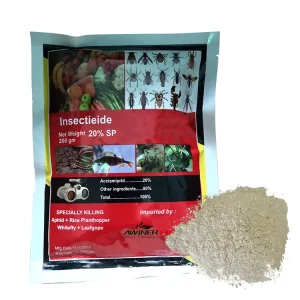
Formulations such as Acetamiprid 20% SP and Imidacloprid provide translucent acropetal translocation via xylem tissues. They disrupt nicotinic acetylcholine receptors (nAChR), offering immediate feeding cessation within 30 minutes of ingestion.
Advanced molecules like Etoxazole 110g/L SC and Emamectin Benzoate 5% WDG act via contact and ingestion, penetrating leaf cuticles to form localized reservoirs that eliminate cryptic aphid colonies hiding on abaxial leaf surfaces.
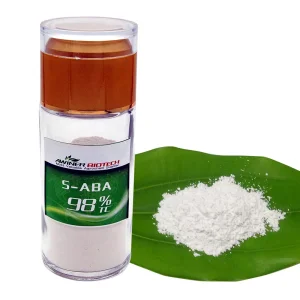
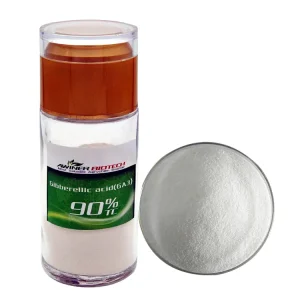
Combinations incorporating plant growth regulators like S-Abscisic Acid (S-ABA) or Gibberellic Acid (GA3) enable crops to recover rapidly from aphid-induced physiological stress, restoring photosynthetic vigor alongside chemical protection.
Optimizing procurement costs, container logistics, and chemical stability from Chinese production hubs.
When evaluating commercial quotations for China insecticide for aphids in vegetables, institutional buyers, chemical distributors, and agricultural enterprise networks must look beyond raw active ingredient (AI) pricing. Freight on Board (FOB), Cost, Insurance, and Freight (CIF), and landed costs are heavily influenced by raw material precursor trends (e.g., 2-chloro-5-chloromethylpyridine for neonicotinoids), environmental compliance audits at synthesis plants, and specialized formulation processing parameters.
Factory quotes are structured based on:
Ensuring batch-to-batch batch homogeneity and chemical stability under tropical or arid storage conditions requires rigorous laboratory verification. Leading Chinese manufacturing partners employ High-Performance Liquid Chromatography (HPLC) and Gas Chromatography (GC) validation protocols to guarantee active content limits comply with FAO/WHO specifications.
Every commercial dispatch undergoes rigorous testing: Active Ingredient Content (±0.5%), Suspensibility Ratio (>90% for SC/WDG), Wet Sieve Test (<0.05% residue on 75μm sieve), Persistent Foaming (<60 ml after 1 min), and Thermal Storage Stability (54°C ± 2°C for 14 days without degradation).
Discover Awiner Biotech's dedicated manufacturing facilities, global trade footprints, and on-site client survey methodology.
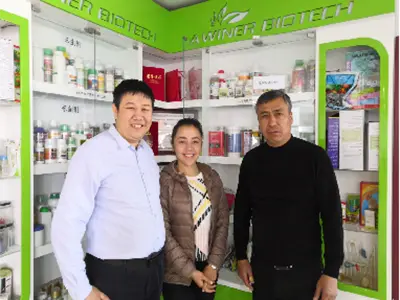
Awiner Biotech was founded in 2006, located in the northern chemical manufacturing hub of Shijiazhuang, Hebei Province, China. Situated in close proximity to the capital city, Beijing, our facility enjoys convenient logistics access to major international shipping ports such as Tianjin Port and Qingdao Port.
Awiner Biotech is committed to the research, synthesis, formulation production, and international distribution of comprehensive agrochemicals. Our specialized product scope encompasses high-potency pesticides, herbicides, fungicides, plant growth regulators (PGRs), and public health vector control chemicals tailored for worldwide crop protection.
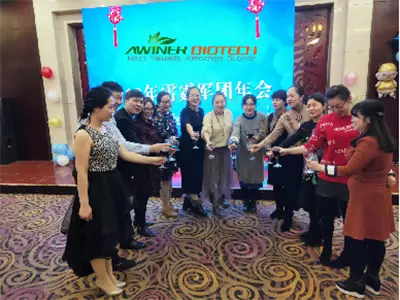
Up to now, Awiner Biotech has secured long-term strategic supply partnerships across more than 40 countries spanning the Middle East, CIS region, Latin America, Africa, and Asia-Pacific.
Our Market Reach Includes: Iraq, Iran, Afghanistan, Pakistan, India, Libya, Syria, Turkey, Yemen, Ukraine, Russia, Kazakhstan, Uzbekistan, Chile, Bolivia, Mexico, Brazil, Paraguay, Nigeria, Djibouti, Rwanda, Somalia, Malaysia, Cambodia, Nepal, Myanmar, and beyond.
Exhibitions & Field Surveys: We actively participate in international chemical and agricultural expos in Turkey, Iran, Pakistan, Nigeria, Russia, Cambodia, Malaysia, and Uzbekistan. Furthermore, our technical teams conduct boots-on-the-ground market surveys, inspecting regional pest resistance patterns, assisting clients with registration dossiers, and optimizing field spray performance directly in local environments.
Pioneering sustainable chemistry, microencapsulation, and high-efficiency application tech for modern vegetable farming.
Controlled release polymeric microencapsulation shields volatile active ingredients against UV degradation, extending residual aphid protection while lowering immediate oral/dermal toxicity for field operators.
Engineered with specialized anti-drift adjuvants and surface tension modifiers, our modern liquid formulations are fully compatible with UAV (Unmanned Aerial Vehicle) precision ultra-low volume (ULV) spraying technologies.
Phasing out aromatic solvents (like Xylene) in favor of vegetable-oil methyl esters and water-based SC/WDG systems to guarantee compliance with EU MRL standards and strict global environmental directives.
Technical, procurement, and regulatory answers for chemical importers, agricultural distributors, and commercial growers.
Browse our expanded technical range including fungicides, miticides, public health formulations, and plant growth regulators.
 Awiner Biotech