China Leafhoppers Control Manufacturer & Global Supply Chain Technical Whitepaper

Precision Chemical Synthesis, Resistance Mitigation Systems & Advanced Agro-Formulation Architecture for Modern Enterprise Farming

1. Executive Agronomic Analysis: The Global Threat of Leafhoppers (*Cicadellidae*)

Leafhoppers (family *Cicadellidae*) represent one of the most economically damaging vectors in modern industrial agriculture. Comprising over 20,000 described species, these sap-sucking hemipterans inflict catastrophic primary and secondary crop damage across temperate, sub-tropical, and tropical farming belts. The direct economic loss attributed to leafhopper infestations spans billions of dollars annually, primarily affecting staple cereal crops (rice, maize), economic cash crops (cotton, tea, sugarcane), and high-value viticulture and horticulture (grapes, citrus, potatoes).
As a leading **China Leafhoppers control manufacturer**, Awiner Biotech combines advanced chemical synthesis with eco-efficient delivery systems to mitigate leafhopper-induced crop loss. Understanding the biological vector dynamic is crucial: leafhoppers do not merely weaken plants via phloem sap depletion; they act as primary vectors for destructive phytoplasmas, spiroplasmas, and plant viruses. For instance, the Green Rice Leafhopper (*Nephotettix cincticeps*) transmits Rice Tungro Spherical Virus (RTSV) and Rice Dwarf Virus (RDV), while the Potato Leafhopper (*Empoasca fabae*) induces severe leaf hopperburn through toxic saliva injection during feeding.
20,000+
Species Identified Globally
35%
Potential Yield Loss without Control
100+
Transmitted Plant Pathogens
50+
Countries Supported by Awiner
Information Gain Insight: Integrated Leafhopper Management (ILM) requires moving beyond single-agent chemical knockdowns. Modern pest control demands multi-modal active combinations (e.g., systemic neonicotinoids + insect growth regulators + feeding blockers) paired with nano-emulsion delivery technologies to penetrate dense crop canopies effectively.

2. Technical Taxonomy: Mode of Action (MoA) & Formulations Matrix

To prevent the rapid escalation of metabolic and target-site resistance, enterprise growers and commercial distributors must deploy active ingredients categorized under distinct Insecticide Resistance Action Committee (IRAC) classifications. China's chemical synthesis infrastructure leads the world in optimizing these multi-pathway active pharmaceutical ingredients (APIs).

IRAC Group 4A: Neonicotinoids

Actives: Imidacloprid, Thiamethoxam, Acetamiprid, Nitenpyram.
Mechanism: Nicotinic acetylcholine receptor (nAChR) competitive modulators. Provides immediate systemic uptake through root and foliar structures, ensuring systemic protection against sap-feeding adults and nymphs.
Systemic Knockdown & Root Dip

IRAC Group 29 & 9B: Selective Feed Modulators

Actives: Flonicamid, Pymetrozine.
Mechanism: Chordotonal organ TRPV channel modulators. Immediately halts leafhopper feeding behavior within 1-2 hours of ingestion, preventing viral transmission without causing non-target harm to beneficial pollinators.
Eco-Toxicological & Pollinator Safe

IRAC Group 13 & 3A: Pyrroles & Pyrethroids

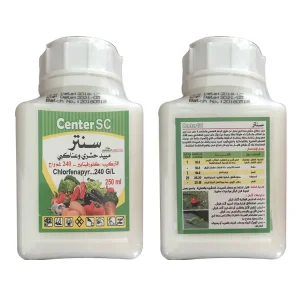
Actives: Chlorfenapyr, Bifenthrin, Lambda-Cyhalothrin.
Mechanism: Uncouplers of oxidative phosphorylation via disruption of proton gradient (Chlorfenapyr) and voltage-gated sodium channel modulators (Pyrethroids) for rapid contact residual control.
Contact Repellency & Quick Knockdown

3. Technology Roadmap: Next-Gen Formulations & Precision Agriculture

The global agrochemical industry is undergoing a paradigm shift from traditional emulsifiable concentrates (EC) toward zero-VOC, micro-encapsulated (CS), and suspension concentrate (SC) formulations. China's chemical innovation ecosystem, led by manufacturers like Awiner Biotech, is driving this technological evolution.

Nano-Microcapsule Suspension (CS)

Polymer-encapsulated active ingredients allow controlled, slow-release application. CS technology extends residual efficacy against leafhopper generations by up to 28 days while reducing rainwash degradation.

UAV-Optimized Low-Volume Fluids

Custom viscosity-adjusted formulations designed for agricultural drone deployment. Micro-droplet drift control guarantees uniform underside leaf coverage where leafhoppers aggregate.

Synergistic Multi-Active Premixes

Pre-formulated co-attractant and dual MoA chemicals (e.g., Nitenpyram + Pymetrozine) suppress Cytochrome P450 monooxygenase detoxification in resistant leafhopper populations.

AI-Integrated Monitoring Protocols

Pairing remote multi-spectral satellite imagery with chemical spray timing algorithms to target leafhopper nymph hatches before exponential population spikes occur.

4. Localized Agronomic Application Scenarios Across Global Belts

Leafhopper management cannot follow a one-size-fits-all approach. Ecological conditions, crop phenology, and regional resistance profiles govern chemical selection. Below are tailored application blueprints designed by Awiner Biotech's agronomic field support engineers.

Southeast Asian Rice Paddies

Target Pest: Green Rice Leafhopper (*Nephotettix virescens*).
Agronomic Challenge: High humidity, rapid crop canopy closure, risk of Rice Tungro Disease.
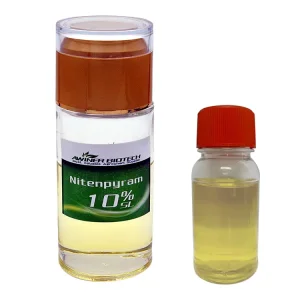
Recommended Protocol: Early seedling soak or tillering foliar spray using Nitenpyram 10% SL combined with Pymetrozine 50% WDG. High systemic mobility protects leaf sheaths.

Latin American Cotton & Soy Belts

Target Pest: Cotton Leafhopper (*Empoasca kraemeri*).
Agronomic Challenge: Dust-heavy environments, rapid nymph emergence, high foliage density.
Recommended Protocol: Tank mix application of Chlorfenapyr 36% SC with premium organosilicone surfactants to ensure deep stomatal penetration and persistent contact kill.

Mediterranean & Eurasian Viticulture

Target Pest: Grapevine Leafhopper (*Scaphoideus titanus*).
Agronomic Challenge: Strict maximum residue limits (MRLs), prevention of *Flavescence Dorée* phytoplasma.
Recommended Protocol: Application of Flonicamid 50% WDG at early nymphal instar phase to guarantee systemic protection with compliant residue decline curves.

5. China Supply Chain Resilience & Industrial Scale Advantage

As global agricultural supply chains face climate fluctuations and geopolitical logistics bottlenecks, China's centralized agrochemical manufacturing clusters offer unmatched resilience, scalability, and technical reliability. Located in Shijiazhuang, Hebei Province—a premier chemical manufacturing hub in northern China—Awiner Biotech leverages deep vertical integration to ensure steady price-to-performance stability for enterprise buyers worldwide.

Backward Raw Material Integration

Direct access to core chemical precursors (such as chloronitrobenzene and pyrazole intermediates) insulates our supply lines from global raw material price spikes, guaranteeing steady commercial pricing.

Advanced Automated Synthesis

Our state-of-the-art formulation plants utilize fully closed, automated SC, WDG, and EC production lines, maintaining tight batch-to-batch particle size distribution (D90 < 5 microns for SCs).

Proximity to Major Deepwater Ports

Situated within direct transit routes to Tianjin and Qingdao ports, Awiner Biotech streamlines containerized export logistics, shortening global shipment lead times by 10 to 15 days.

6. Corporate Profile: Awiner Biotech Infrastructure & Market Reach

Company Introduction

Awiner Biotech was founded in 2006, located in north of China-Shijiazhuang, Hebei Province. The city is close to our capital Beijing, transportation is convenient. Awiner Biotech is committed to research, produce and distribute agrochemicals. Mainly deal with pesticides, herbicides, fungicides, plant growth regulator and public health pesticides.
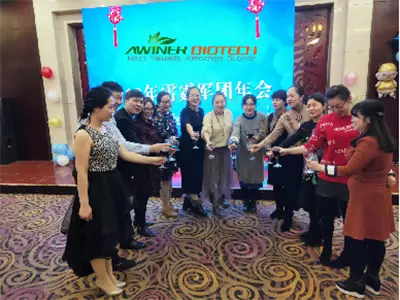
Awiner Global Market Footprint

Our Market

Up to now, we have win customers from Iraq, Iran, Afghanistan, Pakistan, India, Libya, Syria, Turkey, Yemen, Ukraine, Russia, Kazakhstan, Uzbekistan, Chile, Bolivia, Mexico, Brazil, Paraguay, Nigeria, Djibouti, Rwanda, Somalia, Malaysia, Cambodia, Nepal, Myanmar and so on.

Exhibition Presence

Our countries participating in the exhibition are Turkey, Iran, Pakistan, Nigeria, Russia, Cambodia, Malaysia, Uzbekistan, etc. We regularly meet with key distributors and agricultural leaders globally to showcase our latest leafhopper and crop protection innovations.

Customer Market Survey

We go to the customer's country to conduct market inspections, analyze and solve problems for them, understand their product usage, and customers will also visit us in Shijiazhuang for plant audits and technical exchanges.
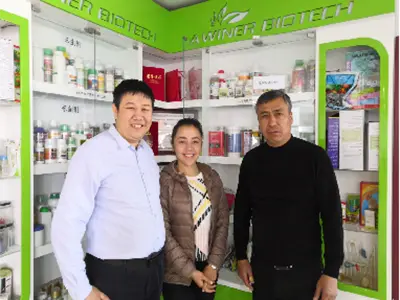
Awiner Agro Chemical Global Network

7. Regulatory Compliance, GLP Testing & Quality Assurance

Navigating strict regional environmental and safety regulations requires comprehensive dossier technical support. Awiner Biotech guarantees full compliance with International FAO and WHO specifications.

GLP Analytical Support

Every production lot undergoes rigorous High-Performance Liquid Chromatography (HPLC) and Gas Chromatography-Mass Spectrometry (GC-MS) testing to verify active ingredient concentration and impurity profiles below standard thresholds.

Global Registration Packages

We provide our global partners with complete registration dossiers, including ICAMA data, toxicological reports, environmental fate studies, and stability testing certificates under CIPAC methods.

Custom Industrial Packaging

Available in high-density polyethylene (HDPE) containers, fluorinated bottles, and co-extruded multi-layer aluminum foil bags to ensure long shelf life in harsh tropical conditions.
8. Frequently Asked Questions (FAQ) & Technical Guidance

Q1: What active ingredients are most effective against neonicotinoid-resistant leafhoppers?
When resistance to IRAC Group 4A (Neonicotinoids) occurs, rotating to Flonicamid (IRAC Group 29) or Chlorfenapyr (IRAC Group 13) is highly recommended. Tank-mixing a systemic feeding blocker with a pyrrole mitochondrial uncoupler breaks cross-resistance mechanisms effectively.
Q2: Why choose Awiner Biotech as your China leafhoppers control manufacturer?
Awiner Biotech combines over 18 years of chemical manufacturing expertise, advanced automated production in Shijiazhuang, strict quality control via HPLC/GC-MS testing, and robust regulatory dossier support for seamless customs entry across 50+ countries.
Q3: How does temperature affect leafhopper spray performance?
Certain active ingredients, such as Chlorfenapyr, exhibit positive temperature coefficients—meaning their insecticidal activity increases at higher ambient temperatures (above 25°C). Conversely, pyrethroids perform best at moderate temperatures. Our agronomists assist in selecting formulations based on local climate data.
Q4: What is the optimal water pH for mixing leafhopper insecticides?
Most leafhopper control insecticides perform best in slightly acidic water solutions (pH 5.5 to 6.5). Alkaline hydrolysis can rapidly degrade organophosphates and carbamates. We recommend adding buffering agents if local spray water exceeds pH 7.5.
Q5: Can leafhopper control pesticides be tank-mixed with plant growth regulators?
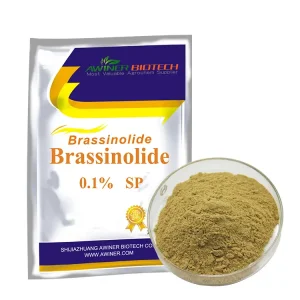
Yes. Combining leafhopper insecticides with plant growth regulators like Brassinolide 0.1% SP or GA3 Gibberellic Acid helps crops recover from feeding stress and salivary toxin damage, promoting rapid physiological rebound.
Q6: What customized packaging options are available for bulk commercial buyers?
We offer flexible OEM and ODM packaging solutions ranging from 100ml/100g retail bottles and sachets up to 200L industrial drums, complete with multi-lingual label design and anti-counterfeiting holographic seals.