Explore our top-tier formulation range engineered for rapid knockdown, extended residual protection, and high target palatability across professional agricultural and vector management sectors.
Understanding the precise technical parameters of active ingredient incorporation, food-grade matrix stability, and delayed-action toxicity dynamics in professional pest suppression systems.
Pest control baits rely on delicate physiological triggers. High-tier Chinese manufacturing utilizes custom lipid, protein, and carbohydrate matrices designed to overcome bait aversion in urban populations (e.g., glucose-averse Blattella germanica) while optimizing moisture retention over extended deployment windows.
The biological efficacy of granular (GR) and gel baits rests on delayed mortality curves. Formulations using Fipronil (0.05% GR) or Thiamethoxam leverage horizontal transfer toxicity (trophallaxis and necrophagy), ensuring secondary and tertiary cascade extermination across entire subterranean or structural colonies.
Advanced WDG and micro-granule manufacturing incorporates UV-stabilized polymer shells. This technology prevents degradation of active ingredients under harsh tropical or agricultural outdoor conditions, ensuring stable release rates over 60-90 days post-application.
| Formulation Type | Active Ingredient (AI) Range | Primary Target Pests | Mechanism of Action | Field Longevity |
|---|---|---|---|---|
| Granular Baits (GR) | Fipronil 0.05%, Imidacloprid 0.5-2.0% | Ants, Cockroaches, Soil Insects | GABA-Gated Chloride Channel Antagonist | 60 - 90 Days |
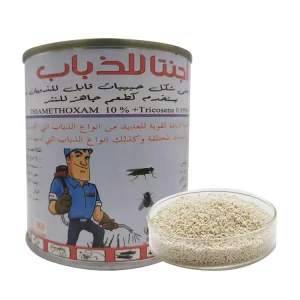
| Water Dispersible Granules (WDG) | Thiamethoxam 1% + Muscalure 0.1% | House Flies (Musca domestica), Stables | Nicotinic Acetylcholine Receptor Agonist + Pheromone | 30 - 45 Days |
| Gel & Paste Formulations | Indoxacarb 0.6%, Bifenthrin 10% Blend | German/American Cockroaches | Voltage-gated Sodium Channel Blocker | 90 - 120 Days |
| Solid Block / Weatherproof Baits | Brocifacoum / Diphacinone derivatives | Rodents, Agricultural Field Voles | Vitamin K1 Epoxide Reductase Inhibition | 120+ Days (All-Weather) |
Why international chemical distributors and institutional pest control operators partner with Hebei chemical manufacturing hubs for resilient, cost-optimized, and compliant supply chains.
China produces over 70% of the world's agrochemical technical (TC) active ingredients. Factories located in established chemical industrial parks in North China (such as Shijiazhuang, Hebei) maintain direct access to raw intermediates including bifenthrin, fipronil, thiamethoxam, and glyphosate. This vertical integration reduces supply chain friction, mitigates price volatility, and guarantees continuous production runs even during peak global agricultural demand.
Modern Chinese pesticide synthesis plants offer high-precision customization of bait attractant profiles, granule sizes, and specialized packaging. From retail-ready bait stations and syringe gel dispensers to 25kg industrial bulk drums and UN-certified hazardous materials containers, Chinese suppliers provide turnkey solutions tailored to local regulatory labeling requirements across LATAM, EMEA, and Asia-Pacific markets.
Leading manufacturing facilities house advanced Analytical Testing Centers equipped with High-Performance Liquid Chromatography (HPLC), Gas Chromatography (GC), and CIPAC standard wet-chemistry testing apparatus. Every batch undergoes stringent checks for active ingredient concentration, suspension stability, emulsion stability, and shelf-life accelerated degradation tests.
Proximity to key international shipping terminals such as Tianjin Port and Qingdao Port allows for rapid container consolidation, streamlined customs declaration for dangerous goods (DG cargo), and significantly reduced inland transit times. Freight management protocols adhere to strict IMDG (International Maritime Dangerous Goods) protocols.
Deploying bait formulations effectively demands precise alignment with environmental micro-climates, target organism behaviors, and sector-specific operational parameters.
In urban municipal vector control, granular baits like Fipronil 0.05% GR are deployed along subterranean drainage systems, utility conduits, and refuse sites. The slow-acting neurological disruption enables foraging insects to return to nesting harborages, spreading active toxins throughout inaccessible urban infrastructure.
Dairy farms, poultry houses, and equestrian stables face severe housefly (Musca domestica) pressures. Combining Thiamethoxam 1% with Muscalure 0.1% WDG creates a dual-action attract-and-kill zone. Painted or sprayed onto structural panels, it dramatically reduces adult fly populations, mitigating livestock stress and pathogen transmission.
In broadacre farming and horticulture, pest baits serve as perimeter firewalls against crop-damaging pests. Integrating target-specific granular baits around green-houses and orchard borders mitigates subterranean root damage and prevents pest migration without requiring full-field broadcast spraying of heavy chemical volumes.
The next generation of pest control baits is evolving toward enhanced environmental safety, precision targeting, and smart monitoring integration.
Replacing synthetic flavor compounds with naturally derived semiochemicals, aggregation pheromones, and cuticular hydrocarbon mimics to dramatically increase bait consumption efficiency while reducing chemical loading.
Combining chemical bait matrices with IoT-enabled optical sensors and weight triggers. Smart stations alert pest management professionals in real-time when bait consumption occurs, optimizing replenishment cycles and labor costs.
Pioneering target-selective enzymatic and biological actives that degrade rapidly upon environmental release, reducing secondary toxicity risks for non-target fauna, domestic pets, and beneficial soil organisms.
Awiner Biotech was founded in 2006, located in north of China—Shijiazhuang, Hebei Province. The city is close to our capital Beijing, and transportation is exceptionally convenient. Awiner Biotech is committed to research, produce, and distribute agrochemicals, mainly dealing with high-performance pesticides, herbicides, fungicides, plant growth regulators, and public health pesticides.
Driven by a technical team dedicated to quality assurance and global compliance, Awiner Biotech provides tailored solutions that address localized pest resistance challenges, variable climatic conditions, and stringent international regulatory frameworks.
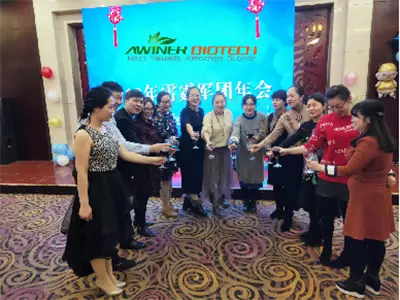
Up to now, we have won trusted long-term customers across more than 30 nations. Our market footprint spans strategic agricultural and public health sectors worldwide.

We actively serve partners in: Iraq, Iran, Afghanistan, Pakistan, India, Libya, Syria, Turkey, Yemen, Ukraine, Russia, Kazakhstan, Uzbekistan, Chile, Bolivia, Mexico, Brazil, Paraguay, Nigeria, Djibouti, Rwanda, Somalia, Malaysia, Cambodia, Nepal, Myanmar, and beyond.
Our team regularly participates in premier global chemical and agricultural expos in countries including: Turkey, Iran, Pakistan, Nigeria, Russia, Cambodia, Malaysia, Uzbekistan, and more.
We directly visit our customers' countries to conduct detailed market inspections, analyze regional pest pressure data, and solve application problems on-site. We gain firsthand insight into product performance under local farm and urban environments, while frequently welcoming international client delegations to our Shijiazhuang manufacturing facilities.
Navigating international chemical regulations requires rigorous documentation, standardized testing, and complete batch traceability.
We provide complete Good Laboratory Practice (GLP) data support for client registrations, including acute oral, dermal, and inhalation toxicity reports, ecotoxicity profiles, and environmental fate studies verified by international accreditation bodies.
All formulation specifications, active content tolerances, particle size distributions, and pH parameters strictly align with joint FAO/WHO specifications for public health pesticides and crop protection chemicals.
Our regulatory affairs department assists global importers with local Ministry of Agriculture or Ministry of Health registration dossiers, supplying COA, MSDS, Certificate of Free Sale, and ICAMA documentation.
Technical insights for institutional buyers, agricultural suppliers, and pest control operators sourcing from Chinese factories.
Pest control baits offer several crucial advantages: targeted active delivery, lower total chemical volume required, reduced non-target toxicity, and systemic colony suppression via horizontal transfer. Contact sprays only eliminate visible foragers, whereas slow-acting baits leverage natural social feeding behaviors (trophallaxis) to eliminate queens, larvae, and hidden nests.
Leading Chinese manufacturers conduct continuous laboratory bio-efficacy testing on target strains. By adjusting sugar profiles (avoiding simple glucose matrices where resistance is detected) and incorporating complex proteins, lipids, and species-specific attractants, formulations retain exceptionally high palatability even in competitive food environments.
Standard commercial pest control bait formulations maintain a guaranteed shelf-life of 2 years when stored in original, unopened multi-layer barrier packaging at temperatures below 30°C. Granular and block formulations utilize moisture-resistant outer barrier bags to prevent clumping or matrix oxidation during ocean transport.
For regulated active ingredients (e.g., Fipronil or Bifenthrin compounds), factories provide full IMDG documentation including Material Safety Data Sheets (MSDS), Dangerous Goods Declarations, UN-rated outer packaging certification, and CIPAC physical properties reports to ensure smooth clearance at destination customs.
Yes, OEM/ODM contracts accommodate specialized active concentrations, multi-active ingredient blends (e.g., combining quick-knockdown pyrethroids with delayed neonicotinoids or insect growth regulators), customized colorants, and branded retail packaging upon meeting Minimum Order Quantities (MOQ).
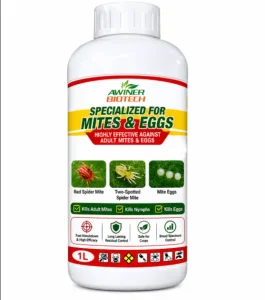
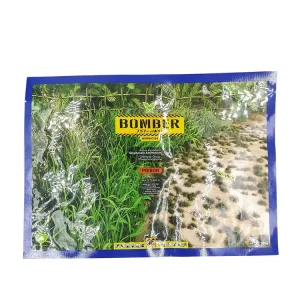
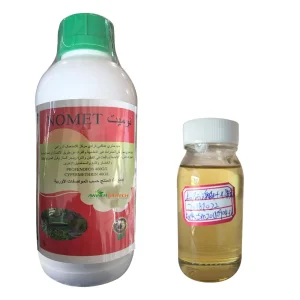
Discover our comprehensive range of systemic insecticides, miticides, selective herbicides, and public health vector control agents.
 Awiner Biotech