High-purity chemical actives, crop regulators, and pest management formulas engineered specifically for protected environment efficacy.
Controlled Environment Agriculture (CEA), commonly referred to as protected cultivation, represents the technological frontier of modern food production. Encompassing high-tech glass Venlo greenhouses, poly-tunnel structures, net houses, and hydroponic vertical farms, protected cultivation allows agricultural producers to decouple crop yield from volatile outdoor climate conditions. As global arable land shrinks and water scarcity intensifies, commercial growers worldwide are shifting toward intensive protected cultivation to guarantee year-round high-density yields of high-value crops including tomatoes, cucumbers, bell peppers, soft fruits, and floriculture.
However, the microclimates inherent to protected cultivation—characterized by elevated humidity, controlled temperatures, and minimal wind turbulence—create localized ecological niches where pathogens and insect pests can multiply exponentially. Fungal pathogens such as Botrytis cinerea (gray mold), powdery mildew, and Phytophthora thrive under greenhouse humidity, while phloem-feeding insects like Bemisia tabaci (whiteflies), thrips, and aphids build multi-generational resistance within shortened life cycles.
To sustain economic productivity, the global protected cultivation sector relies heavily on highly targeted, low-residue agrochemical regimens, biological integration, and specialized plant growth regulators (PGRs). Modern greenhouse operators demand agrochemicals with high active constituent purity, zero phytotoxicity to delicate indoor foliage, complete compatibility with drip-irrigation or fogging systems, and compliance with strict maximum residue limits (MRLs) established by international regulatory bodies.
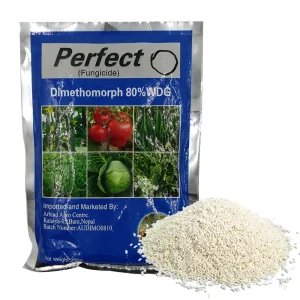
High relative humidity inside plastic tunnels and glasshouses requires targeted anti-fungal formulations like Copper Hydroxide 77% WP and Dimethomorph 50% WP that prevent sporangial germination without scorching sensitive greenhouse crops.
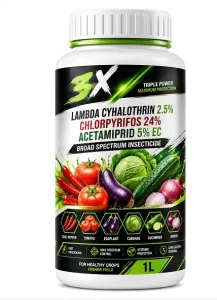
Rapid insect generation cycles under warm enclosure conditions mandate dual- and triple-action systemic insecticides, such as Lambda-cyhalothrin + Chlorpyrifos + Acetamiprid EC, to eliminate resistant vector populations.
Optimizing plant metabolic activity under artificial lighting or shading requires specialized regulators. Formulations like Thidiazuron (TDZ) and Indole-3-Butyric Acid (IBA 98% TC) regulate cell division, rooting, and fruit set.
China has firmly established itself as the world’s primary engine for agrochemical chemical synthesis, raw active ingredient (Technical Grade - TC) manufacturing, and advanced formulation engineering. For international buyers, commercial growers, and B2B distributors searching for China Protected Cultivation Suppliers & Manufacturers, understanding the underlying supply chain mechanics reveals why Chinese agricultural chemical production delivers unmatched cost efficiency and technological quality.
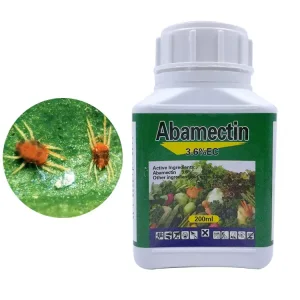
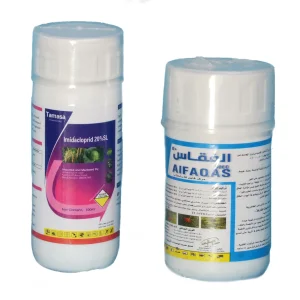
Located in northern China’s chemical manufacturing heartland—specifically Hebei Province around Shijiazhuang, adjacent to Beijing—manufacturers enjoy immediate access to basic chemical building blocks, intermediate synthons, and raw technical materials. This proximity reduces logistical friction, buffers against global supply chain shocks, and allows for rapid synthesis scaling of high-demand molecules such as Thiamethoxam, Imidacloprid, Abamectin, and Glyphosate-ammonium.
Modern Chinese pesticide manufacturing has evolved beyond simple active ingredient synthesis. Today, leading entities like Awiner Biotech focus heavily on advanced delivery mechanisms including Water Dispersible Granules (WDG/WG), Suspension Concentrates (SC), Emulsifiable Concentrates (EC), and Flowable Concentrates for Seed Treatment (FS). Through precise particle size reduction (down to sub-micron scales) and proprietary surfactant selection, these formulations ensure maximum biological performance, physical suspension stability, and zero nozzle clogging in automated greenhouse sprayers.
Through high-capacity automated reaction kettles, continuous-flow synthesis processing, and integrated energy recovery systems, Chinese agrochemical manufacturers achieve unit production costs significantly lower than European or North American counterparts. This efficiency enables commercial greenhouse networks across Latin America, the Middle East, Eastern Europe, and Africa to access professional-grade crop protection protocols at sustainable operational margins.
Applying agrochemicals within an enclosed protected cultivation structure requires drastically different protocols compared to broad-acre open-field farming. The lack of natural rainfall for chemical wash-off, reduced ultraviolet degradation of active ingredients, and elevated air exchange dynamics necessitate specialized chemical selection and precise application timing.
In enclosed tunnel environments, sap-sucking pests like thrips, aphids, and whiteflies reproduce exponentially. Pests transmit crippling viral pathogens like Tomato Yellow Leaf Curl Virus (TYLCV). To combat this:
Relative humidity inside poly-tunnels frequently exceeds 85%, creating optimal conditions for fungal zoospore germination. Management protocols require dual-phase protection:
Managing canopy density, node spacing, and reproductive set is critical in greenhouse space optimization:
Procuring crop protection chemicals and plant growth regulators from China requires high attention to regulatory compliance, formulation stability, and packaging integrity. Commercial agricultural enterprises and regional distributors must evaluate several key parameters when selecting an enterprise manufacturing partner:
Leading Chinese exporters provide comprehensive product registration dossiers (GLP analytical reports, 5-batch analysis, toxicological profiles, and field efficacy data) to facilitate rapid local ministry registration across South America, Eurasia, Africa, and the Middle East.
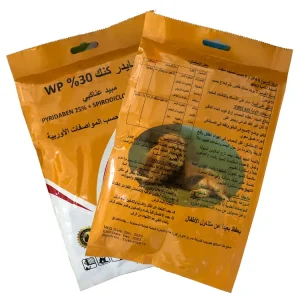
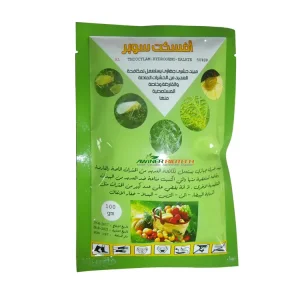
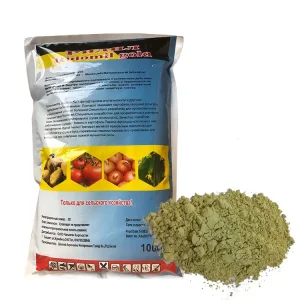
Protected cultivation formulations require specialized packaging to prevent product degradation during ocean transit across tropical climate zones. Options include fluorinated HDPE bottles, aluminum foil sachets, and COEX multi-layer drums with tamper-evident seals.
Every export batch undergoes rigorous High-Performance Liquid Chromatography (HPLC) and Gas Chromatography (GC) testing to ensure active ingredient purity, emulsification stability, suspension percentage, and low free-acid impurity levels according to FAO specifications.
The protected cultivation landscape is undergoing a massive transformation driven by digital technology, automation, and environmental sustainability demands. Over the next decade, several key technological shifts will redefine chemical crop protection within controlled environment agriculture:
1. Drone Integration & Ultra-Low Volume (ULV) Greenhouse Fogging: Micro-droning and automated upper-canopy fogging systems are replacing manual high-pressure spray wands. This shift requires formulation micro-emulsions (ME) and water-dispersible granules (WDG) with ultra-fine particle dispersion to prevent nozzle deposition and ensure uniform droplet distribution on leaf undersides.
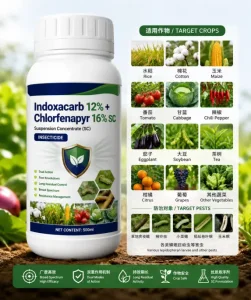
2. Bio-Pesticide & Chemical Hybrid Rotations: To fulfill stringent European and North American retail MRL guidelines, commercial growers are adopting hybrid IPM (Integrated Pest Management) programs. Bio-rationals and low-toxicity synthetic actives—such as combining biological extracts with targeted chemical interventions like Indoxacarb 12% + Chlorfenapyr 16% SC—prevent pest resistance development while keeping final harvest residue profiles near zero.
3. Smart Drip Fertigation & Systemic Molecule Translocation: Modern CEA greenhouses use closed-loop recirculating hydroponics. Insecticides and systemic fungicides must demonstrate high water solubility, low root toxicity, and minimal interaction with nutrient ions ($N, P, K, Ca, Mg$). Active molecules like Thiamethoxam and Imidacloprid SC continue to set the industry standard for root zone absorption efficiency.
Awiner Biotech was founded in 2006, located in the north of China—Shijiazhuang, Hebei Province. The city is close to our capital Beijing, with convenient transportation connections. Awiner Biotech is committed to research, production, and distribution of high-performance agrochemicals, dealing primarily with pesticides, herbicides, fungicides, plant growth regulators, and public health pesticides.
Our Global Footprint & Market Integration: Up to now, we have won trusted long-term customers across international agricultural hubs, including: Iraq, Iran, Afghanistan, Pakistan, India, Libya, Syria, Turkey, Yemen, Ukraine, Russia, Kazakhstan, Uzbekistan, Chile, Bolivia, Mexico, Brazil, Paraguay, Nigeria, Djibouti, Rwanda, Somalia, Malaysia, Cambodia, Nepal, Myanmar, and beyond.
Exhibitions & Field Technical Surveying: Our team regularly participates in international agricultural exhibitions in key regions including Turkey, Iran, Pakistan, Nigeria, Russia, Cambodia, Malaysia, and Uzbekistan. Beyond trade shows, our agronomic experts conduct hands-on customer market surveys directly in client countries—analyzing localized pest challenges, evaluating product usage under real greenhouse/field conditions, and formulating custom chemical solutions. We welcome global partners to visit our production facility and R&D headquarters in Shijiazhuang.
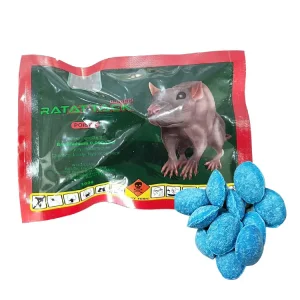
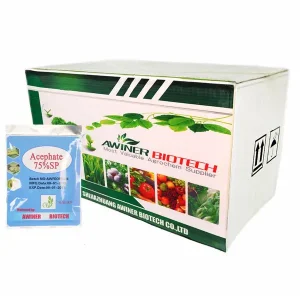
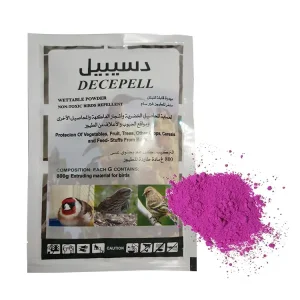
Explore our technical-grade materials, specialized insect control blends, fungicides, and rodenticides for agriculture.
Technical responses for commercial greenhouse operators, agricultural buyers, and chemical importers.
Inside protected structures like glasshouses and poly-tunnels, elevated relative humidity and restricted air velocity significantly alter chemical evaporation rates. Formulations must exhibit high rainfastness/leaf adherence, micro-particle size to prevent fogging nozzle blockage, and zero phytotoxicity under intense enclosed heat. Water Dispersible Granules (WDG) and Suspension Concentrates (SC) are preferred for their minimal solvent residue and superior safety profile on foliage.
Awiner Biotech conducts Accelerated Storage Stability testing (CIPAC MT 46.3) at 54°C for 14 days on all export formulations to simulate tropical transit conditions. We utilize high-grade stabilizers, anti-caking agents, and UV-shielding additives, packaged in fluorinated HDPE, multi-layer aluminum sachets, or COEX containers engineered for long-distance maritime transport.
To prevent physiological resistance across rapid insect breeding cycles, growers should alternate IRAC chemical groups. A typical rotation involves applying systemic neonicotinoid fertigation (Thiamethoxam 25% WG or Imidacloprid SC) during early vegetative development, followed by contact foliar applications of Nitenpyram 50% SG or Thiocyclam, and utilizing multi-mode combinations like Indoxacarb + Chlorfenapyr SC for severe infestations.
Yes. Pure technical materials like IBA 98% TC and Thidiazuron 97% TC can be diluted according to target PPM (parts per million) requirements and introduced directly into hydroponic reservoirs or drip fertigation channels. IBA enhances secondary root branching in substrate culture, while precise micro-dosing of TDZ maintains uniform leaf chlorophyll levels and fruit set.
We supply comprehensive technical registration packages including Certificates of Analysis (COA), Material Safety Data Sheets (MSDS), FAO compliant specification sheets, and GLP-certified analytical data. Our technical team works alongside clients in South America, the Middle East, Eurasia, and Africa to ensure seamless registration compliance with regional Ministries of Agriculture.
Copper Hydroxide 77% WP should be applied at prophylactic rates before fungal sporulation occurs. In greenhouse environments, recommended concentrations range between 1.0 to 1.5 grams per liter of water, ensuring complete canopy coverage. Due to sensitive greenhouse foliage, high-volume fine misting should be performed early in the day to allow foliage to dry before nocturnal temperature drops.
 Awiner Biotech