 Awiner Biotech
1 / 3
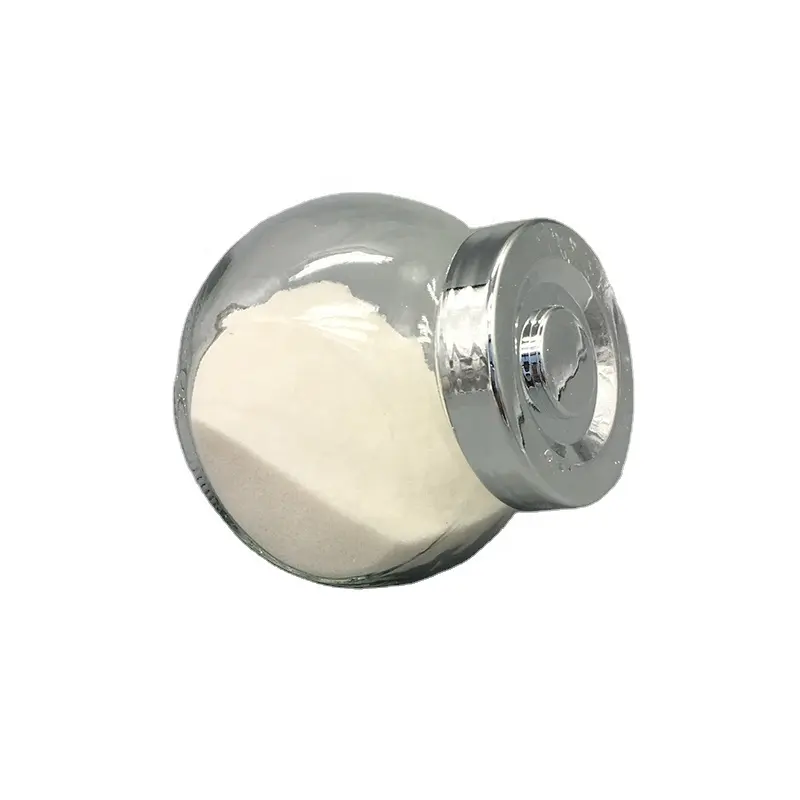
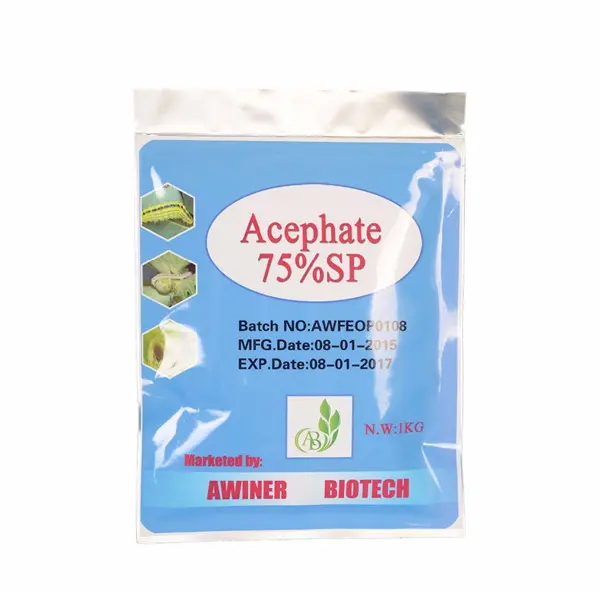
| Product Name | Acephate |
| Function | Insecticide |
| Specification | 95%TC, 75%SP, 400G/L EC, 300G/L EC, 25%WP |
| Chemical Name | (Z)-[3-[(6-chloro-3-pyridinyl)methyl]-2-thiazolidinylidene]cyanamide |
| CAS No. | 30560-19-1 |
| Empirical Formula | C4H10NO3PS |
| Toxicology | Oral Acute oral LD50 for male rats 1447, female rats 1030 mg/kg. Skin and eye Acute percutaneous LD50 for rabbits >10 000 mg/kg. Slightly irritating to skin (rabbits); non-sensitising to skin (guinea pigs). Inhalation LC50 (4 h) for rats >15 mg/l air. NOEL (2 y) for dogs 0.75 mg/kg b.w. daily; LOEL for rats 0.25 mg/kg b.w. daily. ADI (JMPR) 0.03 mg/kg [1990]. Toxicity class WHO (a.i.) III; EPA (formulation) III EC classification Xn; R22 |
| Applications | Mode of action Systemic insecticide. Uses Control of a wide range of chewing and sucking insects, e.g. aphids, thrips, lepidopterous larvae, sawflies, leaf miners, leafhoppers, cutworms, etc., at 0.5-1.0 kg/ha, in fruit (including citrus), vines, hops, olives, cotton, soya beans, peanuts, macadamia nuts, beet, brassicas, celery, beans, potatoes, rice, tobacco, ornamentals, forestry, and other crops. Of moderate persistence, with residual activity lasting c. 10-21 d. Phytotoxicity Non-phytotoxic to most crops, but marginal leaf burn may occur on Red Delicious apples. Formulation types AE; CG; GR; SP; WP. |
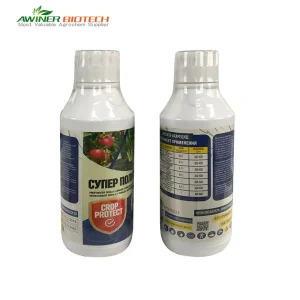
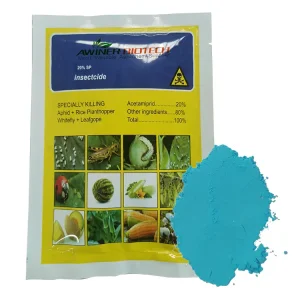
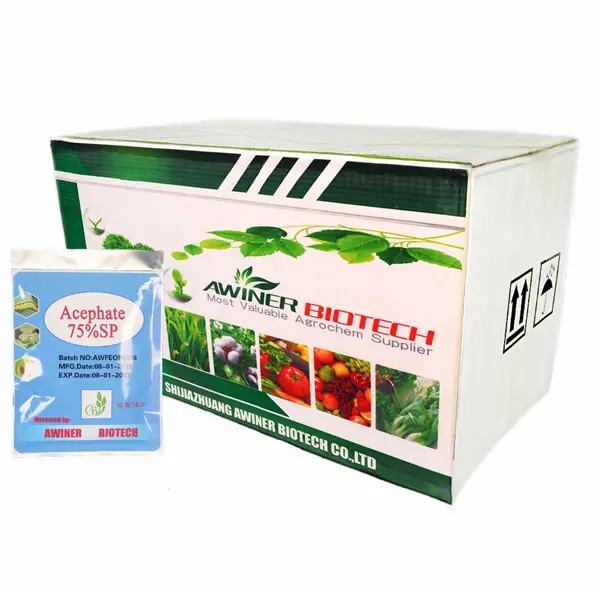
| Package | 25kg/bag, 200l/drum, 20l/drum, etc |
| Target crops | Beans, Brussels sprouts, cauliflower, celery, cotton, cranberries, head lettuce, mint, peanuts, peppers, and tobacco |
| Prevention objects | Effective against alfalfa looper, aphids, armyworm, bagworm, bean leaf beetle, bean leafroller, blackgrass bugs, bollworm, budworm, cabbage looper, cankerworm, corn earworm, cranberry blossomworm, cutworms, diamondback moth, European corn borer, fireworm, fleahopper, grasshoppers, green cloverworm, gypsy moth, hornworm, imported cabbageworm, imported fire ants, lace bugs, leafhoppers, leafminers, leafrollers, lygus bugs, Mexican bean beetle, Mormon crickets, oak moth, saltmarsh caterpillar, soybean looper, spanworm, Sparganothis, stink bugs, tent caterpillars, threecornered alfalfa hopper, thrips, velvetbean caterpillar, webworm, and whiteflies and Insect control in forests, tobacco, and ornamentals |
Acephate is a systemic insecticide used to control a broad spectrum of chewing and sucking pests. It works through systemic action with residual control lasting approximately 10 to 21 days.
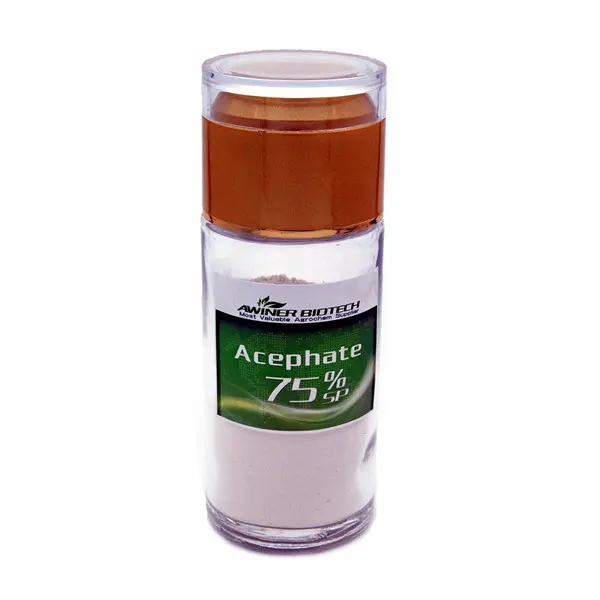
Available formulations include 95% TC, 75% SP, 400G/L EC, 300G/L EC, and 25% WP, alongside AE, CG, and GR types.
It effectively controls aphids, thrips, lepidopterous larvae, cutworms, armyworms, leafminers, leafhoppers, whiteflies, stink bugs, and various other chewing and sucking insects.
It can be applied to beans, Brussels sprouts, cauliflower, celery, cotton, cranberries, head lettuce, mint, peanuts, peppers, tobacco, citrus, forestry, and ornamentals.
Acephate is non-phytotoxic to most crops. However, marginal leaf burn may occasionally occur on specific crop varieties like Red Delicious apples.
Standard packaging options include 25kg/bag, 200L/drum, and 20L/drum, adaptable to customer specifications.