China Rodenticide Bait Quotes & Factories

Global B2B Procurement Guide, Manufacturing Analytics & Advanced Formulation Innovations for Agricultural, Public Health & Industrial Vector Control

ISO 9001 & FAO Compliant Resistance Management Formulations Factory Direct Bulk Pricing

Executive Summary: The Global Rodenticide Bait Industry Architecture

Rodent infestations present a multi-billion dollar challenge to global agricultural production, public health sanitation, and commercial infrastructure logisitics. As urbanization accelerates and climate fluctuations alter pest migration patterns, demand for highly stable, palatable, and lethal rodenticide bait matrices has surged worldwide. B2B procurement professionals, agricultural distributors, and professional pest control operators (PCOs) increasingly look to Chinese manufacturing hubs for direct factory quotes, custom carrier formulations, and regulatory-compliant rodenticides.

$5.2B+
Global Rodenticide Market Size
5.6%
Forecast CAGR (2024-2032)
65%+
Global Active Ingredient Synthesis in China
100%
Regulatory Compliance (FAO/WHO Standard)

Modern rodent management relies on understanding the physiological mechanics of active ingredients. Anticoagulants remain the gold standard, divided into First-Generation Anticoagulant Rodenticides (FGARs) such as Warfarin, Diphacinone, and Chlorophacinone, and Second-Generation Anticoagulant Rodenticides (SGARs) including Brodifacoum, Bromadiolone, Flocoumafen, and Deth Keep. SGARs are notably effective due to their single-feed potency against resistant rodent populations (e.g., Rattus norvegicus and Mus musculus).

Information Gain Insight: The global shift toward eco-conscious Integrated Pest Management (IPM) requires factories to innovate non-anticoagulant options (e.g., Cholecalciferol, Zinc Phosphide) alongside high-palatability SGAR wax blocks containing human-averse bittering agents (Denatonium Benzoate) to prevent accidental secondary poisoning.

Active Ingredient Chemical & Toxicity Profile Comparison

Active Ingredient Generation / Class Acute LD50 (Rat - mg/kg) Primary Application Field Lethality Cycle
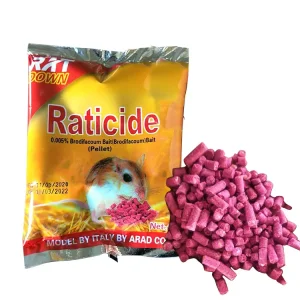
Brodifacoum 2nd Gen Anticoagulant 0.27 mg/kg Agricultural Fields, Industrial Facilities Single-feed (3-7 Days)
Bromadiolone 2nd Gen Anticoagulant 1.12 mg/kg Urban Sanitation, Domestic & Commercial Single/Multi-feed (4-8 Days)
Diphacinone 1st Gen Anticoagulant 2.30 mg/kg Conservation Areas, Field Crops Multiple-feed (5-10 Days)
Zinc Phosphide Acute Inorganic Toxicant 45.0 mg/kg Emergency Orchard & Grain Store Outbreaks Immediate (1-24 Hours)
Cholecalciferol (Vit D3) Non-Anticoagulant Meta-agent 43.5 mg/kg Anticoagulant-Resistant City Zones Sub-acute (2-4 Days)

China Rodenticide Manufacturing Ecosystem & B2B Pricing Metrics

China is the premier global manufacturing nexus for rodenticides, producing over 60% of the world's Technical Grade (TC) active ingredients and finished bait formulations. Direct sourcing from Chinese factories yields massive structural advantages in cost-efficiency, batch consistency, and customized formulation technology (e.g., paraffin extrusion for moisture-dense equatorial climates vs pelletized grain mixes for dry grain silos).

Carrier Grain Selection & Attraction

Chinese factories utilize high-purity crushed wheat, maize, sorghum, and peanut meal tailored to regional rodent feeding preferences, enhancing bait acceptance and consumption speed.

Weatherproofing & Paraffin Matrices

Advanced hot-melt wax extrusion creates waterproof bait blocks that maintain structural integrity in high-humidity agricultural zones, sewers, and tropical plantations without molding.

Bitrex Safety Integration

Standardized incorporation of Denatonium Benzoate (bitter taste agent at 0.001% w/w) prevents ingestion by non-target domestic animals and humans while remaining undetectable to rodents.

Key Price Drivers in Purchasing Factory Direct Quotes

When requesting factory quotes for wholesale rodenticide bait (such as Brodifacoum 0.005% Wax Block or Bromadiolone 0.005% Bait), buyers should evaluate quotes across four fundamental manufacturing parameters:

  1. Active Ingredient TC Purity: Quality synthesis ensures zero unreacted chemical impurities that might repel target pests.
  2. Paraffin-to-Grain Ratio: Higher wax content increases weather resistance but slightly alters palatability. Optimal ratios range between 25%-35% binder wax depending on field conditions.
  3. Packaging Engineering: High-barrier foil pouches, bucket drums, and custom OEM branding impact shipping density and shelf-life stability (up to 3 years standard).
  4. Regulatory Documentation: Inclusion of complete dossiers, ICAMA certificates, COAs, and SDS for seamless customs clearance.

About Awiner Biotech - Global Agrochemical Leader

Awiner Biotech was founded in 2006, located in the north of China—Shijiazhuang, Hebei Province. The city is close to our capital Beijing, ensuring convenient transportation and streamlined export logistics.

Awiner Biotech is committed to the research, production, and international distribution of agrochemicals. We specialize in high-grade pesticides, herbicides, fungicides, plant growth regulators, and public health pesticides.
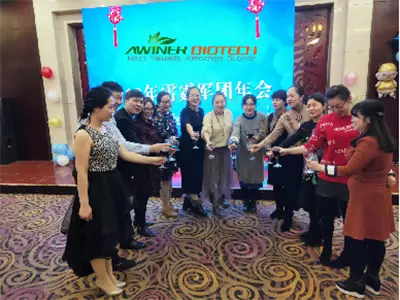
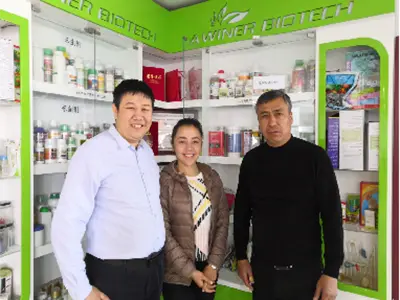
Global Market Reach: Up to now, we have won customers from Iraq, Iran, Afghanistan, Pakistan, India, Libya, Syria, Turkey, Yemen, Ukraine, Russia, Kazakhstan, Uzbekistan, Chile, Bolivia, Mexico, Brazil, Paraguay, Nigeria, Djibouti, Rwanda, Somalia, Malaysia, Cambodia, Nepal, Myanmar, and beyond.
Awiner Biotech Global Footprint
Awiner Agro Market Inspections & Trade Shows

Exhibitions & Customer Field Inspections

Our dedicated technical and sales teams regularly participate in international agrochemical exhibitions across Turkey, Iran, Pakistan, Nigeria, Russia, Cambodia, Malaysia, Uzbekistan, and more.

We proactively conduct on-site customer market surveys, visiting client territories to analyze localized field challenges, inspect product application outcomes, evaluate weather conditions, and engineer tailormade crop protection and rodent control solutions.

Technical Roadmap: Next-Gen Formulation & IPM Deployment

To combat rodent bait shyness and physiological resistance, Chinese chemical manufacturers are pushing technological boundaries across formulation types:

1. Soft Bait Sachets

High-lipid and oil-based paste formulations packed in edible filter paper. Provides exceptional scent diffusion and higher moisture attraction in dry agricultural warehouses.

2. Extruded Wax Blocks

Precision-molded with central hanging holes for secure fixing inside tamper-resistant bait stations. Ideal for sewer systems, damp livestock farms, and tropical plantations.

3. Impregnated Grain Baits

Whole or crushed grains vacuum-infused with active toxicants. Perfectly mimics natural forage sources for agricultural field rodents (Microtus spp. and Gerbillus spp.).

Macro Sector-Specific Rodent Control Strategies

Different industrial and commercial sectors require optimized bait placement, formula selection, and safety protocols:

  • Agricultural Field Protection (Rice, Sugarcane, Oil Palm): Requires broadcast-ready pelletized baits or weatherproof block lines established along field margins to halt seasonal migration into crops.
  • Livestock & Poultry Biosecurity: Rodents carry pathogens like Salmonella and Avian Influenza. Use of secured block baits within lockable bait stations along perimeter fences prevents non-target ingestion by poultry.
  • Urban Public Health & Sewer Infrastructure: Employs high-density paraffinized Brodifacoum blocks suspended above waterline marks to eliminate reservoir rat colonies.
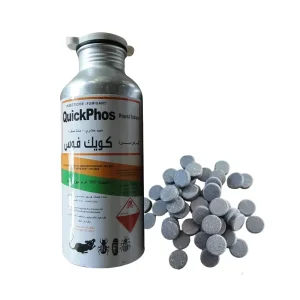
  • Commercial Grain Storage & Port Logistics: Utilizes combined treatments—acute fumigants like Aluminium Phosphide for rapid store clearing, paired with perimeter rodenticide bait barriers for long-term protection.

Frequently Asked Questions (Technical & B2B Procurement)

Expert answers regarding chemical formulation, bulk sourcing, factory quotes, safety compliance, and regulatory execution.

What is the key difference between Brodifacoum and Bromadiolone in factory quotes?
Brodifacoum is a super-potent 2nd generation anticoagulant with an acute LD50 of ~0.27 mg/kg, rendering it effective after a single feeding even against resistant rodents. Bromadiolone (LD50 ~1.12 mg/kg) is slightly less toxic to non-target wildlife while maintaining high lethal efficiency against target species. Brodifacoum technical material generally commands a slightly higher factory price per unit active ingredient.
How do Chinese factories ensure rodenticide bait weatherproofing for tropical climates?
Manufacturers utilize specialized thermal extrusion processing to blend high-melting-point paraffin waxes (up to 30-35% concentration) with grain matrices. This seals the bait against humidity, torrential rainfall, and fungal decay, keeping the block intact and appealing to rodents for several weeks in tropical agricultural fields.
What safety features are embedded into commercial rodenticide bait blocks?
Standard quality protocols mandate the inclusion of Denatonium Benzoate (Bitrex) at 0.001% (10 ppm). This chemical induces an intensely bitter reaction in humans and domestic pets, causing instant regurgitation or rejection, while remaining completely odorless and unpalatable-neutral to rodents. Bright warning dyes (typically intense signal blue or red) are also incorporated.
What are the minimum MOQ and lead time requirements for custom OEM rodenticide bait orders?
Standard factory MOQs for custom-branded retail packaging or specific block shapes range from 1,000 kg to 5,000 kg depending on formulation complexity. Typical production lead time from artwork approval to port shipment is 15 to 25 business days.
How is secondary toxicity managed when applying anticoagulants near livestock?
Secondary poisoning risk is mitigated by using tamper-resistant bait stations securely anchored along walls or perimeter lines. Additionally, Vitamin K1 serves as an immediate, highly effective antidote for non-target domestic animals in cases of accidental exposure.
What regulatory documentation accompanies rodenticide chemical exports from China?
Full export packages include Certificate of Analysis (COA), Safety Data Sheets (SDS compliant with GHS standards), ICAMA registration support dossiers, Certificate of Origin (COO), and FAO compliance documentation.