Global Agrochemical B2B Portal

Wholesale Agricultural Defoliant Quotes & Global Supplier Network

Enterprise-grade crop harvest aids, plant growth regulators, and custom chemical formulations by Awiner Biotech. Precision desiccation solutions engineered for yield optimization and mechanized harvest efficiency.

Company Profile: Pioneering Agrochemical R&D & Global Supply Chain

Awiner Biotech: Founded in 2006, located in northern China—Shijiazhuang, Hebei Province (close to Beijing, with convenient logistics infrastructure). Dedicated to the synthesized research, precision production, and global distribution of crop protection chemical solutions.

As an established chemical manufacturer and exporter, Awiner Biotech specializes in five core agrochemical verticals: agricultural defoliants, crop herbicides, protective fungicides, systemic insecticides, public health pest controls, and plant growth regulators (PGRs). By implementing strict Quality Assurance (QA) standards conforming to FAO and WHO specifications, we empower commercial farms, state agriculture boards, and wholesale importers with cost-effective harvest aids and plant health solutions.

2006
Established Year
27+
Global Export Markets
500+
Formulation Options
100%
Compliance & Testing

Global Market Footprint & International Field Operations

Through persistent market inspection, local agronomic research, and active participation in international trade exhibitions, Awiner Biotech has secured long-term strategic partnerships across major agricultural centers in Europe, Asia, Africa, and the Americas.

Primary Export Destinations & Verified Trade Networks:

IraqIranAfghanistan PakistanIndiaLibya SyriaTurkeyYemen UkraineRussiaKazakhstan UzbekistanChileBolivia MexicoBrazilParaguay NigeriaDjiboutiRwanda SomaliaMalaysiaCambodia NepalMyanmar

Our localized service model includes technical field visits, post-application monitoring, customer market surveys, and customized packaging compliant with national registration guidelines. Furthermore, Awiner Biotech regularly showcases innovations at worldwide agricultural expos across Turkey, Iran, Pakistan, Nigeria, Russia, Cambodia, Malaysia, and Uzbekistan.

Global Commercial & Industrial Status of #agriculturaldefoliant

In modern commercial crop production, **agricultural defoliants** (harvest aid chemicals) represent a vital category of plant growth regulators and desiccation agents. As mechanical harvesting replaces manual labor across broadacre crops—most notably cotton, potatoes, soybean, sunflower, and pulse crops—the demand for reliable, fast-acting, and environmentally responsible defoliation agents has expanded dramatically across North America, Latin America, Central Asia, and the Black Sea region.

Mechanization Acceleration
Rapid transition toward automated combine and cotton-picker harvesting requires uniform canopy leaf drop, boll opening synchronization, and reduced trash content in harvested raw fibers.
Yield Quality Optimization
Chemically induced defoliation prevents green leaf staining on cotton lint, minimizes crop moisture during grain harvest, reduces dockage fees, and prevents fungal boll rot.
Climate Mitigation
Enables predictable harvest scheduling prior to early frost, seasonal rain storms, or monsoon occurrences, protecting market value and field machine efficiency.

Macro Market Structure & Economic Rationale for Wholesale B2B Buyers

Bulk purchasers of defoliation formulations—including regional distributors, agricultural cooperatives, state farm enterprises, and pesticide blenders—evaluate products based on active ingredient concentration, canopy penetration dynamics, rainfastness, temperature sensitivity, and tank-mix compatibility.

Defoliant Category / Active Ingredient Primary Target Crops Mode of Action (MoA) Commercial Advantage
Thidiazuron (TDZ) + Diuron Upland & Pima Cotton Ethylene stimulation & leaf abscission layer formation Prevents leaf regrowth; high efficacy at elevated temperatures
Ethephon (PGR / Harvest Aid) Cotton, Tobacco, Tomatoes Systemic release of ethylene accelerating boll opening & fruit ripening Synchronizes harvest timing; maximizes first-pick yield percentage
Glufosinate-ammonium / Diquat Potatoes, Canola, Sunflower, Pulses Cell membrane disruption & rapid moisture desiccation Enables rapid green tissue burn-down for fast combine harvesting
Sodium Chlorate / Tribufos Organophosphates Broadacre Fibers & Grains Contact leaf desiccation and rapid foliage shedding Cost-effective bulk desiccation under cooler climatic regimes

Technical Roadmap & Innovation Vectors in Defoliant Chemical Formulations

The crop protection industry is undergoing a structural transition toward low-toxicity, drift-controlled, eco-friendly chemical formulations. Awiner Biotech leverages state-of-the-art laboratory synthesis and advanced surfactant engineering to overcome legacy chemical limitations.

1. Nano-Emulsion & Micro-Encapsulation
Traditional EC (Emulsifiable Concentrate) formulations rely heavily on aromatic solvents. Modern technological roadmaps emphasize Ultra-Low Volume (ULV) micro-encapsulated suspensions (CS) and Soluble Concentrates (SC). This engineering reduces solvent toxicity, minimizes active volatile degradation, and enhances rainfastness within 2 hours of application.
2. UAV Air-Spraying Optimization
The worldwide expansion of Unmanned Aerial Vehicle (UAV) drone spraying demands specialized agrochemical characteristics: anti-evaporation technology, drift-reduction adjuvants, high droplet deposition rates, and zero nozzle clogging. Formulations must maintain chemical stability at high concentration levels.
3. Multi-Action Synergistic Tank Mixes
Integrating leaf-drop stimulants (such as Thidiazuron) with crop desiccation agents (Diuron/Glufosinate) and boll-opening agents (Ethephon) into pre-mixed, single-pass formulations reduces field tractor runs by up to 50%, preserving soil structure and lowering overall diesel costs.

Chemical Physiology of Agricultural Defoliation

Effective defoliation requires precise hormonal triggering within the target crop. Chemical defoliants do not merely burn foliage; they stimulate the natural leaf abscission process by disturbing the Auxin-to-Ethylene ratio within the plant petiole joint.

Biochemical Mechanism: High quality TDZ (Thidiazuron) formulations trigger endogenously produced ethylene while inhibiting auxin transport from leaf blades to stems. This imbalance signals the plant to form a distinct layer of parenchymal cells—the abscission zone—at the leaf petiole base. The leaf detaches cleanly under wind or weight, leaving the open cotton bolls unpolluted by leafy debris.

Localized Application Scenarios & Regional Agronomic Protocols

Agrochemical performance is closely tied to ambient temperature, relative humidity, crop density, and local irrigation practices. Below are macro-regional operational protocols supported by Awiner Biotech's agronomic advisory services:

Arid & High-Temperature Zones (Middle East & Central Asia)
Target Countries: Uzbekistan, Kazakhstan, Pakistan, Iraq, Iran, Syria.
Agronomic Challenge: Rapid spray evaporation under low air humidity (<30%) and high ambient heat (>35°C).
Protocol: Application during early morning or twilight hours using non-ionic organosilicone tank surfactants combined with Thidiazuron 500g/L SC + Ethephon 720g/L SL to secure leaf detachment before tissue desiccation occurs.
Temperate & Humid Basins (Eastern Europe & Black Sea)
Target Countries: Russia, Ukraine, Turkey, Moldova.
Agronomic Challenge: Cool daytime autumn temperatures (<15°C) slowing enzymatic plant activities during sunflower and grain desiccation.
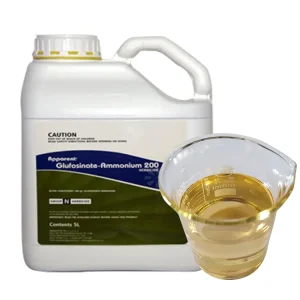
Protocol: Deployment of fast-acting contact desiccation chemistry like Glufosinate-ammonium 200g/L SL or Diquat compounds, bypassing low-temperature hormonal latency to achieve rapid crop dry-down prior to frost.
Subtropical Broadacre Belts (Latin America & SE Asia)
Target Countries: Brazil, Paraguay, Bolivia, Mexico, Malaysia, India.
Agronomic Challenge: Sudden autumn rainfall washing away surface chemical applications.
Protocol: Advanced rainfast sticker-adjuvant blends paired with systemic pyrethroid pest suppression (e.g., Beta-cypermethrin / Imidacloprid mixtures) to control late-season bollworms while executing canopy leaf removal.

Enterprise Agrochemical Supply Chain & Quality Management Systems

Managing international B2B agrochemical tenders and wholesale shipments demands rigorous quality control, regulatory documentation, and customizable packaging solutions. Awiner Biotech operates an end-to-end global supply framework:

Analytical Testing
Every production batch undergoes High-Performance Liquid Chromatography (HPLC) and Gas Chromatography (GC) validation to verify active purity and strict impurity limits (e.g., nitrosamines, heavy metals).
Custom Formulation
Tailored synthesis capability for multi-way combination products, specialty adjuvants, custom liquid SG ratios, and water-soluble packaging tailored to client specifications.
Regulatory Support
Full GLP registration dossier packages, Certificate of Analysis (COA), Safety Data Sheets (SDS), ICAMA documentation, and local ministry compliance assistance.
Export Packaging
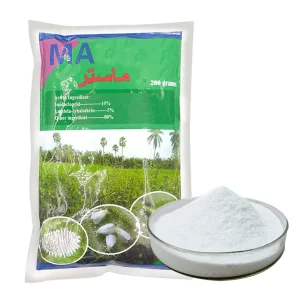
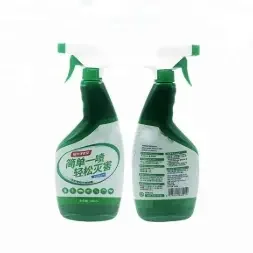
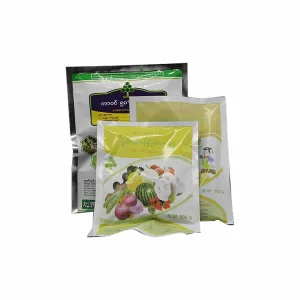
UN-approved heavy-duty packaging solutions including fluorinated HDPE bottles, COEX drums, aluminum bottles, and moisture-proof outer cartons.
Custom Supply Chain Commitment: We ensure guaranteed shelf life stability (minimum 2 years under tropical storage conditions), temperature-controlled shipping logistics, and full cargo traceability from our Hebei manufacturing site to major global seaports worldwide.

Commercial & Technical FAQ: Wholesale Agricultural Defoliant Sourcing

Frequently asked questions by B2B agrochemical buyers, distributors, and commercial plantation managers.

What is the optimal timing for applying cotton defoliant formulations?
Cotton defoliants should ideally be applied when 60% to 70% of bolls are naturally open, and the youngest harvestable boll is mature (un-sliceable with a pocket knife and showing seeds with darkened seed coats). Applying defoliants too early can reduce fiber micronaire and seed weight, whereas applying too late risks weather exposure damage to open lint.
How does daily ambient temperature impact Thidiazuron (TDZ) defoliation efficiency?
Thidiazuron is highly sensitive to temperature. It performs optimally when nighttime temperatures remain above 16°C (60°F) and daytime temperatures range between 24°C and 35°C. When nighttime temperatures dip below 15°C, it is recommended to tank-mix TDZ with hormonal accelerators such as Ethephon or switch to contact-type desiccation chemistries like Glufosinate or Diuron.
Can agricultural defoliants be tank-mixed with insecticides or fungicides?
Yes. Tank mixing defoliants with late-season insecticides (such as Imidacloprid, Beta-cypermethrin, or Fipronil) is a common strategy to clean up late-season whiteflies, aphids, or bollworms during leaf drop. However, physical jar compatibility tests and pH verification are required before broadacre mixing. Highly alkaline chemicals should be avoided to prevent active ingredient hydrolysis.
What is the Minimum Order Quantity (MOQ) and lead time for wholesale exports from Awiner Biotech?
Our standard commercial MOQ for customized formulations is typically 1,000 Liters for liquids or 1,000 Kilograms for solid/powder formulations. Lead time for standard packaging is 15-20 days post-order confirmation. Customized brand packaging, special bottle molds, or GLP dossier registration requirements may extend preparation time by 7-10 days.
What is the difference between chemical defoliation and crop desiccation?
Defoliation involves triggering green leaf drop via physiological plant signals (abscission zone formation) while keeping the plant tissue green and living long enough to shed leaves cleanly. Desiccation refers to the rapid kill and drying out of plant foliage and stem tissue (usually using contact herbicides like Diquat or Glufosinate), which is preferred in crops like potatoes, seed canola, and dry beans where leaf drop is not naturally programmed.

Ready to Request Wholesale Quotes & Customized Formulations?

Partner with Awiner Biotech for high-performance #agriculturaldefoliant batches, custom registration dossiers, and dependable global shipping logistics. Contact our agronomic technical sales team today.