Top-tier fungicides, plant growth regulators, and systemic insecticides engineered for maximum crop protection
Blossom blight, predominantly caused by the fungal pathogens Monilinia fructicola, Monilinia laxa, and Monilinia fructigena (as well as Botrytis cinerea in soft fruits and Sclerotinia sclerotiorum in broadacre crops), represents one of the most economically devastating necrotic diseases affecting stone fruits (peaches, cherries, plums, nectarines), pome fruits (apples, pears), and almond orchards worldwide. Early-season blossom infection not only destroys the yield potential of the current bloom cycle but also establishes an aggressive inoculum base for secondary summer brown rot on developing fruit.
The infection process initiates during the pink bud to petal fall stages when ascospores released from overwintered mummies or conidia from twig cankers land on susceptible floral structures (anthers, stigmas, petals). High relative humidity (>85%) combined with ambient temperatures between 15°C and 25°C creates an optimal microclimate for spore germination. The fungal hyphae penetrate the tissue within 4 to 6 hours, colonizing the floral receptacle and progressing down the pedicel into the supporting twig, causing vascular collapse, gumming, and terminal shoot blight.
To mitigate catastrophic agricultural loss, enterprise procurement officers and distributors must source highly reliable, multi-site, and systemic fungicide active ingredients. As a leading primary manufacturer, Awiner Biotech formulates advanced fungicides designed to disrupt fungal respiration, cell membrane biosynthesis, and nuclear division, guaranteeing maximum bio-efficacy and structural rainfastness.
Next-generation active molecules, biological integration, and FRAC resistance prevention technologies
Over-reliance on single-site quinone outside inhibitors (QoIs / Strobilurins) and Demethylation Inhibitors (DMIs / Triazoles) has led to point mutations such as G143A in cytochrome b. Our engineering roadmap focuses on co-formulated premixes—combining Pyraclostrobin with Tebuconazole or multi-site protective partners—to suppress mutant selection pressure and extend product lifespans.
Transitioning from solvent-heavy EC (Emulsifiable Concentrates) to eco-friendly WDG (Water Dispersible Granules) and SC (Suspension Concentrates). Utilizing micro-encapsulated controlled-release technology, our formulations achieve mean particle sizes below 2.0 microns, ensuring superior foliar coverage, enhanced cuticular penetration, and resistance to UV degradation.
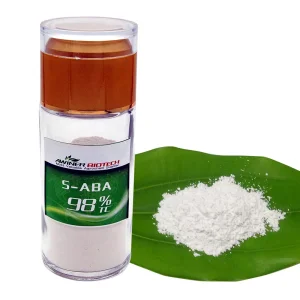
Integrating chemical fungicides with plant defense elicitors such as S-Abscisic Acid (S-ABA) and bio-based lipopeptides. This dual-action mechanism enhances systemic acquired resistance (SAR) in stone fruit flowers while delivering direct fungicidal activity against Monilinia spore germ tubes.
By coupling Pyraclostrobin (FRAC Code 11, inhibiting complex III in the mitochondrial electron transport chain) with Tebuconazole (FRAC Code 3, inhibiting C14-demethylase in ergosterol biosynthesis), our proprietary 20% Pyraclostrobin + 40% Tebuconazole WDG formulation provides both preventive barrier protection and curative systemic activity against blossom blight pathogens.
Comprehensive disease prevention frameworks engineered for commercial orchards and large-scale agricultural enterprises
| Growth Stage | Target Pathogen / Phenology | Recommended Fungicide Formulation | Application Rate & Strategy | Agronomic Objective |
|---|---|---|---|---|
| Popcorn Stage (5% Bloom) | Monilinia fructicola ascospore release | Pyraclostrobin 20% + Tebuconazole 40% WDG | 0.25 - 0.35 kg/ha in 1000L water | Establishes protective chemical shield on expanding petals; halts spore germination. |
| Full Bloom (80% Open) | High-risk infection window (Stigma/Anther colonization) | Systemic Triazole / Biological Co-application | Standard dose; tank-mixed with non-ionic surfactant | Deep vascular penetration preventing floral receptacle infection and twig blight transmission. |
| Petal Fall | Secondary conidial spread & initial fruit set | Multi-site protective fungicide (e.g., Captan/Mancozeb or SC co-mix) | 0.4 - 0.5 L/ha | Eradicates latent infections; guards young developing fruitlets against secondary inoculum. |
| Pre-Harvest (7-14 Days PHI) | Latent brown rot activation on maturing fruit | Low-residue bio-fungicide or short PHI SC active | Calibrated air-blast spraying | Maximizes post-harvest storage shelf life and complies with global MRL standards. |
Commercial orchardists face unpredictable spring weather conditions during the blossom window. Awiner Biotech's specialized adjuvant system incorporates polyether-modified polysiloxanes that reduce dynamic surface tension to < 22 mN/m. This ensures rapid spreading across waxy floral cuticles and achieves complete rainfastness within 30 minutes of application, preventing product wash-off during early spring rains.
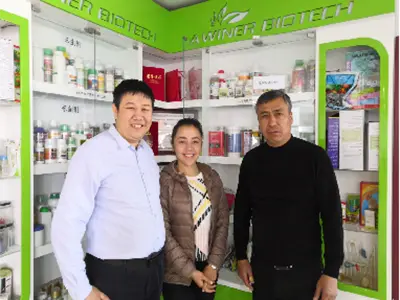
Founded in 2006 in Shijiazhuang, Hebei Province (adjacent to Beijing), Awiner Biotech has evolved into a premier China agrochemical manufacturer committed to the synthesis, formulation, and global distribution of advanced crop protection chemicals.
Our smart manufacturing facility leverages Industry 4.0 automation systems, continuous flow reactors, and fluid bed jet milling technology for high-capacity WDG, SC, EC, and WP production. By integrating raw material synthesis directly with automated packaging lines, we guarantee continuous, reliable supply chains for global enterprise clients, buffering against raw material price volatility and shipping bottlenecks.
Comprehensive international trade solutions tailored for agrochemical importers, brand owners, and agricultural distributors
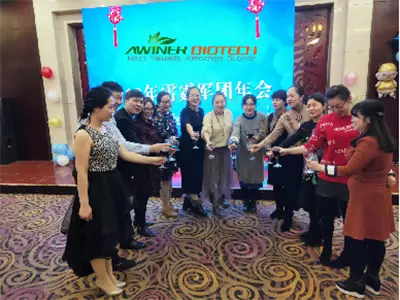
Navigating pesticide registration requirements demands meticulous analytical data and country-specific field trial support. Up to now, Awiner Biotech has built successful long-term partnerships with customers across more than 30 nations, including Iraq, Iran, Afghanistan, Pakistan, India, Libya, Syria, Turkey, Yemen, Ukraine, Russia, Kazakhstan, Uzbekistan, Chile, Bolivia, Mexico, Brazil, Paraguay, Nigeria, Djibouti, Rwanda, Somalia, Malaysia, Cambodia, Nepal, Myanmar, and many others.
We routinely participate in major international agrochemical exhibitions in Turkey, Iran, Pakistan, Nigeria, Russia, Cambodia, Malaysia, and Uzbekistan. Furthermore, our technical teams conduct on-site market surveys directly in customer territories—evaluating local climatic stress, analyzing field efficacy, and offering tailored solutions to optimize crop yields.
We supply complete GLP-compliant toxicological reports, 5-batch analysis documents, environmental fate studies, and product stability tests to facilitate seamless pesticide registration with local Ministries of Agriculture.
From 100ml bottles to 1000L IBC totes for liquid SC/EC formulations, and 100g foil sachets to 500kg bulk bags for WDG/WP powders—our packaging features UN-certified anti-corrosive linings engineered for ocean transport.
Strategically situated near Tianjin and Qingdao ports, we provide optimized shipping routes, flexible payment structures (L/C, T/T, D/P), and dedicated logistics tracking to ensure zero delivery downtime during peak spray seasons.
Technical & commercial insights for agrochemical procurement specialists and distributors
Explore our high-performance insecticides, acaricides, and public health formulations
 Awiner Biotech