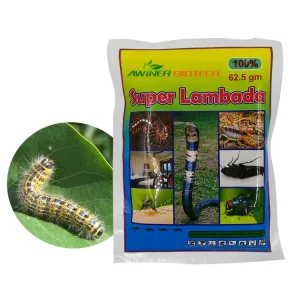
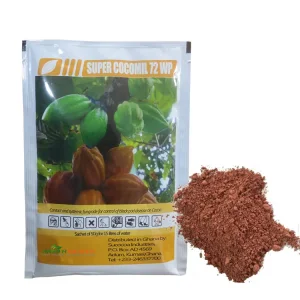
Explore our top-tier wholesale formulations engineered for robust broad-spectrum weed suppression, insect control, and agricultural yield security.
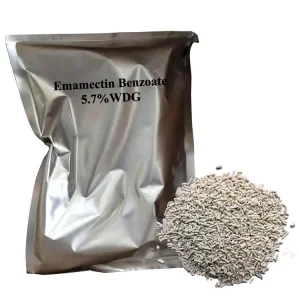
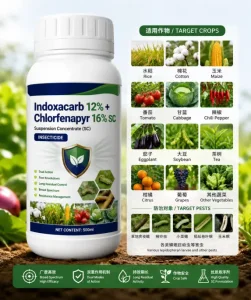
A comprehensive evaluation of biochemical target sites, vascular translocation kinetics, and systemic residual control for enterprise agricultural importers.
Modern intensive crop production requires sophisticated weed management solutions capable of distinguishing between monocotyledonous crops (such as wheat, corn, rice, and sugarcane) and invasive dicotyledonous (broadleaf) weeds. Broadleaf weed species—including Amaranthus retroflexus (pigweed), Chenopodium album (lambsquarters), Convolvulus arvensis (field bindweed), and Xanthium strumarium (cocklebur)—compete aggressively for rhizosphere nutrients, sunlight, and soil moisture. Left unmanaged, broadleaf weed interference can result in yield reductions ranging from 25% to over 70% across major commercial arable acres.
To deliver high Information Gain for enterprise buyers, it is vital to understand the primary modes of action (MoA) deployed within top-tier wholesale broadleaf herbicide factories:
Key Takeaway: Selective broadleaf control relies on enzymatic specificity, metabolic degradation by the target crop, and distinct physiological translocation pathways between dicots and monocots.
Molecules such as 2,4-D, Dicamba, MCPA, and Fluroxypyr mimic endogenous indole-3-acetic acid (IAA). In dicotyledonous weeds, these systemic synthetic auxins overload the plant's hormonal signaling pathways, causing rapid, uncontrolled cell division, vascular tissue disruption, stem epinasty, and eventual phloem collapse. Monocot crops exhibit natural resistance through rapid metabolic degradation and structural vascular isolation.
Sulfonylureas (e.g., Tribenuron-methyl, Thifensulfuron-methyl) and Imidazolinones target the enzyme ALS, which is essential for the biosynthesis of branched-chain amino acids (valine, leucine, and isoleucine). Blocking this metabolic cascade halts apical meristem cell division within hours of application, causing slow chlorosis, necrosis, and systemic weed mortality while maintaining absolute selectivity in aligned tolerant crop cultivars.
Active ingredients like Fomesafen, Flumioxazin, and Oxyfluorfen inhibit the PPO enzyme in the chlorophyll biosynthesis pathway. This leads to an accumulation of protoporphyrin IX, which reacts with light and oxygen to generate reactive oxygen species (ROS). These singlet oxygen molecules destroy lipid cell membranes, leading to rapid foliar desiccation within 24 to 48 hours.
| Active Ingredient | Chemical Class | HRAC Group | Primary Target Weeds | Crop Selectivity |
|---|---|---|---|---|
| 2,4-D Isooctyl Ester | Phenoxy-carboxylate | Group 4 (Auxin) | Broadleaf perennials, mustard, thistle | Corn, Wheat, Sorghum, Turf |
| Fluroxypyr-meptyl | Pyridinecarboxylic acid | Group 4 (Auxin) | Galium aparine, Kochia, Bindweed | Cereals, Corn, Pastures |
| Tribenuron-methyl | Sulfonylurea | Group 2 (ALS) | Annual broadleaf weeds, Anthemis | Wheat, Barley, Oats |
| Fomesafen | Diphenylether | Group 14 (PPO) | Amaranthus spp., Ragweed, Velvetleaf | Soybeans, Common Beans |
| Pendimethalin | Dinitroaniline | Group 3 (Microtubule) | Pre-emergence broadleaf & grasses | Cotton, Corn, Vegetables |
Delivering optimized physical stability, droplet coverage, rainfastness, and tank-mix compatibility through innovative chemical engineering.
Utilizing fluid-bed granulation and spray-drying towers, our WDG formulations offer zero dust hazard, high bulk density, rapid disintegration in hard water (<60 seconds), and 2-year shelf stability without caking.
Engineered via wet sub-micron bead milling, achieving particle size distributions where D90 < 2.5 microns. This ensures enhanced foliar adhesion, minimal Ostwald ripening, and non-settling flowable suspension.
Formulated using high-purity technical grade actives blended with customized bio-based or aromatic solvent systems and balanced anionic/non-ionic surfactant pairs to produce spontaneous micro-emulsions upon dilution.
Highly concentrated aqueous formulations optimized with specialized organosilicone penetration enhancers, drastically reducing surface tension and increasing foliar uptake under stressful environmental conditions.
Leveraging vertical raw material integration, chemical industrial cluster synergy, and large-scale synthesis capabilities to empower global distributors.
China represents over 70% of the world's technical-grade pesticide active ingredient (TC) production capacity. For global crop protection brands, B2B importers, and enterprise distributors, sourcing broadleaf weed control herbicides directly from established chemical manufacturing hubs in Shijiazhuang, Hebei Province provides unmatched structural benefits:
Rigorous quality verification, analytical testing metrics, and packaging specifications essential for international tenders and commercial contracts.
Procuring broadleaf weed control herbicides at factory-direct wholesale volumes demands stringent quality control protocols to protect brand equity and field performance. International buyers must evaluate manufacturers using standardized chemical and physical metrics:
Every technical and formulated batch undergoes High-Performance Liquid Chromatography (HPLC) or Gas Chromatography (GC) analysis to verify active ingredient content matches exact contract specifications (within FAO tolerance limits).
Monitoring relevant toxicological impurities (such as nitrosamines or specific side-reaction isomer byproducts) ensuring strict compliance with European Chemicals Agency (ECHA) and US EPA regulatory ceilings.
Comprehensive laboratory testing for persistent foaming, emulsion stability, suspensibility percentage (>90%), wet sieve residue (<0.5% on 45μm sieve), and pH equilibrium stability.
Thermal degradation evaluation under CIPAC MT 46.3 guidelines (54°C ± 2°C for 14 days) to guarantee a minimum real-world shelf life of 24 months across tropical and humid storage conditions.
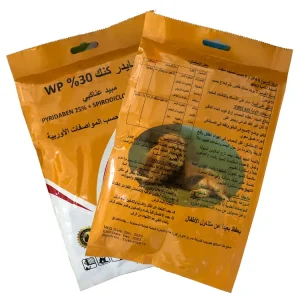
Commercial clients require versatile, durable, and fully compliant container options designed to withstand rigorous international sea transport and multi-tiered retail distribution. Key packaging configurations available from top Chinese herbicide manufacturers include:
Empowering local market entry through GLP-certified data support, FAO/WHO specifications, and environmental safety management.
Securing market registration with national Ministries of Agriculture (such as MAPA in Brazil, SENASA in South America, EFSA in Europe, or local agricultural departments across Africa and the Middle East) is often the longest bottleneck for agrochemical importers.
A reliable wholesale broadleaf herbicide manufacturer serves as a strategic regulatory partner, providing complete GLP (Good Laboratory Practice) registration packages including:
Dossier Capabilities: Five-batch analysis reports, acute toxicology studies (oral, dermal, inhalation, skin/eye irritation), eco-toxicology datasets (bee, fish, daphnia, earthworm, algae toxicity), and crop residue decay dynamics.
Furthermore, maintaining strict Maximum Residue Limit (MRL) compliance is essential for export-oriented crop production. Modern formulation chemistry minimizes eco-toxicity profiles while maximizing target weed selectivity, supporting global bio-security and sustainable Integrated Pest Management (IPM) protocols.
Maximizing herbicide efficacy across diverse agricultural ecosystems while preventing resistance build-up in target weed populations.
Post-emergence treatment during early tillering stage using synthetic auxin combinations (e.g., Fluroxypyr + 2,4-D or Tribenuron-methyl) effectively controls cleavers, wild mustard, and chickweed without phytotoxicity to the grain crop.
Combining pre-emergence residual barriers (such as Pendimethalin) with post-emergence selective active ingredients guarantees full-season suppression of pigweed, cocklebur, and broadleaf nightshade under varied soil moisture regimes.
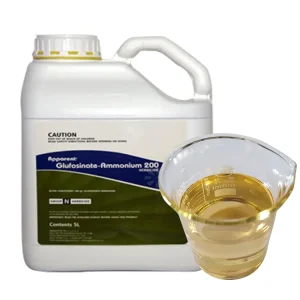
Directed post-emergence burn-down applications using non-selective herbicides (such as Glufosinate-ammonium 20SL) deliver rapid control of tough broadleaf species while avoiding root uptake or systemic trunk damage in perennial tree crops.
Repeated reliance on single-site mechanism herbicides has led to widespread weed resistance (e.g., glyphosate-resistant Amaranthus palmeri). To mitigate this critical threat, wholesale manufacturers advocate for multi-MoA tank-mix combinations and pre-formulated chemical blends. By co-formulating actives with contrasting site-of-action codes (e.g., pairing Group 4 synthetic auxins with Group 2 ALS inhibitors), weed resistance pathways are effectively bypassed, restoring total control efficacy.
How next-generation manufacturing technologies are shaping the future of global broadleaf weed management.
The global crop protection industry is undergoing a structural transition driven by environmental stewardship, regulatory tightening, and digital precision agriculture. Key trends defining the next decade of broadleaf herbicide production include:
Development of anti-drift, anti-evaporation SC and EC formulations specifically designed for agricultural drone spraying systems operating at application rates of 10–20 L/ha.
Utilizing predictive molecular modeling to engineer bio-based solvent matrices that maximize cuticle wax penetration while reducing volatile organic compound (VOC) emissions.
Transitioning from synthetic polymer encapsulation to natural lignin- and cellulose-based microcapsules (CS) for controlled, slow-release pre-emergence weed control.
Dedicated to research, high-volume production, and international distribution of premium crop protection chemicals.
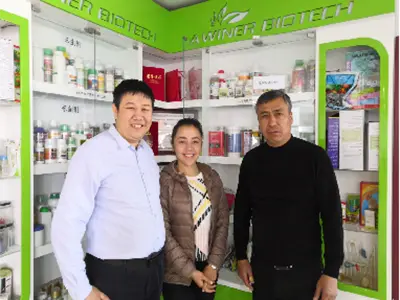
Awiner Biotech was founded in 2006, located in northern China at Shijiazhuang, Hebei Province. Situated close to China's capital Beijing, our facility enjoys convenient logistics connections to global shipping corridors. Awiner Biotech is deeply committed to researching, producing, and distributing high-grade agrochemicals across the globe.
Our enterprise scope includes comprehensive manufacturing of selective and non-selective herbicides, systemic insecticides, broad-spectrum fungicides, plant growth regulators (PGR), and high-potency public health pesticides.
Up to now, we have established enduring partnerships with clients across Iraq, Iran, Afghanistan, Pakistan, India, Libya, Syria, Turkey, Yemen, Ukraine, Russia, Kazakhstan, Uzbekistan, Chile, Bolivia, Mexico, Brazil, Paraguay, Nigeria, Djibouti, Rwanda, Somalia, Malaysia, Cambodia, Nepal, Myanmar, and beyond.
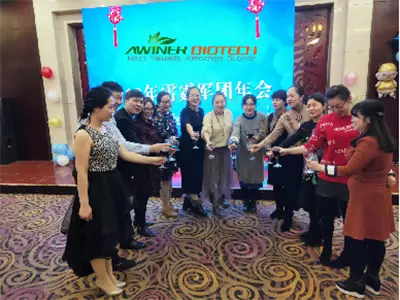
We actively participate in international chemical and agricultural trade exhibitions in countries including Turkey, Iran, Pakistan, Nigeria, Russia, Cambodia, Malaysia, and Uzbekistan. Furthermore, our senior technical teams regularly conduct overseas market surveys to analyze local crop conditions, resolve field application challenges, and optimize formulation parameters alongside our global distribution partners.
Detailed answers regarding technical specifications, minimum order quantities, custom formulations, registration support, and shipping logistics.
Herbicide selectivity is dictated by differential metabolic degradation rates between crops and target weeds, physiological vascular variations, spray retention characteristics, structural leaf wax barriers, and precise placement timing (pre-emergence vs. post-emergence).
Yes. Our production facilities specialize in custom OEM/ODM formulation development. We can formulate multi-active binary or ternary mixture products (e.g., SC, WDG, EC) tailored to specific target weed profiles and local climate conditions required by enterprise distributors.
We offer comprehensive regulatory assistance, providing GLP-certified product data, Certificate of Analysis (COA), MSDS, FAO specifications, 5-batch analysis reports, acute and chronic toxicological data, and field trial efficacy reports necessary to clear Ministry of Agriculture regulatory hurdles in target countries.
Standard MOQs typically range from 1,000 Liters/Kilograms for high-value specialized formulations to full container loads (20ft FCL) for commodity products. Average manufacturing and packaging lead time is 15 to 25 days following label layout finalization and registration verification.
All commercial batches undergo accelerated heat storage tests (CIPAC MT 46.3) at 54°C for 14 days prior to packaging dispatch. We utilize high-grade emulsifiers, dispersants, and thermal stabilizers designed to prevent phase separation, crystallization, or active ingredient degradation in humid or high-temperature regions.
Complete crop protection lineup featuring targeted active ingredients, fungicides, systemic insecticides, and growth regulators.
 Awiner Biotech