High-performance crop protection, plant growth regulators, and harvest aid agents tailored for commercial large-scale agriculture.
An authoritative technical guide on physiological defoliation, boll opening kinetics, supply chain management, and chemical synthesis.
In modern industrial agriculture, cotton defoliation represents the ultimate agronomic bridge between crop maturity and mechanical harvesting. Efficient defoliation is not merely a desiccation process; it is a delicate biochemical intervention that induces premature leaf abscission, accelerates boll dehiscence (opening), reduces trash contents in harvested lint, and prevents trash-induced lint staining. For global cotton enterprise buyers, importers, and agricultural authorities, sourcing high-efficiency defoliants directly from established Chinese chemical manufacturing plants offers significant strategic advantages in terms of active ingredient (AI) concentration, formulation stability, scale economics, and compliance with stringent environmental standards.
This whitepaper synthesizes technical knowledge surrounding key active defoliant chemistry—including Thidiazuron (TDZ), Diuron, Ethephon, and Cyclanilide—while evaluating the macro-economic advantages of China's chemical infrastructure, advanced application methodologies such as UAV ultra-low volume (ULV) aerial spraying, and enterprise-level bulk procurement protocols.
Understanding the physiological mode of action for optimal leaf abscission and boll dehiscence.
Thidiazuron acts as a synthetic substituted phenylurea plant growth regulator. Unlike harsh contact desiccants, TDZ exhibits potent cytokinin activity. At optimal dosages, it stimulates ethylene synthesis in leaf petioles while suppressing auxin transport. This triggers the formation of a natural abscission layer at the leaf base, causing intact leaves to drop while still green, preventing dry leaf fragment contamination in cotton fiber.
Combining Thidiazuron with Diuron (a Photosystem II inhibitor herbicide) significantly enhances low-temperature efficacy. Diuron induces mild light-dependent stress in foliage, accelerating the abscission response even when daytime temperatures dip below 18°C. This combination is the industry gold standard for cold-climate cotton belts such as Xinjiang, Central Asia, and Northern Argentina.
Ethephon breaks down within plant tissues to release ethylene gas directly into the boll pericarp. This triggers rapid tissue softening, speeds up internal carpel maturation, and forces simultaneous opening of mature unopened bolls. Tank-mixing TDZ+Diuron with Ethephon synchronizes harvest timing, enabling single-pass mechanical picking and reducing field exposure risks.
| Formulation Type | Active Ingredients (AI) | Target Temperature Range | Primary Agronomic Benefit | Recommended Application Rate |
|---|---|---|---|---|
| TDZ 500g/L SC / 50% WP | Thidiazuron | > 22°C (Warm Climates) | Clean green leaf drop, zero regrowth | 150 - 300 g/Ha |
| TDZ + Diuron 540g/L SC | TDZ 360g/L + Diuron 180g/L | 15°C - 22°C (Cool Climates) | Rapid defoliation, rainfast, handles cold spells | 200 - 400 mL/Ha |
| Ethephon 480g/L / 720g/L SL | 2-Chloroethylphosphonic acid | > 18°C | Accelerated boll opening & uniform maturation | 1500 - 2500 mL/Ha |
| Defoliation + Ripening Pack | TDZ+Diuron SC + Ethephon SL + Organosilicone Adjuvant | 14°C - 30°C (Universal) | Complete single-pass harvest preparation | Customized regional ratio |
Why international agchem buyers, distributors, and estate managers rely on Chinese supply chains for wholesale harvest aids.
China possesses the world's most complete chemical synthesis ecosystem for basic petrochemicals and phosphorus/nitrogen intermediates. From raw precursor chemical synthesis to technical grade (TC) active ingredient crystallisation, Chinese factories operate without reliance on overseas raw material imports. This backward integration guarantees uninterrupted production cycles and price resilience during global logistics disruptions.
Modern cotton defoliation requires sophisticated formulation science. Leading Chinese plants utilize high-energy bead milling technologies to achieve sub-micron particle size distribution in Suspension Concentrates (SC) and Water Dispersible Granules (WDG). Micro-fine particle sizes dramatically increase plant cuticle penetration, reduce surfactant load requirements, and eliminate nozzle clogging in automated spray booms.
With domestic cotton production hubs like Xinjiang driving massive internal consumption, Chinese producers operate high-capacity automated production lines. Scale economies translate into unmatched cost efficiencies per metric ton, giving global buyers direct access to factory-direct wholesale pricing without compromising purity or stability.
The transformation of cotton harvest aid application through robotics, smart adjuvant design, and eco-friendly chemistries.
The rapid adoption of agricultural UAVs (Unmanned Aerial Vehicles) in cotton spraying demands specialized chemical formulations. Traditional high-volume hydraulic liquids cause droplet drift or crystallization at ultra-low water volumes (15-30 L/Ha). Modern Chinese factories produce drone-customized defoliant formulations featuring anti-evaporants, drift reducers, and enhanced spreading agents for uniform canopy penetration.
Environmental compliance regulations worldwide are phasing out toxic aromatic solvents like Xylene and Isophorone. Manufacturers are pioneering water-based Suspension Concentrates (SC), Microemulsions (ME), and solvent-free Water Dispersible Granules (WDG) that maintain high bio-efficacy while meeting OECD eco-toxicity standards.
To reduce field passes and fuel consumption, next-generation harvest aid solutions integrate defoliant (TDZ), herbicide/stressor (Diuron), boll opener (Ethephon), and leaf regrowth inhibitor into single pre-blended products, reducing grower labor costs by up to 40%.
Customizing chemical timing, dosage, and tank-mix partners to diverse regional climate profiles.
Agronomic Context: Ultra-dense drip-irrigated cotton with 120,000-150,000 plants/Ha. Rapid temperature drop in late September.
Protocol: Double application strategy. First spray: TDZ 50% WP (150g/Ha) + Ethephon 48% (1000mL/Ha). Second spray 7-10 days later: TDZ+Diuron SC (250mL/Ha) via high-clearance boom sprayer or UAV swarm.
Agronomic Context: Arid continental climate, high autumn winds, moderate temperatures.
Protocol: Tank mix of TDZ 360g/L + Diuron 180g/L SC with organosilicone penetrating agents. Focus on complete canopy penetration to prevent late secondary leaf regrowth during extended dry harvests.
Agronomic Context: Large-scale mechanized estates, high rainfall risk, vigorous lush canopy vegetation.
Protocol: Inclusion of rainfast adjuvants with high concentration TDZ WDG. Precise timing when top bolls reach 60-70% open rate to preserve high-grade fiber color and micronaire values.
How institutional procurement managers minimize risk, verify chemical purity, and optimize international logistics.
Rigorous High-Performance Liquid Chromatography (HPLC) testing ensures active ingredient content meets guaranteed specs with zero unreacted toxic intermediates (e.g., free aniline limits in Diuron).
Accelerated heat storage testing (54°C for 14 days) and cold storage testing (0°C for 7 days) ensure zero phase separation, creaming, or crystallization during long sea freight transitions.
Options ranging from 100mL fluorinated HDPE bottles for smallholders to 200L UN-rated steel drums and 1000L IBC totes designed for commercial estate mixing stations.
Full support with FAO/WHO specifications, ICAMA export dossiers, COA, SDS, ISO certifications, and custom registration support for national agricultural ministries.
Delivering premium agrochemical solutions with proven research, modern production, and global delivery networks since 2006.
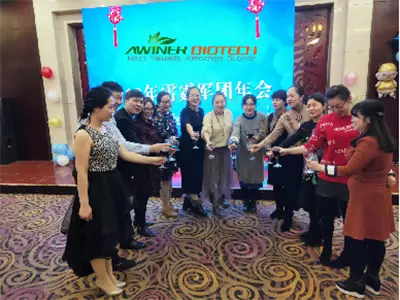
Awiner Biotech was founded in 2006, located in the north of China—Shijiazhuang, Hebei Province. The city is close to our capital Beijing, with convenient transportation links to major international ports like Tianjin.
Awiner Biotech is committed to research, production, and global distribution of agrochemicals. We specialize in high-efficiency pesticides, herbicides, fungicides, plant growth regulators (PGR), and public health pesticides. Our dedicated synthesis facilities and formulation labs adhere to ISO9001 and ISO14001 quality management systems, serving agricultural enterprises worldwide.
Up to now, we have established trusted long-term partnerships with clients across dozens of countries, including:
Iraq, Iran, Afghanistan, Pakistan, India, Libya, Syria, Turkey, Yemen, Ukraine, Russia, Kazakhstan, Uzbekistan, Chile, Bolivia, Mexico, Brazil, Paraguay, Nigeria, Djibouti, Rwanda, Somalia, Malaysia, Cambodia, Nepal, Myanmar, and beyond.
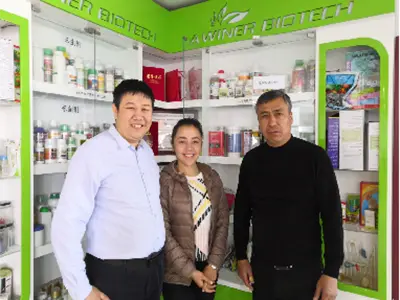
Exhibition & Field Survey Engagement: We actively participate in international agricultural expos across Turkey, Iran, Pakistan, Nigeria, Russia, Cambodia, Malaysia, and Uzbekistan. Furthermore, our technical teams conduct on-site market inspections, analyzing local crop conditions, resolving field issues, and customizing chemical solutions for local farmers and distributors.
Explore our complete spectrum of plant growth regulators, insecticides, and crop protection chemistries.
Detailed technical answers for farm operations managers, agronomists, and agrochemical importers.
 Awiner Biotech