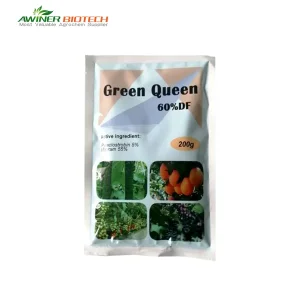
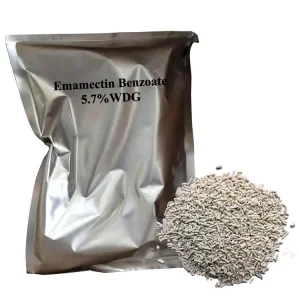
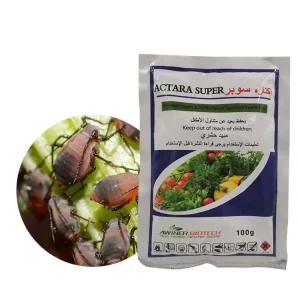
Direct factory supply of premium crop protection products, insecticides, herbicides, and plant growth regulators.
Understanding the Anilinopyrimidine Class and Target Pathogen Inhibition dynamics
In the global high-value fruit trade, sweet cherries (Prunus avium) and sour cherries (Prunus cerasus) represent premium horticultural commodities vulnerable to severe yield losses and post-harvest decay driven by fungal pathogens. Key among these threat vectors are Brown Rot (Monilinia fructicola and Monilinia laxa), Cherry Leaf Spot (Blumeriella jaapii), and Gray Mold (Botrytis cinerea). Efficient protection demands systemically mobile, broad-spectrum fungicides capable of functioning under cooler early-season bloom temperatures.
Cyprodinil (CAS No. 121552-61-2), a synthetic chemical belonging to the anilinopyrimidine class (FRAC Group 9), has established itself as an indispensable active ingredient in modern stone fruit management programs. As a synthetic methionine biosynthesis inhibitor, Cyprodinil disrupts the fungal life cycle at multiple physiological checkpoints:
Cyprodinil acts primarily by inhibiting the biosynthesis of methionine—an essential amino acid required for fungal protein synthesis and cellular elongation. It inhibits the secretion of fungal hydrolytic enzymes (such as cell-wall degrading enzymes) that pathogens utilize to penetrate host plant tissue during early germ tube elongation and appressorium formation.
Unlike classic triazole (DMI) fungicides whose efficacy drops significantly under cold spring conditions, Cyprodinil exhibits outstanding acropetal systemic movement and translaminar activity. When applied during early bloom stages (white bud to full bloom), Cyprodinil rapidly penetrates leaf cuticle wax layers and translocates upward and outward through the leaf tissue, establishing internal protection that is highly resistant to wash-off by spring rains.
Field studies demonstrate that Cyprodinil is absorbed into foliage and petal tissue within 2 hours of application. Its systemic uptake is largely temperature-independent, maintaining robust preventative and curative action even when ambient temperatures fall below 10°C (50°F)—a common climatic challenge during spring cherry bloom in major production zones across Washington State, Southern Chile, and Eastern Europe.
| Fungal Pathogen | Disease Expression | Timing of Max Vulnerability | Cyprodinil Efficacy Profile |
|---|---|---|---|
| Monilinia fructicola / laxa | Brown Rot, Blossom Blight, Twig Blight | Popcorn stage to Petal Fall; Pre-harvest fruit ripening | Exceptional preventative & early curative inhibition of spore germination. |
| Botrytis cinerea | Gray Mold, Fruit Rot, Post-harvest storage decay | Bloom bloom phase; High humidity pre-harvest windows | High translaminar protection; prevents latent stem-end infections. |
| Blumeriella jaapii | Cherry Leaf Spot, Premature Defoliation | Post-petal fall through summer humid cycles | Suppresses lesion expansion and secondary conidial sporulation. |
| Podosphaera clandestina | Powdery Mildew | Shuck split through leaf expansion | Moderate suppressive action; optimal in premix combinations. |
Supply Chain Integration, Technical Grade Synthesis, and Advanced Formulation Processing
Global commercial growers and distributors seeking bulk sourcing for Cyprodinil for cherries rely heavily on Chinese chemical synthesis hubs. Over the past decade, China has matured from a basic technical supplier into an advanced formulation powerhouse capable of delivering high-specification Water Dispersible Granules (WDG), Suspension Concentrates (SC), and complex co-formulated premixes compliant with global environmental and safety standards.
Chinese synthesis plants feature fully integrated precursor chemical production lines for cyanamide and key intermediate 4-cyclopropyl-6-methylpyrimidin-2-amine. This vertical integration buffers international buyers against raw material price volatility and guarantees continuous supply continuity.
Leading Chinese manufacturers utilize high-capacity continuous fluid-bed granulators to yield Cyprodinil 50% WDG and 75% WDG with exceptionally uniform particle geometry, rapid bloom dispersion (<45 seconds), and low dusting attributes.
Top-tier export factories operate under strict ISO 9001, ISO 14001, and ISO 45001 management systems. Product batches are analyzed via High-Performance Liquid Chromatography (HPLC) to verify active purity (≥98% TC) and ensure zero cross-contamination.
From raw technical grade active ingredient (TC) to finalized commercial packaging, the production pipeline involves automated micro-milling, precise additive surfactant blending, and rigorous physical property verification.
Synthesis of Cyprodinil TC exceeding 98% purity with minimal isomer impurity profiles.
Ultra-fine particle size reduction (D90 < 5 microns) for optimized plant coverage.
Blending with specialized dispersants to maximize suspension stability in hard water.
HPLC assay testing, wet sieve retention tests, and wet foam stability validation.
Implementing Sustainable Spray Programs to Mitigate FRAC Group 9 Resistance Risk
As intensive cherry production expands across key export regions—such as Chile’s Central Valley, the Pacific Northwest of the United States, Turkey’s Anatolia region, and Southeastern Australia—fungicidal resistance management has become a critical operational imperative. Fungal pathogens like Monilinia fructicola and Botrytis cinerea possess medium-to-high risk profiles for developing resistance to single-site systemic fungicides.
To preserve the field life of Cyprodinil, global agronomic advisors recommend strict adherence to Fungicide Resistance Action Committee (FRAC) guidelines:
| Fungicide Class | FRAC Code | Active Ingredient Example | Resistance Risk | Synergistic Combination Potential |
|---|---|---|---|---|
| Anilinopyrimidines | Group 9 | Cyprodinil | Medium | Baseline solo or foundation premix component |
| Phenylpyrroles | Group 12 | Fludioxonil | Low to Medium | High Synergy: Standard benchmark for Botrytis/Monilinia |
| Triazoles (DMI) | Group 3 | Tebuconazole / Difenoconazole | Medium | High Synergy: Broadened spectrum for Powdery Mildew & Leaf Spot |
| SDHI (Succinate Dehydrogenase) | Group 7 | Boscalid / Penthiopyrad | Medium to High | Rotational Partner: Prevents cross-resistance build-up |
For commercial growers targeting international markets (such as exports to the European Union, China, Japan, or the United States), compliance with Maximum Residue Limits (MRLs) is non-negotiable. Cyprodinil’s rapid breakdown curve under solar radiation allows for favorable Pre-Harvest Intervals (PHI)—typically 1 to 7 days depending on regional registration—making it ideal for pre-harvest decay control.
Factory-backed technical support assists enterprise buyers in selecting appropriate dosage rates (e.g., 400g - 600g 50% WDG per hectare) to remain comfortably below Codex, EU (2.0 mg/kg), and US EPA tolerance levels while providing up to 14 days of post-harvest storage protection.
Custom Formulations, OEM Packaging, Regulatory Dossiers, and Supply Chain Logistics
Procuring ag-chem active ingredients like Wholesale Cyprodinil for cherries requires a strategic evaluation beyond unit pricing. Enterprise buyers, regional distributors, and large plantation corporations require tailored solutions spanning formulation technology, customized packaging, regulatory compliance, and international shipping security.
Factories provide customized retail packaging options from 100g water-soluble bags (PVA) to 1kg, 5kg aluminum foil bags and 25kg fiber drums. Multi-language label printing and UV-resistant barrier packaging ensure compliance with local country regulations.
To assist local product registrations, tier-1 Chinese manufacturers provide comprehensive regulatory dossiers, including GLP-accredited toxicology reports, 5-batch chemical analysis, environmental fate studies, Certificates of Analysis (COA), and Safety Data Sheets (MSDS).
With proximity to major shipping ports (such as Tianjin, Qingdao, and Shanghai), direct factory shipping protocols ensure short lead times, optimized container loading, and hazardous goods (DG) compliant transport execution.
Founded in 2006, Awiner Biotech is strategically located in Shijiazhuang, Hebei Province, North China—in close proximity to Beijing, supported by world-class transportation and industrial chemical infrastructure. Awiner Biotech is dedicated to the research, production, and global distribution of advanced agrochemicals, specializing in premium fungicides, insecticides, herbicides, plant growth regulators, and public health pesticides.
Through rigorous quality assurance and customer-centric field support, Awiner Biotech has built lasting commercial partnerships with agricultural leaders, distributors, and farm operations across over 30 countries globally.
Our export network spans key agricultural zones, including: Iraq, Iran, Afghanistan, Pakistan, India, Libya, Syria, Turkey, Yemen, Ukraine, Russia, Kazakhstan, Uzbekistan, Chile, Bolivia, Mexico, Brazil, Paraguay, Nigeria, Djibouti, Rwanda, Somalia, Malaysia, Cambodia, Nepal, Myanmar, and beyond.
Awiner Biotech regularly participates in major international chemical and agrochemical exhibitions across Turkey, Iran, Pakistan, Nigeria, Russia, Cambodia, Malaysia, and Uzbekistan. Furthermore, our agronomic specialist teams regularly conduct on-site overseas market inspections, visiting commercial orchards, conducting localized application surveys, and collaborating with local distributors to solve emergent crop protection challenges directly in the field.
Comprehensive agrochemical portfolio including public health insecticides, fungicides, and specialized crop regulators.
Addressing key B2B sourcing inquiries, application compatibility, and regulatory compliance
 Awiner Biotech