Explore our high-purity active ingredient solutions and advanced plant protection formulations engineered for international commercial distribution.
A comprehensive analysis of Cyprodinil (CAS 121552-61-2), a broad-spectrum, systemic anilinopyrimidine fungicide transforming global crop protection ecosystems.
In modern agricultural production, targeted crop protection solutions must balance high bio-efficacy with low environmental persistence. Cyprodinil (4-cyclopropyl-6-methyl-N-phenylpyrimidin-2-amine) represents a cornerstone chemistry within the anilinopyrimidine fungicide class (FRAC Code 9). Engineered primarily to inhibit the biosynthesis of methionine and suppress the secretion of fungal cell-wall degrading enzymes, Cyprodinil acts as an indispensable defense mechanism against destructive phytopathogenic fungi including Botrytis cinerea, Venturia inaequalis, Sclerotinia sclerotiorum, and Monilinia spp.
As global regulatory standards evolve—demanding stricter maximum residue limits (MRLs) and reduced ecotoxicity profiles—b2b enterprise buyers, multinational agrochemical distributors, and regional formulators are shifting toward specialized OEM (Original Equipment Manufacturer) and ODM formulation models. Purchasing unformulated technical grade active ingredients (TC) often poses severe processing risks due to particle size control, crystallization kinetics, and surfactant compatibility. Accessing custom-formulated Cyprodinil products from accredited Smart Factories ensures stability, enhanced rainfastness, and tailored bio-availability across regional agro-climates.
Information Gain Insight: Modern OEM Cyprodinil manufacturing is no longer limited to basic technical purity. Advanced fluid-bed granulation for WDG (Water Dispersible Granules) and specialized micro-emulsification for SC (Suspension Concentrate) deliver superior translaminar uptake, enabling plants to withstand severe fungal pressure even under low temperature and high humidity conditions.
Optimizing physicochemical parameters to enhance leaf surface adhesion, penetration, and resistance management.
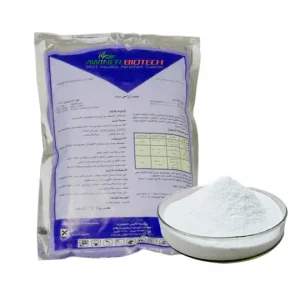
Utilizing high-speed fluid-bed granulation technology, 75% WDG offers zero-dust generation, rapid spontaneous dispersion in spray tanks, and high resistance to caking during long-term storage in tropical environments.
The gold standard for Botrytis management. Combining Cyprodinil (methionine inhibitor) with Fludioxonil (phenylpyrrole class, osmotic signal transduction inhibitor) delivers multi-site action, eliminating resistance buildup.
Water-based liquid formulation engineered with non-ionic polycarboxylate dispersants. Ensures ultra-fine sub-micron particle distribution (D90 < 3 µm), accelerating cuticular penetration without crop phytotoxicity.
Unlike purely contact fungicides that remain on the outer epicuticular wax layer, Cyprodinil possesses powerful translaminar mobility. Upon foliar spray application, the active ingredient redistributes from the upper to the lower leaf surfaces. Furthermore, it moves acropetally (upward) through the plant xylem tissue, protecting newly expanding leaves and growing shoot tips from unseen latent infections.
This dual systemic and curative action is particularly crucial during early spring pre-bloom and bloom phases in orchards and vineyards, where early fungal spore germ tube development occurs in hidden micro-habitats.
Understanding active ingredient pricing models, raw material precursors, minimum order quantities (MOQ), and packaging customization economics.
When evaluating wholesale Cyprodinil quotations from international pesticide factories, commercial procurement executives must analyze cost parameters beyond simple active ingredient concentration ($/kg or $/L). The final landed cost and operational ROI depend on several critical manufacturing factors:
| Formulation Code | Active Concentration | Standard Packaging Options | Key Cost Drivers | Target Export Regions |
|---|---|---|---|---|
| Cyprodinil 98% TC | ≥ 980 g/kg | 25kg Fibre Drum, 500kg UN Bag | Raw material precursor costs (Cyclopropylamine synthesis), crystallization solvent recovery, environmental safety levies. | Formulators in South America, CIS Region, South Asia |
| Cyprodinil 75% WDG | 750 g/kg | 100g-1kg Al-Foil Bag, 10kg Carton | Fluid-bed drying energy efficiency, binder/dispersant quality (Naphthalene sulfonate vs. Lignosulfonate), mesh yield rate. | Europe, North America, Oceania, Chile |
| Cyprodinil 50% WDG | 500 g/kg | 250g, 500g, 1kg Custom Printed Bag | Dispersibility velocity, carrier medium purity, high-speed automated packaging line speeds. | Middle East, Southeast Asia, Central America |
| Cyprodinil 30% + Fludioxonil 20% WDG | 500 g/kg (Total AI) | 100g, 250g, 500g OEM Branded Foil | Dual active material purity, multi-active adjuvant stabilization, IP protection, cross-resistance protection packaging. | Global Commercial Viticulture & Berry Producers |
| Cyprodinil 250g/L SC | 250 g/L | 1L, 5L, 20L HDPE Fluorinated Bottle | Sub-micron wet-milling process, anti-freezing agents, long-term suspension anti-settling rheology modifiers. | High-humidity tropical agricultural regions |
Securing competitive OEM pricelists requires long-term supply chain partnerships. Accredited manufacturing partners provide comprehensive **GLP (Good Laboratory Practice) data packages**, including 5-batch analysis reports, acute toxicity studies, eco-toxicological data, and environmental fate studies necessary for local Ministry of Agriculture product registration (e.g., EPA, EU REACH, Brazil MAPA, Mexico COFEPRIS).
How automated continuous synthesis, strict environmental stewardship, and Hebei chemical cluster logistics drive quality and pricing efficiency.
Transitioning from traditional batch reactors to continuous micro-channel reactors ensures higher reaction yields, precise temperature control, and zero batch-to-batch variation in Cyprodinil Technical synthesis.
State-of-the-art MVR (Mechanical Vapor Recompression) evaporators, thermal oxidizers (RTO), and biological wastewater treatment systems guarantee uninterrupted year-round production during strict environmental inspections.
Situated in Shijiazhuang, Hebei Province—adjacent to China's political and logistics capital Beijing—factories leverage direct access to Tianjin Port and major railway routes, cutting international freight lead-times by up to 30%.
Targeted disease control strategies across high-value horticultural, orchard, and greenhouse crops worldwide.
In high-end wine grapes and table grapes, Botrytis cinerea causes devastating bunch rot, ruining sugar-to-acid balance and destroying crop yields. Cyprodinil OEM formulations applied at veraison (change of color) and pre-harvest intervals penetrate berry skins to halt latent fungal mycelium growth, preventing post-harvest storage losses during transport.
Cool, rainy spring weather accelerates primary ascospore release of Apple Scab in pome fruit orchards. Cyprodinil demonstrates exceptional efficacy at temperatures below 15°C, where many conventional triazole fungicides exhibit reduced performance. Its curative action within 48 hours of infection prevents leaf lesion development and fruit russeting.
Peaches, plums, and cherries are vulnerable to blossom blight and brown rot of fruit. Foliar sprays of Cyprodinil during full bloom protect delicate reproductive floral structures, while pre-harvest sprays safeguard harvestable stone fruits against field-to-storage fungal decay.
High relative humidity inside climate-controlled commercial greenhouses favors rapid fungal proliferation. Using sub-micron Cyprodinil SC or dust-free WDG formulations ensures uniform leaf canopy coverage without leaving unsightly white residues on commercial produce destined for premium retail supermarket shelves.
Integrating research excellence, certified automated production, and localized market technical support.
Awiner Biotech was founded in 2006, located in the north of China—Shijiazhuang, Hebei Province. The city is close to our capital Beijing, with highly convenient transportation and industrial integration. Awiner Biotech is deeply committed to researching, producing, and distributing premium agrochemicals across the globe. Our operational scope mainly encompasses pesticides, herbicides, fungicides, plant growth regulators, and public health pesticides.
By blending modern formulation R&D with rigid analytical quality control (HPLC, GC, Particle Size Analyzers), Awiner Biotech delivers OEM formulations customized to regional climatic conditions, registration standards, and customer private-labeling requirements.
Up to now, we have won trusted long-term corporate customers across a diverse range of global agricultural markets, including:
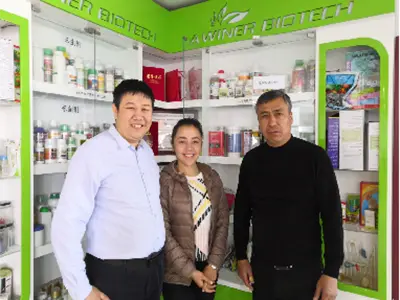
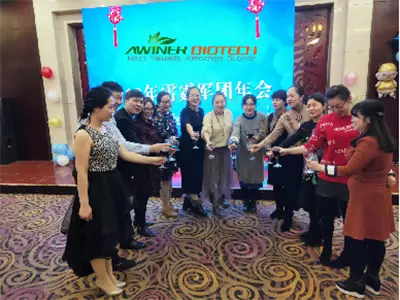
Building genuine authority and reliability in agricultural supply chain management requires direct boots-on-the-ground presence. Awiner Biotech actively participates in prominent international agricultural exhibitions across the globe, including key tradeshows in Turkey, Iran, Pakistan, Nigeria, Russia, Cambodia, Malaysia, and Uzbekistan.
Furthermore, our agronomic technical teams regularly travel to customer countries to conduct thorough field market inspections. We inspect crop performance, analyze regional disease resistance challenges, work directly with local farmers to solve usage problems, and optimize OEM product designs based on localized weather patterns. International agricultural clients also frequently visit our Shijiazhuang manufacturing facilities for factory audits and multi-year supply agreement signings.
Clear, authoritative answers to common technical, procurement, and regulatory queries from commercial buyers.
Explore additional high-grade crop protection, public health pesticides, and specialized formulations from our Smart Factory lines.
 Awiner Biotech