Commercial-Grade Active Ingredients & Synergistic Formulations Available for Global Bulk Procurement
Understanding piercing-sucking Hemipteran pests, economic loss vectors, and the agronomic imperative for advanced systemic protection
Sap-sucking pests belonging to the orders Hemiptera and Thysanoptera—including aphids (Aphididae), whiteflies (Aleyrodidae), thrips (Thripidae), spider mites (Tetranychidae), planthoppers (Delphacidae), and scale insects (Coccoidea)—represent the single largest vector for economic yield degradation in commercial agriculture worldwide. Unlike chewing insects that damage leaf parenchyma directly, sap-sucking pests utilize specialized stylet mouthparts to penetrate vascular tissues (phloem and xylem), draining vital photosynthates, amino acids, and water directly from the crop system.
The damage inflicted by sap-sucking pests operates through a dual-mechanistic threat profile:
Continuous phloem feeding causes turgor pressure loss, leaf chlorosis, stunted vegetative growth, premature senescence, and severe wilting. Heavy infestations alter crop nitrogen balance and reduce photosynthetic efficiency by up to 65%.
Insects like Bemisia tabaci and Myzus persicae serve as primary vectors for devastating plant viruses (e.g., Tomato Yellow Leaf Curl Virus, Potato Virus Y). Additionally, excreted honeydew creates an ideal substrate for Sooty Mold (Capnodium spp.), blocking sunlight and degrading produce commercial value.
To mitigate these catastrophic losses, multinational commercial growers and regional agricultural distributors require reliable access to wholesale high-grade chemical formulations that combine fast-acting contact mortality with persistent systemic activity and trans-laminar movement.
IRAC classification, neurotoxic mechanisms, and optimized combination active formulations
Effective long-term control of sap-sucking insects relies on precision chemistry capable of bypassing dense plant canopies and target pest cuticle barriers. Modern agricultural science utilizes distinct Mode of Action (MOA) groups designated by the Insecticide Resistance Action Committee (IRAC) to construct potent rotation and combination regimes.
| Active Ingredient | IRAC Group | Primary Target Pests | Mode of Action & Mobility Profile |
|---|---|---|---|
| Acetamiprid | Group 4A (Neonicotinoid) | Aphids, Whiteflies, Thrips | Competitive modulator of nicotinic acetylcholine receptors (nAChR). High systemic upward acropetal mobility with strong translaminar activity. |
| Thiamethoxam | Group 4A (Neonicotinoid) | Planthoppers, Aphids, Jassids | Fast-acting systemic root and foliar uptake. Excellent plant vascular transport, providing long residual protection against sucking complex. |
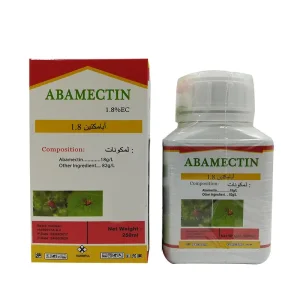
| Abamectin | Group 6 (Avermectin) | Spider Mites, Leafminers, Thrips | Allosteric modulator of glutamate-gated chloride channels (GluCl). Exceptional translaminar penetration providing deep leaf layer reservoir activity. |
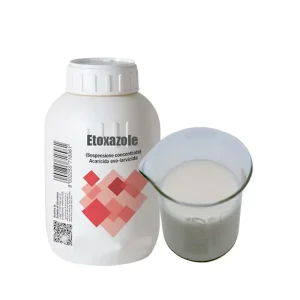
| Etoxazole | Group 10B (Diphenyloxazoline) | Phytophagous Mites (Eggs/Larvae) | Selective mite growth inhibitor affecting chitin biosynthesis. Sterilizes adult females and eradicates embryonic mite development. |
| Lambda-Cyhalothrin | Group 3A (Pyrethroid) | Lepidoptera, Broad Sucking Pests | Sodium channel modulator causing rapid knock-down through contact and stomach action. Highly rainfast with strong lipophilic binding. |
| Dimethoate + DDVP | Group 1B (Organophosphate) | Resistant Aphids, Scale Insects | Acetylcholinesterase (AChE) inhibitor. Combines vapor action (DDVP) with deep systemic absorption (Dimethoate) for dense canopy knock-down. |
Technical Information Gain: Formulation Synergism
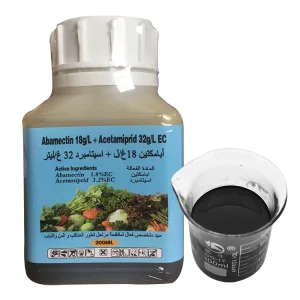
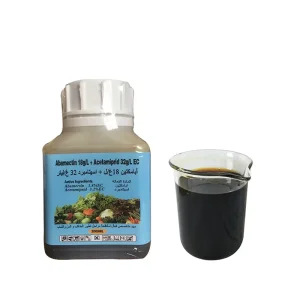
Combining neonicotinoids with avermectins (e.g., Acetamiprid 32g/L + Abamectin 18g/L EC) creates a multi-site attack strategy. Acetamiprid targets central nervous system nAChR channels in adult insects, while Abamectin disrupts GluCl channels and targets phytophagous mite populations simultaneously. This dual-action mechanism prevents the rapid buildup of metabolic resistance while reducing application pass requirements by 50%.
Maximizing spray drift retention, translaminar penetration, and UV stability
The raw efficacy of an active ingredient (AI) is heavily dictated by its formulation technology. Standard technical material (TC) cannot perform effectively in field conditions without sophisticated surfactant packages, emulsifiers, anti-foaming agents, and UV stabilizers. As a premier manufacturer based in Shijiazhuang, Hebei Province, our factory utilizes high-shear emulsification and micro-suspension processes to manufacture top-tier formulations:
Formulated with specialized solvent systems (e.g., bio-based methyl esters) and dual non-ionic/anionic surfactant blends. Delivers rapid cuticle penetration, high emulsion stability in hard water (up to 342 ppm CaCO3 equivalent), and optimal droplet dispersion.
Dust-free dry flowable granules engineered via fluid-bed granulation. Rapidly disintegrates in water within 30 seconds without sedimentation. Highly stable in tropical storage conditions with zero dynamic caking.
Water-based liquid suspensions utilizing sub-micron particle milling (D90 < 2.5 microns). Ensures maximum surface area contact on plant leaves, resistance to rain wash-off, and reduced phytotoxicity risk for delicate crop foliage.
Science-backed field application schedules for zero-resistance management
Overreliance on single-class insecticides has caused severe resistance development in populations of Bemisia tabaci (Q and B biotypes) and Myzus persicae. A robust Integrated Resistance Management (IRM) regime demands strict chemical class rotation, window-based applications, and tank-mix optimization.
Early Season Strategy: Utilize soil-applied or seed-treated Thiamethoxam to protect young seedlings.
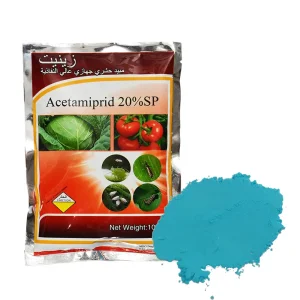
Mid-Season Strategy: Rotate to foliar applications of Acetamiprid 20% SP or Acetamiprid + Abamectin EC at threshold levels (> 5 aphids/leaf).
Late-Season Strategy: Switch to organophosphate/pyrethroid blends (Chlorpyrifos + Cypermethrin) to prevent late-stage build-ups and knock down overlapping generations.
Whitefly & Thrips Management: Alternate neonicotinoids with insect growth regulators (IGRs) or specialized acaricides like Etoxazole for spider mite outbreaks.
Spray Droplet Optimization: Utilize flat-fan nozzles operating at 3.0-4.0 bar pressure to achieve droplet sizes of 150–250 microns for thorough canopy coverage and maximum systemic uptake.
Leveraging Shijiazhuang's agrochemical cluster for global B2B procurement efficiency
Located in Shijiazhuang, Hebei Province—just hours from Beijing and Tianjin Commercial Port—our industrial manufacturing campus represents the pinnacle of Chinese chemical synthesizing and formulation capability. As an established agrochemical manufacturing enterprise since 2006, our platform bridges raw material synthesis with end-user customized packaging.
Direct integration with domestic intermediate producers guarantees uninterrupted active ingredient supply, mitigating global market price volatility and securing long-term price stability for our wholesale partners.
State-of-the-art analytical laboratory equipped with High-Performance Liquid Chromatography (HPLC), Gas Chromatography (GC), and laser particle size analyzers. Every batch undergoes rigorous quality testing against FAO/WHO specifications.
Flexible packaging production lines capable of filling small-pack retail sizes (10mL, 100mL, 1L HDPE bottles, aluminum foil pouches) to bulk commercial drums (200L, 1000L IBCs) with customized private label design.
Streamlining agricultural product registrations for overseas distributors and importers
Navigating national agrochemical regulations is a critical barrier to entry for international buyers. We provide end-to-end regulatory registration support to ensure seamless market entry across target regions including South America, the Middle East, Southeast Asia, Eastern Europe, and Africa.
Comprehensive Registration Support Package Includes:
Precision agriculture, microencapsulation technology, and bio-rational chemistry
The crop protection sector is undergoing a rapid technological evolution driven by strict Maximum Residue Limits (MRLs), pollinator safety mandates, and climate-induced pest population shifts. Strategic procurement teams must align with suppliers investing in next-generation crop protection methodologies:
Polymeric shell microcapsules providing controlled release of active ingredients over 30–60 days, minimizing worker exposure and drastically extending field residual control.
Formulations specifically engineered with anti-evaporation additives and ultra-low volume (ULV) stability for application via unmanned aerial vehicles (UAVs).
Integration of botanical extracts and semiochemicals alongside traditional synthetic chemistry to safeguard non-target beneficial insects like honeybees (Apis mellifera).
Expert answers regarding product performance, stability, ordering, and field application
Integrating world-class chemical manufacturing with international distribution partnerships
Awiner Biotech was founded in 2006, located in north of China-Shijiazhuang, Hebei Province. The city is close to our capital Beijing, transportation is convenient. Awiner Biotech is committed to research, produce and distribute agrochemicals. mainly deal with pesticides, herbicides, fungicides, plant growth regulator and public health pesticides.
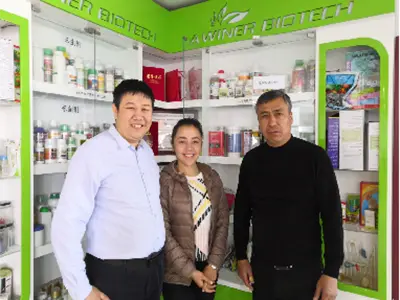
Up to now, we have won customers from Iraq, Iran, Afghanistan, Pakistan, India, Libya, Syria, Turkey, Yemen, Ukraine, Russia, Kazakhstan, Uzbekistan, Chile, Bolivia, Mexico, Brazil, Paraguay, Nigeria, Djibouti, Rwanda, Somalia, Malaysia, Cambodia, Nepal, Myanmar and so on.
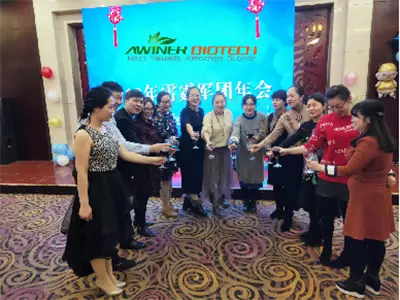
Our countries participating in the exhibition are Turkey, Iran, Pakistan, Nigeria, Russia, Cambodia, Malaysia, Uzbekistan, etc. We actively connect with regional agricultural leaders worldwide.
We go to the customer's country to conduct market inspections, analyze and solve problems for them, understand their product usage, and customers will also visit us in China for long-term collaboration.
Broader Pest Control Actives, Fungicides, Herbicides, and Plant Growth Regulators
 Awiner Biotech