Modern mouse bait blocks leverage paraffin-wax matrices, food-grade grain meals, and scent-attractant tech to achieve multi-weather longevity without compromising rodents' voluntary intake rates.
Escalating biosecurity mandates in commercial poultry, agricultural grain storage, and municipal logistics require scalable, high-efficiency rodenticide blocks with predictable mortality curves.
Direct OEM/ODM manufacturing partnerships with Chinese Industry 4.0 facilities streamline regulatory compliance, batch consistency, chemical stability, and cost-efficiency for international distributors.
According to vector control field audits, high-density extruded wax bait blocks exhibit up to 85% higher retention of structural integrity under humid agricultural conditions (90%+ RH) compared to standard pelletized or loose grain rodenticides. This drastically reduces rebaiting labor overheads and prevents active ingredient degradation.
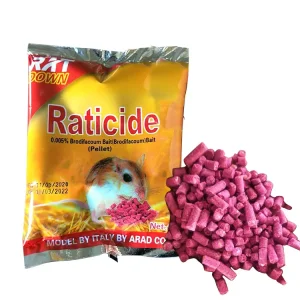
The industrial rodenticide landscape continues to rely on Second-Generation Anticoagulants (SGARs) such as Brodifacoum, Bromadiolone, and Dethiolone. SGARs disrupt the vitamin K epoxide reductase cycle, halting blood coagulation. Brodifacoum, known for its ultra-potent single-feed lethality, remains the gold standard for heavy infestation knockdown, whereas Bromadiolone offers balanced potency for managed perimeter maintenance. Modern manufacturing processes ensure precise homogenisation of the active ingredient down to 50 ppm (0.005%) to minimize non-target risks while guaranteeing lethal threshold delivery in a single feeding session.
Unformulated bait pellets deteriorate rapidly when exposed to humidity, mold, and extreme thermal fluctuations. Advanced wholesale block manufacturing uses high-pressure hot-extrusion technologies to lock active compounds inside high-melting-point synthetic and natural paraffin matrices. Central hole designs are integrated into the block geometry, allowing secure mounting on metal rods inside tamper-resistant bait stations. This prevents rodents from removing the bait from the station, mitigating environmental dispersion and target-animal hoarding.
A critical obstacle in rodent eradication is "bait shyness" caused by low palatability compared to available ambient food sources (e.g., in grain warehouses or food processing plants). Leading chemical manufacturers integrate refined oat flour, animal lipid fractions, and molecular aroma enhancers (such as peanut, anise, or chocolate volatiles) into the bait core. This guarantees high acceptance rates even in environments with abundant competing food supplies.
To align with stringent international regulatory benchmarks (such as US EPA standards and European Biocidal Products Regulation - BPR), premium mouse bait blocks incorporate Denatonium Benzoate (Bitrex®) at 0.001% (10 ppm). This intensely bitter human deterrent prevents accidental ingestion by children, pets, and non-target wildlife without impairing rodent consumption, as rodent gustatory receptors do not trigger avoidance at these minute thresholds.
| Formulation Type | Active Ingredient Retention | Moisture / Mold Resistance | Palatability Index | Securing Mechanism | Primary Ideal Deployment |
|---|---|---|---|---|---|
| Extruded Wax Blocks | Exceptional (>24 Months) | High Weatherproof (95%+) | High (Lipid Enriched) | Center Hole Baffle Rod | Sewers, Farms, Perimeter Stations |
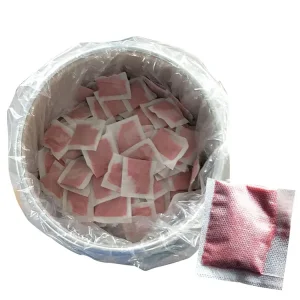
| Soft Bait (Sachets) | Moderate (12-18 Months) | Moderate (Pouch Dependent) | Very High (Oil Matrix) | Vertical Metal Skewer | Indoor Residential, Food Facilities |
| Pelletized Baits | Fair (6-12 Months) | Low (Absorbs Moisture) | Moderate (Grain Base) | Tray / Loose Dispenser | Dry Indoor Basements, Warehouses |
| Liquid Concentrates | Requires Daily Monitoring | N/A (Liquid Phase) | High (Arid Zones) | Drink Station Dispensers | Dry Grain Silos, Arid Storage Units |
Rodent vectors pose major biosecurity hazards in poultry houses, swine facilities, and cattle feedlots by spreading pathogens like Salmonella and Leptospira. High-wax mouse bait blocks resist ammonia fumes and high humidity, securing long-term protection along farm perimeter fencing and feed storage sheds.
Under HACCP and ISO 22000 auditing standards, open grain contamination leads to total batch rejection. Using zero-dust, block-form rodenticides within tamper-resistant lock boxes eliminates airborne toxic dust risk while maintaining continuous exterior defensive barriers around grain silos and flour mills.
Urban rat infestations thrive in subterranean sewer networks and storm drains. Specially formulated mold-inhibited wax blocks strung on wire ropes remain intact even when submerged or subjected to extreme flow cycles, offering continuous bio-control in damp urban subterranean systems.
Our state-of-the-art chemical manufacturing facilities in Shijiazhuang utilize automated gravimetric dosing systems. This ensures an exact 0.005% active ingredient distribution across every metric ton produced, eliminating localized hot spots or cold spots in the matrix and guaranteeing regulatory compliance and uniform field efficacy.
We provide complete private label customization for multinational importers. Options include multi-color block dye customization (e.g., Signal Blue, Emerald Green, High-Visibility Red), custom block sizing (10g, 15g, 20g, 50g), and diverse packaging formats ranging from 100g retail foil pouches to 10kg heavy-duty HDPE industrial pails.
Every production batch undergoes High-Performance Liquid Chromatography (HPLC) testing in our ISO/IEC 17025 accredited laboratory to verify active ingredient concentration, stability coefficient, and moisture resistance parameters before shipping documentation is released.
Navigating global pesticide registration requires extensive technical documentation. We supply complete ICAMA registration certificates, FAO standard specification dossiers, SDS, Certificate of Analysis (COA), and toxicology evaluation reports to support quick local registration.
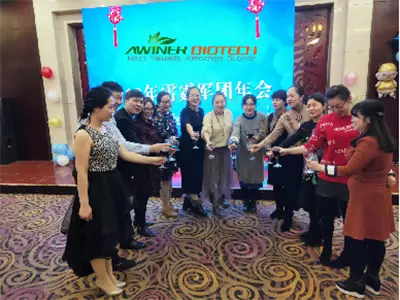
Awiner Biotech was founded in 2006, located in north of China-Shijiazhuang, Hebei Province. The city is close to our capital Beijing, transportation is convenient. Awiner Biotech is committed to research, produce and distribute agrochemicals. mainly deal with pesticides, herbicides, fungicides, plant growth regulator and public health pesticides.

Up to now, we have win customers from Iraq, Iran, Afghanistan, Pakistan, India, Libya, Syria, Turkey, Yemen, Ukraine, Russia, Kazakhstan, Uzbekistan, Chile, Bolivia, Mexico, Brazil, Paraguay, Nigeria, Djibouti, Rwanda, Somalia, Malaysia, Cambodia, Nepal, Myanmar and so on.
Our countries participating in the exhibition are Turkey, Iran, Pakistan, Nigeria, Russia, Cambodia, Malaysia, Uzbekistan, etc.
We go to the customer's country to conduct market inspections, analyze and solve problems for them, understand their product usage, and customers will also visit us.
 Awiner Biotech