Explore our primary B2B export-grade agrochemicals, optimized for multi-pest mitigation, high bio-efficacy, and broad-spectrum crop protection.
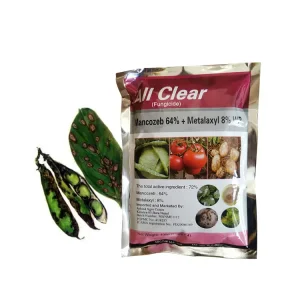
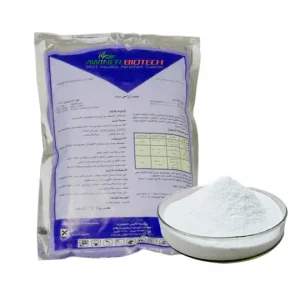
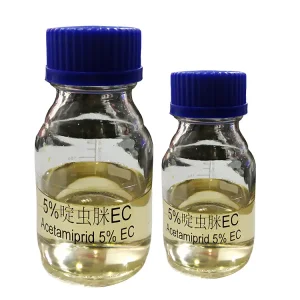
The contemporary global agricultural and industrial pest control sector is undergoing a profound paradigm shift driven by evolving climatic patterns, expanding invasive pest corridors, and stringent international pesticide residue regulations. According to recent macro-economic agrochemical market assessments, the global pest control and commercial insecticide industry is projected to scale beyond USD 28.5 Billion by 2030, maintaining a compound annual growth rate (CAGR) exceeding 5.4%.
Enterprise procurement managers, regional agrochemical distributors, and government vector control agencies are increasingly shifting away from single-active mono-insecticides toward multi pest control insecticides. These modern complex formulations combine complementary Modes of Action (MoA) to mitigate metabolic and target-site resistance, broaden spectrum efficacy, and minimize field application frequencies—reducing operational expenditure per hectare while maintaining high knockdown and long-lasting residual control.
Unprecedented thermal variances accelerate insect breeding cycles, creating overlapping generations of hemipteran, lepidopteran, and dipteran pests. Multi-action insecticides serve as essential barriers to prevent devastating crop yield drops in cereal, cotton, and horticulture networks.
Regulatory frameworks such as European REACH, US EPA tolerances, and Codex Alimentarius demand reduced chemical loading. Formulators must leverage high-potency synergistic active ingredients that break down into non-toxic metabolites without leaving illegal Maximum Residue Limits (MRLs).
Widespread resistance against older synthetic pyrethroids and organophosphates necessitates scientific Insecticide Resistance Management (IRM). Dual-active co-formulations ensure pests resistant to one pathway are effectively neutralized by the secondary active agent.
Designing enterprise-grade multi pest control insecticides requires deep bio-chemical engineering. Combining two or more active ingredients is not merely physical mixing; it involves evaluating thermodynamic stability, surfactant compatibility, crystal growth kinetics, and physiological synergy within target pests. At Awiner Biotech, our chemical engineers rely on the Insecticide Resistance Action Committee (IRAC) classification framework to build formulations that prevent cross-resistance.
Our research and production pipelines focus on combining rapid knock-down agents with systemic, long-residual, or stomach-poison compounds. For instance, pairing a neonicotinoid (competitive modulators of nicotinic acetylcholine receptors - IRAC Group 4A) like Acetamiprid or Imidacloprid with a contact synthetic pyrethroid (sodium channel modulators - IRAC Group 3A) such as Alpha-Cypermethrin delivers immediate knockdown against chewing insects while securing systemic control against sap-sucking pests like aphids, whiteflies, and planthoppers.
| Active Ingredient Combination | IRAC MoA Classification | Primary Target Pest Spectrum | Formulation Types Available | Key Bio-Efficacy Advantages |
|---|---|---|---|---|
| Imidacloprid + Carbendazim + Metalaxyl | Group 4A + Group 1 + Group 4 Fungicide/Insecticide | Tuta absoluta, Soil Pests, Early Damping-off, Foliar Blights | 10% WP, Seed Treatment DS | 3-in-1 Seed/Foliar defense combining systemic insecticidal control with broad fungicide coverage. |
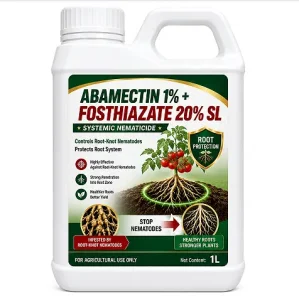
| Abamectin + Fosthiazate | Group 6 (Chloride Channel) + Group 1B (Organophosphate) | Root-Knot Nematodes (Meloidogyne spp.), Thrips, Mites | 21% SL, 10% GR | Dual systemic & contact nematicide; destroys adult nematodes and suppresses egg hatching at the root zone. |
| Indoxacarb Technical & Formulations | Group 22A (Voltage-dependent sodium channel blockers) | Lepidopteran larvae, Armyworms, Helicoverpa zea, Cutworms | 95% TC, 150g/L SC, 30% WDG | Pro-insecticide activated inside insect enzymes; rapid feeding cessation, crop-safe, low impact on beneficials. |
| Pymetrozine + Acetamiprid | Group 9B (Chordotonal organ selective modulators) + Group 4A | Aphids, Whiteflies, Brown Plant Hopper (BPH), Thrips | 25% WP, 50% WDG | Immediate feeding inhibition (starvation effect) combined with systemic neuro-toxic control. |
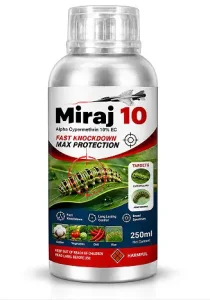
| Alpha-Cypermethrin + Organophosphates | Group 3A (Sodium Channel Modulator) + Group 1B | Cotton Bollworm, Beet Armyworm, Stink Bugs, Beetles | 10% EC, 25% EC | Strong contact & stomach action, fast knockdown, effective across broad temperature spectrums. |
Modern commercial insect pest control relies heavily on advanced formulation chemistry to maximize active ingredient bioavailability while minimizing bio-accumulation and environmental drift:
For commercial distributors, government procurement officers, and large-scale agricultural cooperatives, sourcing multi pest control insecticides involves rigorous supplier evaluation. Technical specification compliance, purity thresholds, chemical stability, and international export documentation are non-negotiable parameters.
Every commercial batch manufactured by Awiner Biotech undergoes rigorous High-Performance Liquid Chromatography (HPLC) and Gas Chromatography (GC) testing. We guarantee technical grade purity standard compliance matching FAO/WHO specifications, verified via batch-specific Certificates of Analysis (COA).
From 100ml HD-PE bottles, aluminium foil sachets, to 200L steel drums and IBC totes, our automated packaging lines accommodate custom OEM configurations with UN-certified hazardous materials packaging compliant with IMDG and IATA regulations.
We empower our global partners by offering complete regulatory support dossiers, including ICAMA certificates, toxicology studies, GLP stability reports, and field efficacy trial data required for national registration.
Global chemical supply chains encounter disruptions ranging from raw material active ingredient (TC) shortages to ocean freight rate volatility. Awiner Biotech mitigates these risks by maintaining long-term strategic raw material reserves, dual-location manufacturing capabilities, and transparent lead-time management. Our strategic proximity to major Northern China shipping hubs (such as Tianjin Port) ensures streamlined logistics, rapid customs clearance, and consistent delivery timelines to over 30 countries across the Middle East, Southeast Asia, South America, Eastern Europe, and Africa.
Founded in 2006 in Shijiazhuang, Hebei Province (adjacent to Beijing), Awiner Biotech has evolved into a leading Chinese high-tech enterprise specializing in agrochemical R&D, formulation synthesis, and international distribution.
Our modern chemical synthesis and formulation plant operates multiple fully automated production lines dedicated to WP, WDG, SC, EC, SL, and Public Health vector control products, maintaining strict ISO9001 and ISO14001 quality and environmental certifications.
Our agrochemical products are trusted across diverse global markets, including Iraq, Iran, Afghanistan, Pakistan, India, Libya, Syria, Turkey, Yemen, Ukraine, Russia, Kazakhstan, Uzbekistan, Chile, Bolivia, Mexico, Brazil, Paraguay, Nigeria, Djibouti, Rwanda, Somalia, Malaysia, Cambodia, Nepal, Myanmar, and beyond.
We participate actively in major international chemical exhibitions across Turkey, Russia, Pakistan, Nigeria, Uzbekistan, and Cambodia. Furthermore, our technical teams conduct direct field surveys in client countries to inspect crop performance, analyze pest resistance dynamics, and provide custom solutions.
Sustainable crop protection requires balancing high insecticidal potency with minimal non-target environmental toxicity. Awiner Biotech’s multi pest control insecticide development follows strict eco-toxicological guidelines to safeguard beneficial insects, pollinators, and aquatic ecosystems.
Neonicotinoid actives like Acetamiprid are selected for their lower honeybee toxicity compared to older chemical classes when applied according to label directions. Microencapsulation technology further limits exposure to non-target arthropods, permitting integrated pest management (IPM) compatibility in greenhouse and field operations.
Formulations incorporating actives like Fluopyram or Spinosad demonstrate favorable soil sorption coefficients ($K_{oc}$), preventing deep percolation into groundwater reserves while degrading into harmless natural compounds via solar and microbial action.
The future of pest control lies in the synergy between bio-engineered active molecules, smart delivery mechanisms, and precision digital agriculture. Awiner Biotech is heavily investing in next-generation R&D projects that will define the next decade of commercial pest management:
Unmanned Aerial Vehicle (UAV) spraying demands ultra-concentrated formulations that maintain anti-evaporation, high droplet spreadability, and drift reduction properties. Our drone-specific SC and EC lines are optimized for micro-droplet stability at low spray volumes (10–15 L/ha).
Integrating natural biopesticides (such as Bacillus thuringiensis or Spinosad derived from soil actinomycetes) with targeted synthetic chemistry reduces chemical residue loads while preserving high speed of action against resistant lepidopteran larvae.
Developing nano-emulsions and smart polymeric nanocarriers that release active ingredients in response to specific environmental triggers, such as pest digestive tract pH or elevated ambient humidity levels.
Additional high-grade chemical and biological formulations engineered for specialized crop environments and public health vector eradication.
 Awiner Biotech