 Awiner Biotech
1 / 4
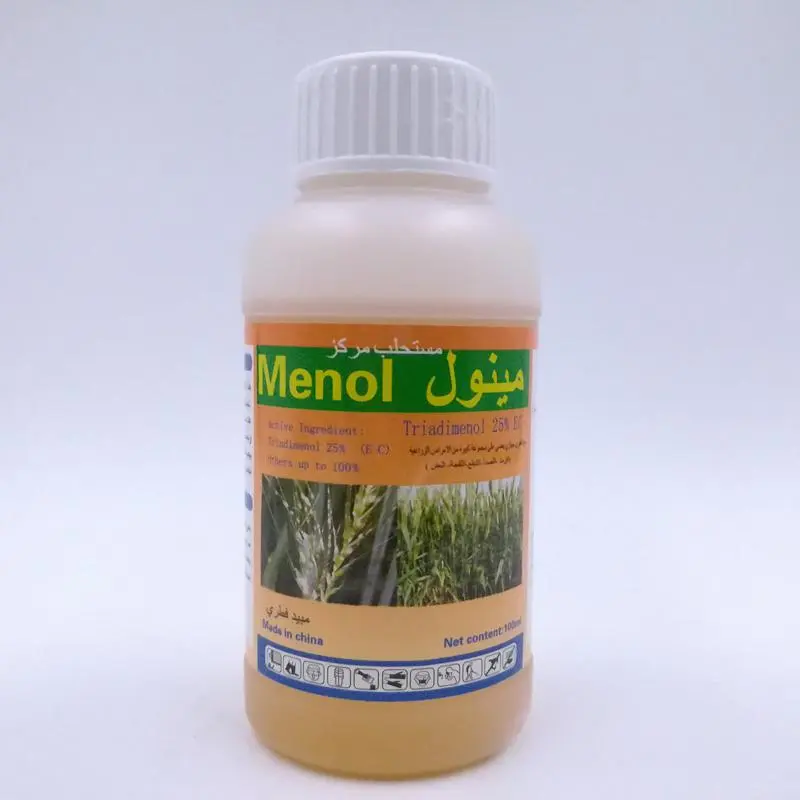
Main Specification: Triadimenol fungicide
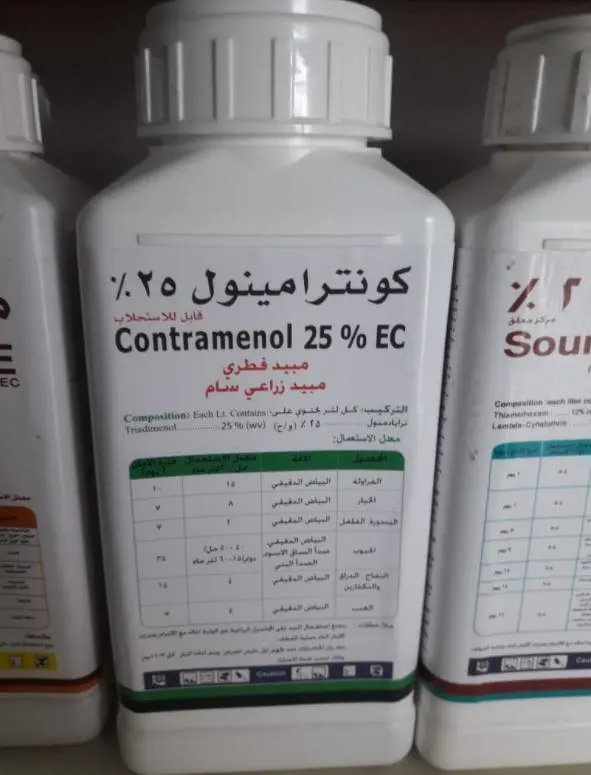
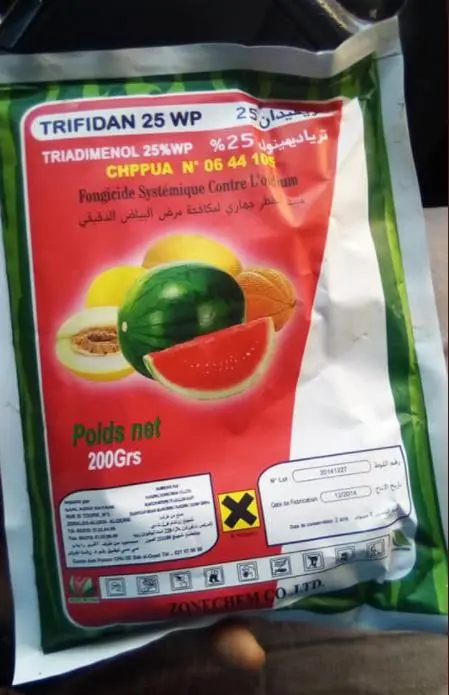
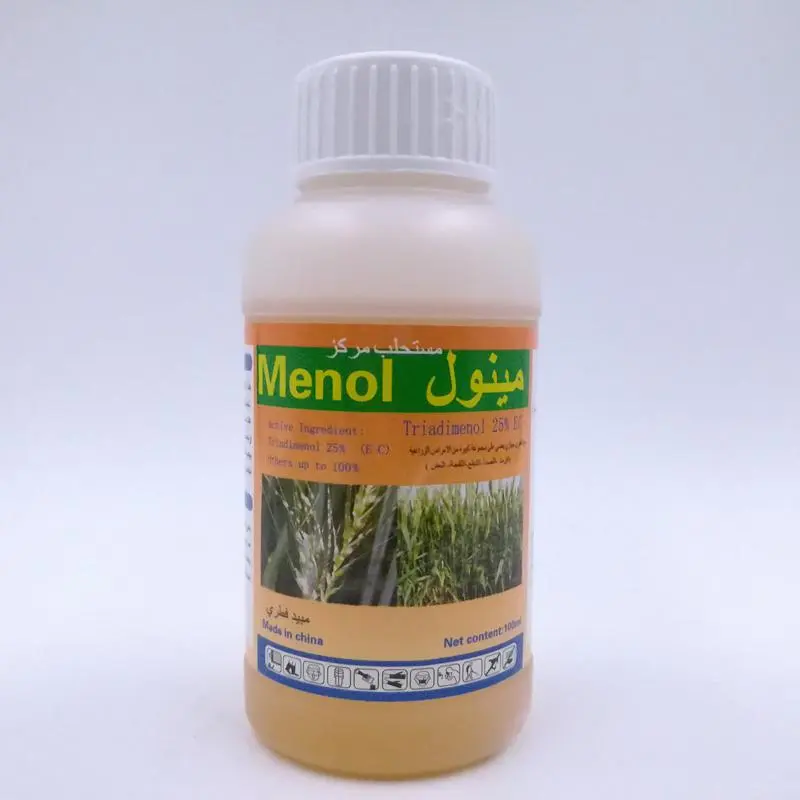
Formulations Available: 95% TC, 97% TC, 10% WP, 15% WP, 25% WP, 25% EC, 250g/L EC
Triadimenol Description: Triadimenol is a low-toxicity systemic fungicide. It is widely used for cereals, beet, and brassicas to control a comprehensive range of fungal diseases including powdery mildew, rusts, bunts, and smuts.
| Product Name | Triadimenol |
| CAS No. | 55219-65-3 |
| Content & Formulations | 250g/L EC, 97% TC |
| Physical & Chemical Property |
Appearance: Light yellow Liquid Molecular Formula: C14H18ClN3O2 Structural Formula: 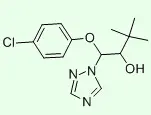
Molecular Weight: 295.76 Solubility: Insoluble in acetone: 0.5% max; Slightly soluble in isopropanol, methylene chloride, cyclohexanone. Insoluble in aliphatic hydrocarbons. Melting Point: 110℃ Boiling Point: 465.4 °C at 760 mmHg Flash Point: 235.3 °C |
| Toxicity Data |
Acute Toxicity: Oral LD50 (rat): 2330mg/kg Dermal LD50 (rabbit): >1000mg/kg Inhalation LC50 (rat): >15.3 mg/L/hr (4hrs) Skin irritation (rabbit): Minimally irritating Eye irritation (rabbit): Mildly irritating |
Scope of Application: Effective control of powdery mildews, rusts, and Rhynchosporium in cereals. Applied as a seed treatment to control bunt, smuts, seedling blight, leaf stripe, net blotch, and other seed-borne cereal diseases. Also utilized on vegetables, ornamentals, coffee, hops, vines, fruit, tobacco, sugar cane, bananas, and other crops primarily targeting powdery mildews, rusts, and leaf spot diseases.
| Formulation | Crops | Target Germs / Diseases | Recommended Dosage |
|---|---|---|---|
| Triadimenol 25% GB | Wheat | Rust disease | 34 - 37.5 g / 100 kg seeds |
| Triadimenol 10% WP | Wheat | Powdery mildew | 112.5 - 135 g / hectare |
| Triadimenol 15% WP | Rice | Rice blast | 135 - 157.5 g / hectare |
| Wheat | Banded sclerotial blight | 30 - 45 g / 100 kg seeds |