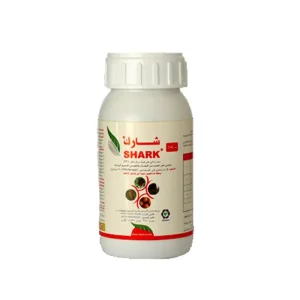
Industrial-grade pesticides, plant growth regulators, and residual acaricide solutions formulated for global commercial agricultural enterprises.
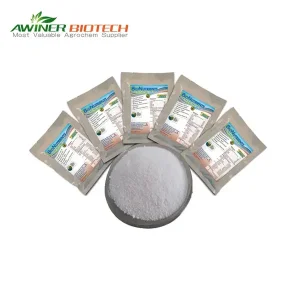
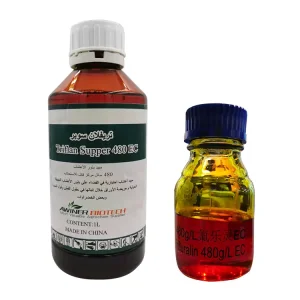
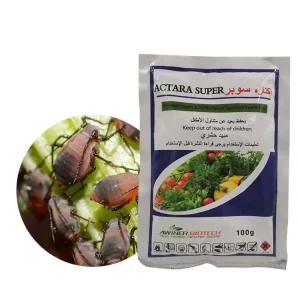
Analyzing global agricultural shifts from high-frequency contact knockdown sprays toward sustained extended-residual acaricidal protection frameworks.
Phytophagous mites—primarily Tetranychus urticae (Two-Spotted Spider Mite), Panonychus citri (Citrus Red Mite), and Panonychus ulmi (European Red Mite)—exhibit exceptionally short reproduction cycles (8–12 days in warm climates). Traditional contact acaricides eliminate adults but leave hidden eggs and early-instar nymphs unexposed, triggering resurgence spikes within 7–10 days.
Achieving a verified 20 to 40-day residual control window breaks 2 to 3 full generational cycles of Acari pest populations. This extended duration drastically reduces fuel, labor, and machinery costs for commercial agricultural operators while mitigating canopy compaction and mechanical crop damage.
Achieving sustained efficacy without phytotoxicity requires advanced formulation physics: Microencapsulation (CS), Suspension Concentrates (SC), and Water Dispersible Granules (WDG) with specialized UV-stabilizer matrices and rainfast adjuvant polymers that bind actives securely to leaf cuticle waxes.
In modern industrial agriculture, selecting an acaricide is no longer just about immediate initial contact kill rate (% knockdown at 24 hours). Professional buyers must evaluate the Total Protection Period Cost Ratio (TPPCR). A 20-40 day residual solution at a 15% higher chemical unit cost yields a net 40-50% operational saving by replacing three conventional spray applications with a single targeted treatment.
Deep-dive analysis into formulation chemistry, microencapsulation kinetics, and physiological mode-of-action targeted strategies.
Microencapsulated Suspension (CS) technology encapsulates active ingredient droplets within a synthetic polyurea shell ranging from 2 to 10 micrometers in diameter. These microcapsules adhere to plant leaves via specialized surface-active stickers.
Upon application, the active ingredient diffuses through the capsule shell wall at a controlled linear rate. This sustained diffusion maintains an active toxic threshold on the leaf cuticle for 20 to 40 days, protecting emerging growth and killing newly hatched larvae upon contact or ingestion.
To sustain protection beyond 20 days, a formulation must target multiple life stages of the mite. Products like Buprofezin acting as Chitin Synthesis Inhibitors (IRAC Group 16) disrupt the molting process of nymphs and sterilize adult females.
Combining chitin inhibitors or mitochondrial electron transport inhibitors (METI) with lipogenesis inhibitors (Spiromesifen/Spirodiclofen - IRAC Group 23) prevents female oviposition, rendering egg populations non-viable and breaking resistance cycles.
| Active Ingredient & Active Class | IRAC Code | Target Mite Stages | Residual Duration | Key Formulation Types | Primary Agronomic Benefit |
|---|---|---|---|---|---|
| Buprofezin (Chitin Synthesis Inhibitor) | Group 16 | Nymphs, Scale Larvae, Sterilizes Adults | 25 – 35 Days | 25% SC, 50% SC, 70% WDG | High selectivity, safe for beneficial predatory insects, zero cross-resistance. |
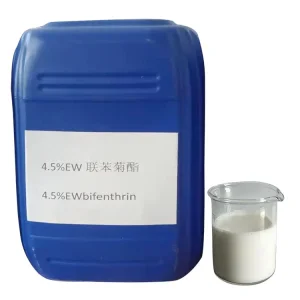
| Bifenthrin + Imidacloprid / Thiamethoxam | Group 3A + 4A | Adult Mites, Aphids, Whiteflies, Thrips | 20 – 30 Days | 10% SC, 20% EC, 25% WDG | Broad-spectrum knockdown coupled with systemic plant uptake for dual chewing/sucking pest protection. |
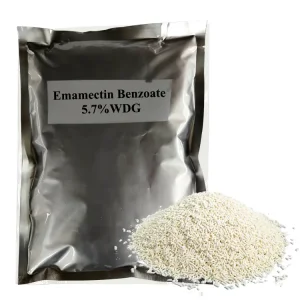
| Emamectin Benzoate (Avermectin derivative) | Group 6 | Mite Nymphs, Adults, Lepidoptera | 18 – 28 Days | 5.7% WDG, 30% WDG | Translaminar activity; penetrates leaf parenchyma forming an internal reservoir resistant to rain wash-off. |
| Thiamethoxam + Lambda-Cyhalothrin | Group 4A + 3A | Broad spectrum acari & foliage vectors | 20 – 35 Days | 247 g/L SC (141 + 106 g/L) | Synergistic combination offering rapid knock-down with long-lasting systemic translocation. |
Evaluating sourcing criteria for enterprise distributors, multinational agricultural corporations, and commercial importers.
Enterprise procurement managers require minimum active ingredient purity thresholds (e.g., Buprofezin ≥ 97% TC, Indoxacarb ≥ 95% TC) to ensure formulation stability, eliminate toxic isomers, and guarantee uniform efficacy across varied climate zones.
Long-residual formulations require superior physical properties: Suspension Percentage ≥ 90%, Wetting Time ≤ 60 seconds (for WDG), Cold Test Stability (0°C for 7 days without crystallization), and Tropical Heat Test Stability (54°C for 14 days).
High-barrier packaging is mandatory to prevent solvent evaporation or active degradation in tropical destination ports. Formulations utilize UN-certified fluorinated HDPE drums, co-extruded aluminum foil pouches, and moisture-proof outer cartons.
Customized agronomic execution guidelines for major commercial crop markets worldwide.
Target Pests: Panonychus citri, Phyllocoptruta oleivora (Citrus Rust Mite).
Recommended Program: Early-season application of Buprofezin 25% SC or 50% SC combined with organosilicone spreaders. Protects spring flush growth and maintains beneficial mite populations (Amblyseius swirskii).
Target Pests: Tetranychus cinnabarinus, Aphids, Whiteflies.
Recommended Program: Mid-season tank mix of Emamectin Benzoate 5.7% WDG + Bifenthrin 10% EC. Delivers rapid knock-down of cotton bollworms while establishing a 20-30 day barrier against spider mites.
Target Pests: Two-spotted Spider Mite, Bemisia tabaci.
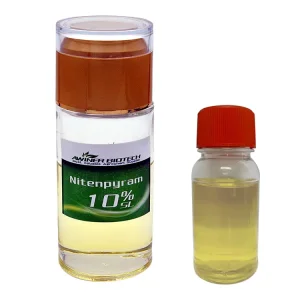
Recommended Program: Rotational spray schedules utilizing Thiamethoxam 25% WDG and Nitenpyram 10% SL with controlled humidity management to prevent resistant strain development.
Ensuring seamless import clearance and compliance with international environmental standards.
Entering international agrochemical markets requires comprehensive regulatory documentation. We provide complete registration packages including: GLP Analytical Reports, Batch Analysis Certificates, Material Safety Data Sheets (MSDS/SDS in GHS format), Toxicity Studies, and Environmental Impact Data suitable for registration with ministries of agriculture across South America, Middle East, Africa, and Eastern Europe.
Commercial export crops (e.g., grapes for Europe, citrus for North America, tea for Japan) must comply with strict MRL thresholds. Our long-residual microcapsule formulations are engineered to degrade predictably, ensuring that active residue levels drop well below international MRL guidelines prior to harvest windows (PHI compliance).
Empowering global agriculture with premium agrochemical manufacturing and dedicated localized support since 2006.
Awiner Biotech was founded in 2006, located in northern China—Shijiazhuang, Hebei Province. Situated in close proximity to the capital city Beijing, our strategic location provides convenient transportation and logistics access to major international shipping ports.
Awiner Biotech is dedicated to the research, synthesis, formulation, and global distribution of advanced agrochemicals. Our comprehensive product scope encompasses high-performance pesticides, herbicides, fungicides, plant growth regulators (PGRs), and public health insecticides tailored to commercial agriculture and pest control operators.
Up to now, Awiner Biotech has established trusted partnerships and supplied high-quality products to clients across more than 30 nations worldwide, including: Iraq, Iran, Afghanistan, Pakistan, India, Libya, Syria, Turkey, Yemen, Ukraine, Russia, Kazakhstan, Uzbekistan, Chile, Bolivia, Mexico, Brazil, Paraguay, Nigeria, Djibouti, Rwanda, Somalia, Malaysia, Cambodia, Nepal, Myanmar, and many more.
We actively participate in international chemical and agricultural exhibitions in countries such as Turkey, Iran, Pakistan, Nigeria, Russia, Cambodia, Malaysia, and Uzbekistan to maintain close connections with local market demands.
Awiner Biotech goes beyond chemical manufacturing. Our technical agronomy teams regularly travel to customer countries to conduct detailed market inspections, analyze regional pest resistance vectors, understand field product performance, and solve complex agronomic challenges alongside local growers. Likewise, international partners regularly visit our state-of-the-art production facilities in Hebei for technical exchanges and supply chain audits.
Explore our extended catalog of crop protection chemicals, combination insecticides, and specialized public health products.
Comprehensive answers to technical, logistical, and registration questions for commercial agrochemical buyers.
 Awiner Biotech