Explore our laboratory-tested, field-proven crop protection chemicals engineered for extreme continental climates and large-scale industrial farming.
Uzbekistan stands as one of the world's premier cotton producers, undergoing a monumental structural shift driven by the national "Cotton-Textile Cluster" privatization initiative (Presidential Decree UP-5880). This industrial evolution has transitioned raw cotton production from fragmented state-managed farms into vertically integrated private enterprise clusters across key agricultural provinces, including Fergana, Syrdarya, Tashkent, Bukhara, and Kashkadarya. Consequently, large-scale commercial farming demands unprecedented volumes of high-grade agrochemicals, specialized pest control strategies, and precision plant growth regulators to maximize yield per hectare, enhance fiber quality (upper half mean length and Micronaire values), and suppress pest resistance.
The agrarian ecosystem of Central Asia presents unique environmental parameters: hyper-arid summer conditions, high soil salinity, alkaline irrigation waters derived from the Amu Darya and Syr Darya basins, and extreme daytime-to-nighttime temperature fluctuations. Standard, unformulated agrochemical inputs often fail under these stress conditions due to rapid photodegradation, alkaline hydrolysis, or poor canopy penetration. To secure consistent yields exceeding 4.0 metric tons of seed cotton per hectare, enterprise procurement officers must source technical-grade chemical formulations fortified with advanced surfactants, UV stabilizers, and targeted systemic modes of action.
Sourcing chemical inputs for Uzbekistan requires more than baseline pricing. Successful wholesale contracts depend on active ingredient concentration stability, compatibility with drip-irrigation fertigation systems, regulatory compliance with the State Chemical Commission (Gosstandart / Uzbekistan Agro-chemical Registration), and robust packaging tailored for trans-Eurasian rail logistics.
Cotton (Gossypium hirsutum) is exceptionally vulnerable to biotic stress factors throughout its 150 to 180-day growth cycle. Effective agronomic governance requires a multi-stage defense program integrating pre-emergence herbicides, early-season sap-sucking insect control, mid-to-late season lepidopteran pest suppression, systemic fungal management, and chemical defoliation.
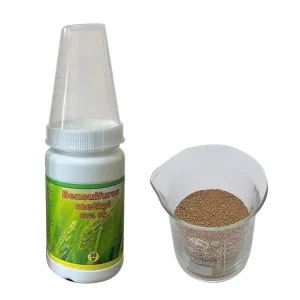
Weeds such as Amaranthus retroflexus, Echinochloa crus-galli, and Solanum nigrum compete aggressively for moisture and nitrogen. Soil-applied residual herbicides like Pendimethalin 330 g/L EC and Bensulfuron-methyl form a persistent chemical barrier, preventing weed germination while protecting young cotton seedlings during early root development.
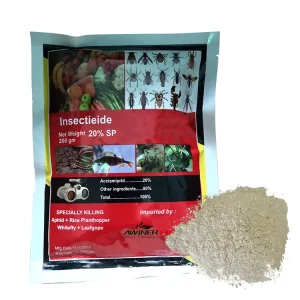
Early-season threats like Aphids (Aphis gossypii), Thrips (Thrips tabaci), and Whiteflies (Bemisia tabaci) transmit viruses and cause leaf curling. Neonicotinoid combinations, including Acetamiprid 20% SP and Imidacloprid 35% SC, provide systemic, acropetal protection with minimal impact on beneficial predatory insects when applied strictly according to economic thresholds.
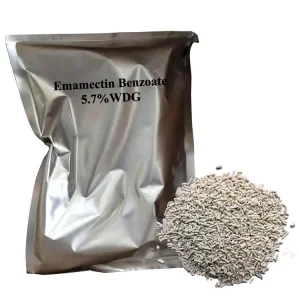
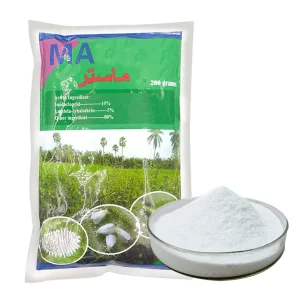
The Cotton Bollworm (Helicoverpa armigera) remains the most destructive pest in Central Asian cotton belts. Enterprise control regimes utilize Emamectin Benzoate 5.7% WDG and dual-action compounds like Imidacloprid 15% + Lambda-cyhalothrin 5% to deliver rapid knock-down and translaminar ovicidal action.
| Active Ingredient / Formulation | Target Chemical Class | Agronomic Application Target | Recommended Dosage / Ha | Optimal Application Window |
|---|---|---|---|---|
| Pendimethalin 330 g/L EC | Dinitroaniline Herbicide | Annual Grasses & Broadleaf Weeds | 3.0 - 4.5 Liters | Pre-emergence / Post-planting soil seal |
| Acetamiprid 20% SP | Neonicotinoid Insecticide | Aphids, Thrips, Flea Beetles | 150 - 250 Grams | 4-6 Leaf Stage to Early Squaring |
| Emamectin Benzoate 5.7% WDG | Avermectin Insecticide | Cotton Bollworm, Spodoptera spp. | 200 - 300 Grams | Boll Formation / Peak Larval Hatch |
| Azoxystrobin 200g/L + Difenoconazole 125g/L SC | Strobilurin + Triazole Fungicide | Verticillium Wilt, Alternaria Leaf Spot | 0.5 - 0.75 Liters | First Bloom / Mid-Season Canopy Shield |
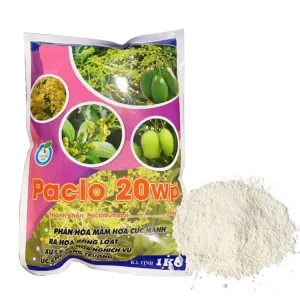
| Paclobutrazol 20% WP | Plant Growth Regulator (PGR) | Rank Vegetative Growth Control | 100 - 200 Grams | Peak Flowering / Canopy Management |
Procuring enterprise volumes of cotton farming chemicals for Uzbekistan requires a sophisticated, highly compliant supply chain infrastructure. Direct ocean-to-rail freight pathways originating from manufacturing bases in China must cross border checkpoints such as Khorgos or Alashankou, transitioning through Kazakhstan before arriving at logistics hubs in Tashkent, Samarkand, or Andijan. Understanding key procurement friction points ensures timely delivery aligned with strict agricultural calendars.
All agrochemical active ingredients and formulated end-products must hold active registration certificates issued by the State Chemical Commission under the Ministry of Agriculture of the Republic of Uzbekistan. Full technical dossiers—including GLP analytical reports, toxicological profiles, and multi-season efficacy trials—are provided to facilitate smooth clearance.
Chemical transit across Central Asian rail corridors subjects cargo to extreme thermal variations (-15°C winter to +45°C summer) and mechanical stress. Formulations are packaged in UN-certified fluorinated HDPE drums, aluminum-laminated foil pouches, and reinforced corrugated outer cartons with moisture-vapor barriers to prevent leakages and active degradation.
Every commercial lot undergoes rigorous High-Performance Liquid Chromatography (HPLC) and Gas Chromatography (GC) validation prior to dispatch. Certificates of Analysis (COA) document active purity, wetability, emulsification stability, suspension percentage, and pH thresholds to ensure consistent field performance.
Founded in 2006, Awiner Biotech is located in Shijiazhuang, Hebei Province—the heartland of China's agrochemical manufacturing corridor, strategically positioned near Beijing with convenient transport connections to major international shipping ports and Eurasian rail freight terminals. Awiner Biotech specializes in the synthesis, formulation development, and international distribution of premium crop protection products, encompassing insecticides, herbicides, fungicides, plant growth regulators, and public health formulations.
Recognizing that laboratory precision must match real-world field conditions, Awiner Biotech conducts ongoing in-country market surveys and agronomic evaluations across Central Asia. Our technical specialists regularly visit agricultural clusters in Uzbekistan, Russia, Kazakhstan, Turkey, Pakistan, and South America to inspect field application results, analyze localized pest resistance patterns, and optimize product delivery systems alongside enterprise growers.
To date, Awiner Biotech has built lasting commercial partnerships across key agricultural nations, including Uzbekistan, Kazakhstan, Russia, Ukraine, Turkey, Iraq, Iran, Afghanistan, Pakistan, India, Syria, Yemen, Libya, Nigeria, Djibouti, Rwanda, Somalia, Chile, Bolivia, Mexico, Brazil, Paraguay, Malaysia, Cambodia, Nepal, and Myanmar. Our continuous involvement in international agricultural expos (in Russia, Uzbekistan, Turkey, Iran, and Pakistan) reinforces our commitment to providing tailored crop protection systems to modern farm management entities.
The next decade of cotton farming in Uzbekistan will be defined by ecological sustainability, water conservation, and chemical efficiency. As drip-irrigation infrastructure expands across thousands of hectares in the Fergana and Syrdarya regions, chemical formulations must evolve to complement precision application methods.
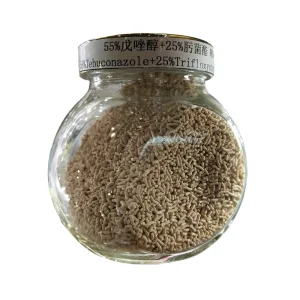
Transitioning from older, solvent-heavy Emulsifiable Concentrates (EC) to solvent-free WDG formulations (such as Emamectin Benzoate 5.7% WDG and Tebuconazole 50% + Trifloxystrobin 25% WDG) reduces environmental toxicity, enhances operator safety, and prevents nozzle clogging in automated spray rigs.
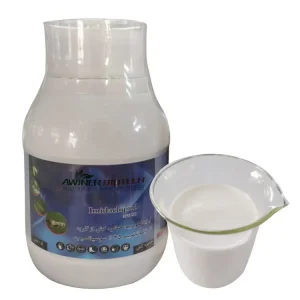
Modern systemic crop protection tools (such as high-purity suspension concentrates like Imidacloprid 35% SC and Azoxystrobin 200g/L + Difenoconazole 125g/L SC) are specifically refined for subterranean drip-line injection, delivering active molecules directly to the root zone with zero atmospheric loss.
Combating target-site resistance in cotton bollworms and mites requires multi-site premixes. Formulations like Imidacloprid 15% + Lambda-cyhalothrin 5% offer dual modes of action, combining rapid knockdown with extended residual activity while preventing resistant population surges.
Review our targeted compound insecticides, systemic broad-spectrum herbicides, and plant growth regulators designed for high-density planting schemes.
 Awiner Biotech