Explore our export-grade crop protection chemistry, manufactured under stringent FAO/WHO specifications to ensure maximum biological efficacy and field stability.
Cotton (Gossypium hirsutum) remains one of the world's most critical industrial crops, sustaining the global textile sector and generating essential agricultural revenue across Asia, Africa, and the Americas. However, maintaining high cotton lint quality and yield requires intense protection against a broad spectrum of chewing and sucking lepidopteran pests. Among synthetic pyrethroids, Alpha-Cypermethrin (CAS No. 67375-30-8) stands out as an exceptionally potent, broad-spectrum insecticide widely utilized across major cotton-producing basins in China, India, Pakistan, Central Asia, and West Africa.
Chemically, Alpha-Cypermethrin consists of a racemate containing two enantiomeric pairs comprising the (1R-cis)-S and (1S-cis)-R isomers of cypermethrin. This specific stereochemical purity provides two to three times higher biological activity than standard racemic cypermethrin, enabling significantly lower active ingredient application rates per hectare. This structural optimization reduces environmental chemical loading while maintaining superior knockdown speed and extended residual activity against economic cotton pests.
When sourcing Alpha Cypermethrin for cotton from China suppliers, inspecting the isomeric purity of the Technical Grade (TC) chemical is crucial. High-purity Alpha-Cypermethrin TC should contain minimum 97% active enantiomeric pairs. Lower purity technical grades often contain inactive stereoisomers that increase phytotoxicity risks without adding pest knock-down power.
| Parameter | Technical Specification / Standard |
|---|---|
| Chemical Name (IUPAC) | (Racemate containing (S)-α-cyano-3-phenoxybenzyl (1R,3R)-3-(2,2-dichlorovinyl)-2,2-dimethylcyclopropanecarboxylate and (R)-α-cyano-3-phenoxybenzyl (1S,3S)-3-(2,2-dichlorovinyl)-2,2-dimethylcyclopropanecarboxylate) |
| CAS Registry Number | 67375-30-8 |
| Molecular Formula / Weight | C22H19Cl2NO3 / 416.3 g/mol |
| Mode of Action (IRAC Group) | Sodium Channel Modulators (IRAC Class 3A) |
| Melting Point & Purity | 78°C – 81°C; Standard TC purity ≥ 97% |
| Target Pests in Cotton | Cotton Bollworm (Helicoverpa armigera), Pink Bollworm, Cotton Aphids, Leafhoppers, Thrips |
China is the global leader in the synthesis, formulation, and export of Alpha-Cypermethrin TC and its downstream agricultural formulations. Chemical clusters located in Hebei, Shandong, Jiangsu, and Zhejiang provinces form the core of the global supply chain, leveraging fully integrated backward production from precursor synthesis (such as meta-phenoxybenzaldehyde and DV acid chloride) to final end-use crop protection packaging.
The FOB China quotes for Alpha Cypermethrin for cotton fluctuate based on several macroeconomic and technical variables:
Prices of MPBD (Meta-Phenoxybenzaldehyde) and permethric acid precursors directly control TC costs. Supply chain stability in Chinese chemical parks dictates seasonal wholesale prices.
China’s strict eco-compliance policies favor top-tier manufacturers with automated effluent treatment facilities, leading to stable, reliable supply lines for global importers.
Seasonal surges in cotton bollworm infestations across West Africa, Central Asia (Uzbekistan/Kazakhstan), and South America drive concentrated quarterly demand for 10% EC and 10% SC formulations.
Continuous overuse of single-mode synthetic pyrethroids can accelerate resistance in target pests like the Old World Cotton Bollworm (Helicoverpa armigera) via enhanced cytochrome P450 monooxygenase detoxification and target-site sodium channel mutations (kdr resistance). To preserve the field efficacy of Alpha-Cypermethrin in intensive cotton cultivation, global agronomists advocate strict Integrated Pest Management (IPM) and resistance rotation protocols.
To overcome metabolic resistance and widen the pest control spectrum, leading chemical manufacturers offer co-formulated or tank-mixed solutions that combine Alpha-Cypermethrin with complementary active ingredients:
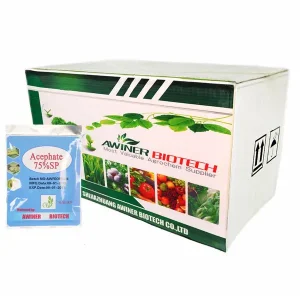
Combines fast voltage-gated sodium channel knock-down with organophosphate acetylcholinesterase (AChE) inhibition. Excellent for penetrating dense cotton canopies and managing resistant bollworms.
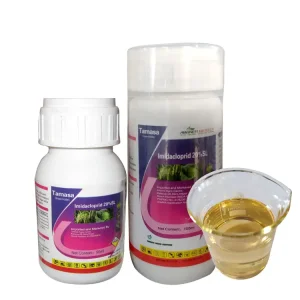
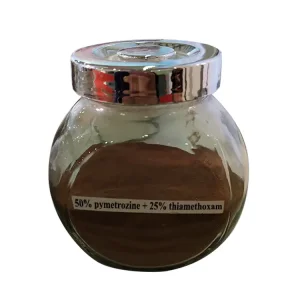
Pairs pyrethroid contact action with systemic neonicotinoid trans-laminar movement. Solves simultaneous infestations of leaf-eating caterpillars and sap-sucking whiteflies/aphids.
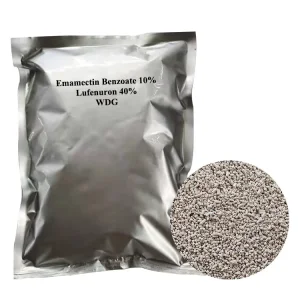
Integrates contact knockdown with Chitin Synthesis Inhibition (IGR). Disrupts the larval molting cycle, preventing egg hatch and nymph development for extended field control.
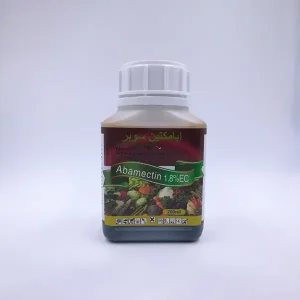
Offers dual contact and stomach activity targeting nerve glutamate receptors alongside sodium channels. Highly effective for emergency bollworm suppression in late-season cotton.
Modern Chinese pesticide manufacturing has evolved beyond basic solvent-heavy emulsifiable concentrates (EC) toward environmentally conscious, bio-available, and green formulation delivery systems.
Traditional high-performance liquid formulations using optimized bio-based methyl ester solvents instead of xylene. Features instant spontaneous emulsification, rapid leaf cuticle penetration, and high rainfastness within 2 hours of application.
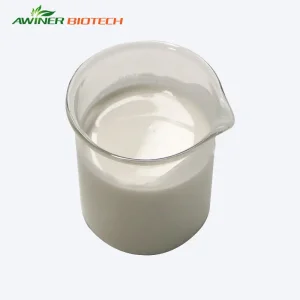
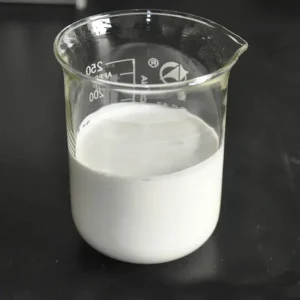
Water-based liquid formulations featuring micro-milled crystal particles (< 5 microns). Zero organic solvent odor, lower mammalian toxicity, minimal crop phytotoxicity risk during sensitive flowering/boll opening stages, and superior tank-mix safety.
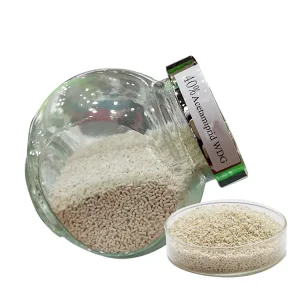
Water Dispersible Granules and Wettable Powders offering long shelf life (up to 3 years), reduced shipping weight, zero leak hazards during transoceanic shipping, and rapid dispersion upon dilution in field spray tanks.
Effective field application of Alpha-Cypermethrin requires adapting spray volumes, dosages, and application timing to local climatic conditions and specific agronomic practices across global cotton belts:
| Region / Market | Dominant Pests | Recommended Formulation | Application Rate & Method |
|---|---|---|---|
| Central Asia (Uzbekistan, Kazakhstan) | Cotton Bollworm, Spider Mites, Thrips | Alpha-Cypermethrin 10% EC / SC | 150 - 250 ml/ha applied via tractor boom sprayer during peak squaring stage. |
| South Asia (India, Pakistan) | Pink Bollworm, Whiteflies, Jassids | Alpha-Cypermethrin 10% EC + Acetamiprid | 200 - 300 ml/ha applied using knapsack or motorized mist blowers. Tank mixed with organosilicone spreaders. |
| Sub-Saharan Africa (Nigeria, Rwanda) | Leaf Folders, Stainers, Bollworms | Alpha-Cypermethrin 5% EC | 300 - 400 ml/ha; Ultra-Low Volume (ULV) foliage spraying for smallholder farm plots. |
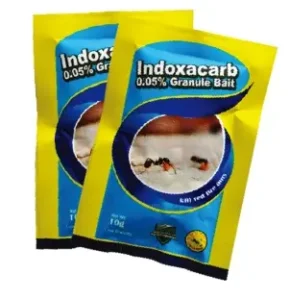
| South America (Brazil, Bolivia) | Helicoverpa armigera, Armyworms | Alpha-Cypermethrin 10% SC + Indoxacarb | Aerial drone application (UAV) at 10-15 L water carrier volume per hectare. |
International agricultural distributors and chemical importers evaluating China Alpha Cypermethrin quotes should verify suppliers across several critical technical and commercial checkpoints:
Request High-Performance Liquid Chromatography (HPLC) certificate of analysis verifying that the (1R-cis)-S and (1S-cis)-R enantiomeric ratio meets strict FAO quality parameters without adulteration by cheaper racemic cypermethrin isomers.
For EC formulations, ensure passing scores in standard CIPAC test MT 39.3 (low-temperature stability at 0°C for 7 days) to prevent active ingredient crystallization during winter transport and long-term storage in tropical port warehouses.
Liquid pesticides must be packaged in high-density polyethylene (HDPE) bottles, fluorinated drums, or COEX bottles with heat-induction seals to prevent solvent vapor leakage during transoceanic shipping under high temperature environments.
Top China agrochemical suppliers provide complete registration dossiers (including acute toxicity reports, environmental fate studies, GLP data packages, and field efficacy trial reports) to support national pesticide registration filings.
Awiner Biotech was founded in 2006, located in north of China-Shijiazhuang, Hebei Province. The city is close to our capital Beijing, transportation is convenient. Awiner Biotech is committed to research, produce and distribute agrochemicals. mainly deal with pesticides, herbicides, fungicides, plant growth regulator and public health pesticides.
Exhibition: Our countries participating in the exhibition are Turkey, Iran, Pakistan, Nigeria, Russia, Cambodia, Malaysia, Uzbekistan, etc.
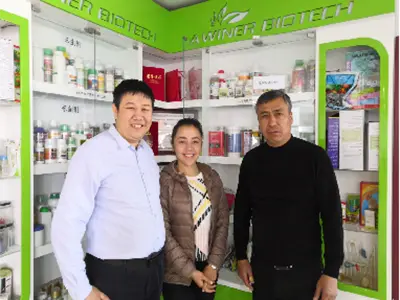
Customer market survey: We go to the customer's country to conduct market inspections, analyze and solve problems for them, understand their product usage, and customers will also visit us.
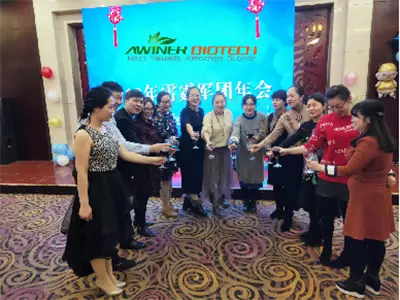
Up to now, we have win customers from Iraq, Iran, Afghanistan, Pakistan, India, Libya, Syria, Turkey, Yemen, Ukraine, Russia, Kazakhstan, Uzbekistan, Chile, Bolivia, Mexico, Brazil, Paraguay, Nigeria, Djibouti, Rwanda, Somalia, Malaysia, Cambodia, Nepal, Myanmar and so on.
Explore our complete catalog of complementary active ingredients, systemic insecticides, and target crop protection formulations engineered for international agricultural distributors.
 Awiner Biotech