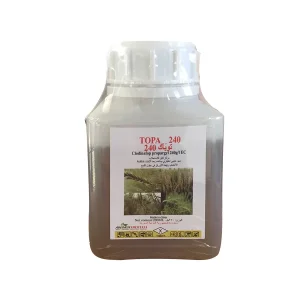
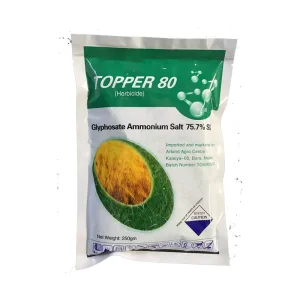
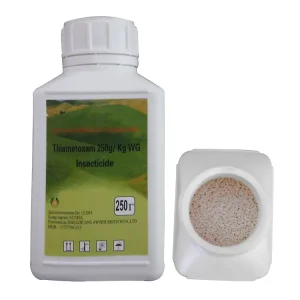
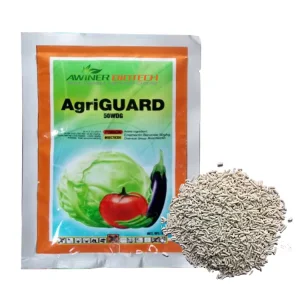
Explore our premium grade crop protection products, specialized fungicides, and crop enhancers manufactured to stringent international quality specifications.
Understanding pathobiology, economic thresholds, and latent infection dynamics in high-value table and wine grapes.
Botrytis cinerea is a necrotrophic filamentous fungal pathogen capable of attacking over 1,400 plant species, with Vitis vinifera being exceptionally susceptible. Overwintering as sclerotia in cane debris or mummified berries, airborne conidia infect grape clusters during flowering and berry ripening under high humidity (>85%) and moderate temperatures (15°C–25°C).
Infections during early bloom often remain quiescent inside developing berries due to high phytoalexin (resveratrol) levels and acidity. As berries enter veraison, sugars increase, cell walls soften, and endogenous antifungal compounds decline. This triggers explosive mycelial development, causing berry split, slipskin, and characteristic grey sporulation.
Uncontrolled gray mold reduces yields by up to 70%, degrades fruit appearance for fresh export markets, and introduces laccase enzymes into wine must. Laccase resists thermal oxidation and SO2 clarification, leading to premature browning, off-flavors, and complete destruction of vintage quality.
Scientific trial data demonstrates that 60% of late-season Gray Mold outbreaks originate from blossom-end infections established during early flowering. Targeting the canopy at 80% bloom with high-affinity contact and systemic protectants yields a 4.2x higher return on investment (ROI) compared to reactive post-veraison applications alone.
Engineered multi-site and single-site fungicide modes of action designed to prevent resistant Botrytis strains.
| Active Ingredient (AI) | FRAC Code | Biochemical Mode of Action | Formulation Tech | Systemic Activity | Resistance Risk |
|---|---|---|---|---|---|
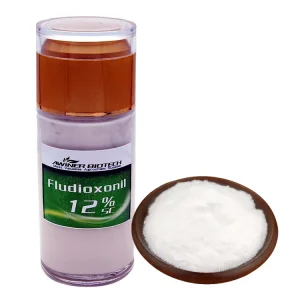
| Fludioxonil | FRAC 12 (Phenylpyrroles) | Inhibits osmoregulatory MAP-kinase signal transduction pathway. Prevents spore germination. | SC, WDG, FS | Non-systemic / Surface Contact | Low to Medium |
| Cyprodinil | FRAC 9 (Anilino-pyrimidines) | Inhibits methionine biosynthesis and secretion of fungal hydrolytic enzymes. | WG, SC | Translaminar & Systemic | Medium |
| Boscalid | FRAC 7 (SDHI) | Inhibits succinate dehydrogenase in complex II of fungal mitochondrial respiration chain. | WDG, SC | Translaminar & Acropetal | Medium to High |
| Fenhexamid | FRAC 17 (Hydroxyanilides) | Inhibits 3-keto-reductase during C4-demethylation in sterol biosynthesis. | SC, WDG | Protectant / Contact | Medium |
| Pyrimethanil | FRAC 9 (Anilino-pyrimidines) | Disrupts cell wall degrading enzymes secretion (polygalacturonases & cellobiases). | SC, EC | Vapor Phase & Systemic | Medium |
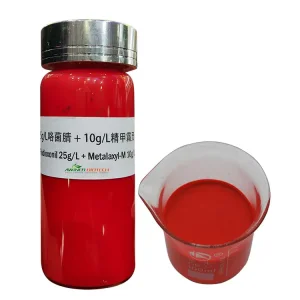
| Fludioxonil + Metalaxyl-M | FRAC 12 + 4 | Dual mechanism: Signal disruption combined with RNA Polymerase I inhibition. | FS, SC | Broad-Spectrum Systemic | Managed Low |
Unmatched synthetic chemistry scale, formulation technology, and global export security from Hebei, China.
Located in Shijiazhuang, Hebei Province, our proximity to core chemical industrial clusters enables direct access to key intermediate precursor chemicals (such as 2,2-difluoro-1,3-benzodioxole for Fludioxonil synthesis). This backward vertical integration guarantees cost stability and immunizes global buyers against international supply chain shocks.
Our state-of-the-art air-jet milling and high-shear emulsification units achieve ultra-fine particle sizes (<2 microns) for Suspension Concentrates (SC) and Water Dispersible Granules (WDG). Smaller particle size dramatically enhances foliar adhesion, spray distribution, rainfastness, and bio-availability on target grape foliage.
Turnkey solutions tailored for chemical distributors, multi-national brand owners, and commercial agricultural buyers.
We provide full GLP toxicological data, FAO standard technical specifications, 5-batch analysis reports, environmental fate studies, and Certificate of Analysis (COA) to facilitate fast-track local registrations in Ministry of Agriculture agencies worldwide.
From 100mL fluorinated HDPE bottles, aluminum foil sachets for WDG formulations, to 200L steel drums and 1000L IBC totes. OEM custom branding, anti-counterfeiting holographic labeling, and multi-lingual compliance text printing are fully supported.
Every commercial lot undergoes rigorous High-Performance Liquid Chromatography (HPLC), Gas Chromatography (GC), particle size distribution testing, and suspension stability checks prior to factory release. Zero-defect shipping commitment.
Agronomic protocols for maximizing field efficacy while complying with stringent import Maximum Residue Limits (MRLs).
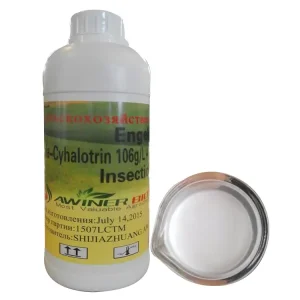
When compounding fungicides with insecticides (e.g., Lambda-cyhalothrin + Thiamethoxam) or plant growth regulators (e.g., Gibberellic Acid GA3), adhere to the standard JAR test procedure:
How smart chemistry and application technology are redefining vineyard disease control worldwide.
Polymer micro-encapsulation technology provides controlled, sustained release of active ingredients over a 21-day period, reducing application frequency, leaching losses, and worker exposure risk while maximizing UV degradation resistance.
Customizing SC and WDG formulations with specialized drift-reduction agents and anti-evaporation surfactants engineered specifically for low-volume spray drones (5-15 L/ha spray volume), improving canopy penetration into dense vine foliage.
Integrated Pest Management (IPM) protocols combining conventional fungicides (such as Fludioxonil) with biological control agents (Bacillus subtilis, Trichoderma harzianum) to maintain zero-residue profiles at harvest while preventing resistance development.
Direct responses to common technical, sourcing, and application inquiries from international buyers.
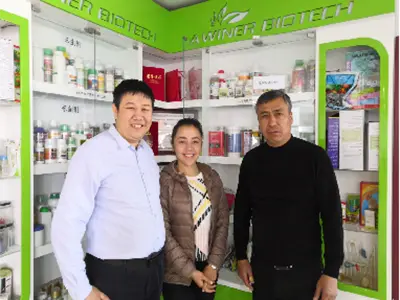
Awiner Biotech was founded in 2006, located in north of China-Shijiazhuang, Hebei Province. The city is close to our capital Beijing, transportation is convenient. Awiner Biotech is committed to research, produce and distribute agrochemicals. mainly deal with pesticides, herbicides, fungicides, plant growth regulator and public health pesticides.
Up to now, we have won customers from Iraq, Iran, Afghanistan, Pakistan, India, Libya, Syria, Turkey, Yemen, Ukraine, Russia, Kazakhstan, Uzbekistan, Chile, Bolivia, Mexico, Brazil, Paraguay, Nigeria, Djibouti, Rwanda, Somalia, Malaysia, Cambodia, Nepal, Myanmar and so on.
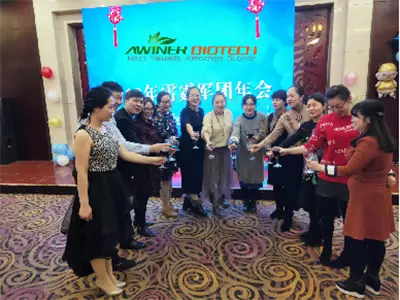
We regularly participate in international agrochemical exhibitions (Turkey, Iran, Pakistan, Nigeria, Russia, Cambodia, Uzbekistan) and conduct on-site market surveys to solve growers' field problems directly.
Browse our extensive portfolio of technical grade chemical concentrates, systemic insecticides, selective herbicides, and custom crop protection formulations.
 Awiner Biotech