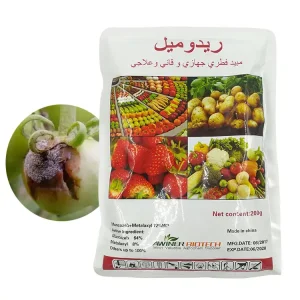
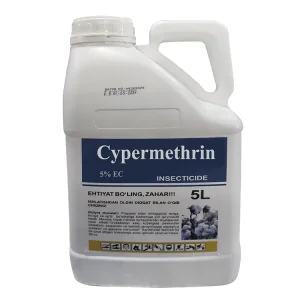
Premium export-grade insecticides, fungicides, and plant growth regulators synthesized for robust crop defense and foliage preservation.
Understanding the agronomic and physiological impacts of leaf-chewing, skeletonizing, and leaf-mining pests on broadacre crops and high-value horticulture.
Leaf-eating pests such as armyworms (*Spodoptera frugiperda*), cabbage loopers (*Trichoplusia ni*), beetles, and caterpillars reduce active leaf surface area, compromising photosynthetic capacity (PAR absorption). A defoliation rate exceeding 20% during critical reproductive stages (e.g., silking in corn, pod filling in soybeans) can result in yield drops of up to 45%.
Monoculture spraying patterns have accelerated target-site mutations (e.g., kdr mutation in pyrethroids, ryanodine receptor insensitivity in diamides). Modern foliar pest management protocols mandate systematic rotation of Mode of Action (MoA) groups—alternating nerve agents, muscle disruptors, and biological chitin inhibitors to preserve chemical longevity.
Traditional liquid sprays suffer from high runoff and solar photodegradation. Modern China pesticide manufacturers engineer Advanced Microemulsions (ME), Water Dispersible Granules (WDG), and Suspension Concentrates (SC) utilizing organosilicone surfactants to ensure rapid cuticular penetration and rainfastness within 30 minutes of application.
Comprehensive chemical breakdown, IRAC classification, target species, and application dynamics engineered by premier Chinese agrochemical plants.
| Active Ingredient / Combination | IRAC Group | Primary Target Pests | Physiological Mode of Action | Formulation Tech |
|---|---|---|---|---|
| Bacillus thuringiensis kurstaki (Bt) | Group 11 | *Tuta absoluta*, Diamondback Moth, Cabbage Looper | Delta-endotoxin insecticidal crystal proteins disrupt midgut membrane integrity leading to septicemia. | WP / WDG (Organic Compliant) |
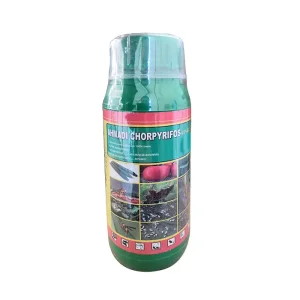
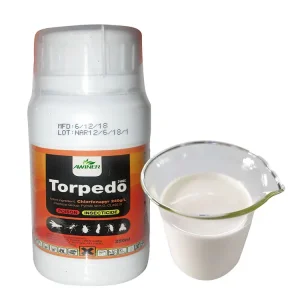
| Chlorfenapyr (360g/L) | Group 13 | Beet Armyworm, Thrips, Spider Mites, Caterpillars | Pro-insecticide uncoupler of oxidative phosphorylation; disrupts ATP production in insect mitochondria. | SC (Suspension Concentrate) |
| Cyantraniliprole | Group 28 | Leafminers, Whiteflies, Chewing Caterpillars | Binds to ryanodine receptors, releasing intracellular calcium stores causing immediate muscle paralysis. | OD / SC (Systemic Foliar) |
| Cypermethrin / Permethrin Combos | Group 3A | Fall Armyworm, Leaf Beetles, Locusts, Cutworms | Sodium channel modulators causing repetitive nerve firing, rapid knockdown, and feeding inhibition. | EC / EW (High Cuticle Penetration) |
| Acetamiprid + Thiamethoxam | Group 4A | Foliar Aphids, Leafhoppers, Flea Beetles | Nicotinic acetylcholine receptor (nAChR) agonists providing systemic systemic translaminar protection. | FS / EC / SP |
From basic chemical synthesis to advanced formulation nanotechnology, Chinese pesticide manufacturers offer unmatched scale and quality assurance.
China synthesizes over 70% of the world's agrochemical active ingredients (AIs). Strategic clustering in industrial chemical parks (such as Hebei, Jiangsu, and Shandong) guarantees uninterrupted access to key intermediates (e.g., synthetic pyrethroid precursor intermediates, cyanobenzene, and triazine rings).
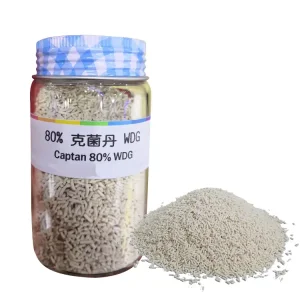
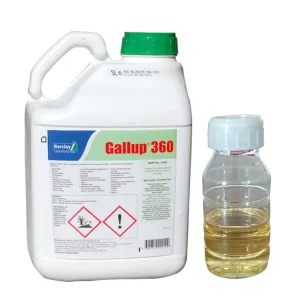
This vertical Integration allows direct factory production of formulations like Captan 80% WDG, Glyphosate 480SL, and Chlorfenapyr 36SC at cost efficiencies unreachable by regional blenders.
Leading Chinese exporters utilize high-precision High-Performance Liquid Chromatography (HPLC) and Gas Chromatography-Mass Spectrometry (GC-MS) to guarantee active content tolerances within strict FAO/WHO benchmarks.
Connecting global agricultural markets with premium Chinese chemical research and specialized crop protection formulations.
Awiner Biotech was founded in 2006, located in north of China - Shijiazhuang, Hebei Province. The city is close to our capital Beijing, transportation is convenient.
Awiner Biotech is committed to research, produce and distribute agrochemicals. We mainly deal with pesticides, herbicides, fungicides, plant growth regulators, and public health pesticides. By maintaining rigorous technical audits, continuous field trial verification, and scalable manufacturing facilities, Awiner Biotech guarantees consistent product excellence for large-scale agricultural operations worldwide.
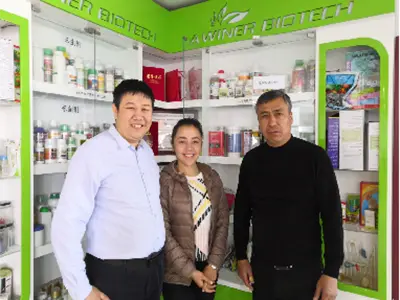
Up to now, we have won customers across diverse international agricultural zones, delivering tailored foliar and soil solutions to partners in:
Iraq, Iran, Afghanistan, Pakistan, India, Libya, Syria, Turkey, Yemen, Ukraine, Russia, Kazakhstan, Uzbekistan, Chile, Bolivia, Mexico, Brazil, Paraguay, Nigeria, Djibouti, Rwanda, Somalia, Malaysia, Cambodia, Nepal, Myanmar, and beyond.
Awiner Biotech actively participates in major global agrochemical and agricultural technology trade shows to stay engaged with regional farming developments. Our regular exhibition footprint includes:
Turkey, Iran, Pakistan, Nigeria, Russia, Cambodia, Malaysia, Uzbekistan, and several other strategic regional summits.
We go directly to the customer's country to conduct rigorous market inspections, analyze specific regional pest pressure, and solve agronomic challenges first-hand.
We thoroughly analyze local product performance under varied soil/climate conditions, while regularly welcoming global partners to our headquarters and production facilities in Hebei.
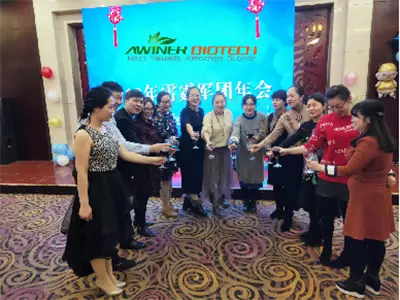
Specific spray regimes engineered to maximize yield protection across global farming ecosystems.
Primary Threat: *Spodoptera frugiperda* larvae feeding inside the whorl, causing extensive leaf ragging and tassel damage.
Optimal Formulation: Chlorfenapyr 36% SC or Cypermethrin 25% EC coupled with organosilicone penetrants. Early morning whorl-directed spraying delivers 95%+ mortality within 24 hours.
Primary Threat: *Tuta absoluta* (Tomato Leafminer) and Diamondback Moth (*Plutella xylostella*) developing rapid resistance.
Optimal Formulation: Rotation of *Bacillus thuringiensis kurstaki* (Bt WP) biological agent with Cyantraniliprole. Maintains strict MRL compliance for international export while protecting foliage.
Primary Threat: Tea caterpillars, loopers, cane leafhoppers, and aggressive weeds competing for canopy space.
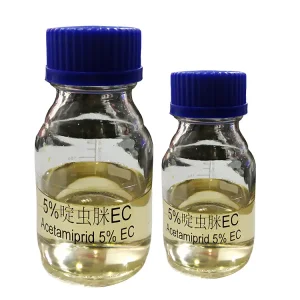
Optimal Formulation: Application of Glyphosate 480SL for inter-row weed clearance combined with targeted foliar sprays of Acetamiprid 5% EC to suppress leaf-sucking and leaf-chewing complexes simultaneously.
Navigating complex global registration dynamics with factory-backed administrative and technical documentation.
Importing pesticides requires extensive regulatory proof. China's top pesticide factories provide complete registration support packages including:
We supply flexible packaging tailored to local retail and commercial farming demands:
Integrating formulation chemistry with UAV drone deployment, satellite foliage analytics, and bio-rational insecticides.
Aerial spraying requires specialized non-foaming, anti-evaporation, and high-drift-reduction formulations. Modern Chinese manufacturing lines develop specialized drone-compatible SC and EC formulations optimized for ultra-fine droplet spectrums (100–150 microns).
Combining satellite vegetation indices (NDVI) with AI camera vision enables real-time detection of leaf damage before widespread yield reduction occurs. Targeted spot-spraying protocols lower chemical usage by up to 30% while maximizing control efficacy.
The next decade will see a major transition toward bio-rational synthetic peptides and RNA interference (RNAi) sprays that target leaf-eating insects at the genetic level with absolute selectivity, leaving pollinators and beneficial arthropods completely unharmed.
Expert insights on chemical selection, resistance management, dosage recommendations, and international sourcing from China.
Leaf-eating insects (such as Lepidopteran caterpillars and Coleopteran beetles) possess chewing mouthparts that physically consume plant tissue. Consequently, insecticides with strong stomach-poison action (such as Chlorfenapyr, Bt toxins, or synthetic pyrethroids) are highly effective because the pest ingests the active ingredient while foliage is consumed. In contrast, leaf-sucking insects (aphids, whiteflies) require systemic insecticides with translaminar activity (like Acetamiprid or Thiamethoxam) that move into the plant vascular system.
To prevent rapid resistance buildup, growers must implement an IRAC (Insecticide Resistance Action Committee) rotation strategy. Avoid applying chemicals from the same IRAC mode-of-action group for consecutive generations. For example, spray a Diamide (Group 28 like Cyantraniliprole) during the first egg hatch window, followed by a Pyrrole (Group 13 like Chlorfenapyr) or Biological (Group 11 like *Bacillus thuringiensis*) for the subsequent pest cycle.
Formulation quality dictates how effectively the active ingredient adheres to, spreads across, and penetrates the leaf cuticle. High-quality Water Dispersible Granules (WDG) and Suspension Concentrates (SC) engineered in advanced Chinese factories utilize micronized active particles and specialized wetting agents. This ensures high rainfastness, prevents rapid UV degradation, and avoids nozzle clogging in commercial high-volume sprayers or UAV drones.
Yes, *Bacillus thuringiensis* (Bt) can often be tank-mixed with many non-alkaline synthetic insecticides to provide immediate knockdown combined with biological residual control. However, Bt should never be mixed with highly alkaline chemicals or copper-based fungicides that may denature the insecticidal crystal proteins or kill the bacterial spores. Always perform a jar compatibility test prior to broadacre tank mixing.
Awiner Biotech provides full regulatory support for international import compliance, including Certificate of Analysis (COA), ICAMA export certificates, MSDS sheets, Certificate of Origin (Form E/Form A/CO), and GLP-certified tox/environmental testing data required by national Ministries of Agriculture across South America, Africa, Eastern Europe, and Asia.
Residual protection duration depends on the chemical class, formulation type, solar exposure (UV degradation), and rainfall. Contact pyrethroids like Cypermethrin typically offer 7-10 days of surface defense. Modern systemic or Translaminar formulations (e.g., Cyantraniliprole, Chlorfenapyr, or Flusilazole for companion disease protection) provide sustained internal leaf protection for 14 to 21 days.
Standard factory MOQs typically start at 1000 Liters/Kilograms for specialized formulations and 5000 units for customized retail bottles. Production lead time, including custom label printing, laboratory quality assurance testing, and export clearance, generally ranges between 15 to 25 days from contract confirmation.
Complete wholesale listing of public health vector controls, plant growth regulators, broad-spectrum fungicides, and selective foliar insecticides.
 Awiner Biotech