High-efficacy active ingredients, synergistic insecticide formulations, and regulatory-compliant pest control solutions synthesized for global commercial distributors and agricultural enterprises.
Commercial tomato (Solanum lycopersicum) production globally is currently under escalated pressure from invasive lepidopteran species. Effective management requires an advanced understanding of pest biology, physiological resistance mechanisms, and precision chemical delivery.
The polyphagous nature of H. armigera allows it to bore directly into green and ripening tomato fruits. Internal tissue consumption causes secondary bacterial and fungal fruit rots, leading to complete marketability loss. High fecundity—with single females laying up to 1,500 eggs—demands preventative and early-instar intervention strategies.
Originating from South America and rapidly spreading across Europe, Africa, and Asia, T. absoluta larvae create extensive leaf mines, destroy apical buds, and bore into stems and fruit. Yield losses can reach 50% to 100% if unchecked due to rapid generation cycles (up to 10-12 generations per year).
These gregarious foliar feeders skeletonize leaves during early instars and consume expanding floral buds and young fruit during later stages. Rapid foliage destruction severely reduces photosynthetic capacity, exposing fruits to severe sunscald.
Commercial tomato enterprise profitability hinges on timing chemical interventions. For Helicoverpa armigera, the IPM threshold triggering action is defined as 1 egg per 10 plants or 5% fruit damage in sample surveys. For Tuta absoluta, pheromone trap catches exceeding 30 moths/trap/week necessitate immediate contact and systemic larvicide applications combined with ovicidal chemical rotation.
Relying on single-active chemistries inevitably leads to rapid target-site resistance development in lepidopteran populations. Chinese agrochemical manufacturing hubs have pioneered advanced co-formulations and high-purity active ingredient synthesis to provide multi-site protection strategies.
| Active Ingredient | IRAC Code | Biochemical Mode of Action | Primary Target Species | Translaminar / Systemic Activity | Optimal Application Window |
|---|---|---|---|---|---|
| Emamectin Benzoate | Group 6 | Glutamate-gated chloride channel allosteric modulators; leads to neuromuscular paralysis. | H. armigera, Spodoptera spp., T. absoluta | Strong Translaminar (Leaf Tissue Storage) | Egg hatch to early instar larvae (L1-L2) |
| Chlorantraniliprole | Group 28 | Ryanodine receptor modulators; induces uncontrolled calcium loss from muscle cells. | Lepidoptera (Broad-Spectrum) | Systemic & Translaminar | Ovi-larvicidal; pre-bore window |
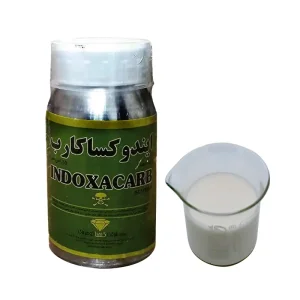
| Indoxacarb | Group 22A | Voltage-dependent sodium channel blockers; halts feeding within 2-12 hours. | H. armigera, Tuta absoluta | Contact & Ingestion | Mid-stage larval infestation (L2-L4) |
| Bifenthrin | Group 3A | Sodium channel modulators (Pyrethroid); rapid knock-down action. | Adult moths, flea beetles, mites | Non-Systemic (Surface Guard) | Adult moth emergence & knock-down |
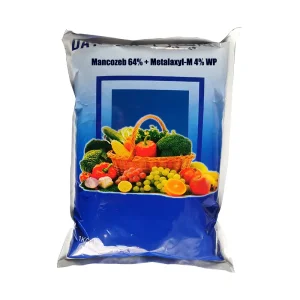
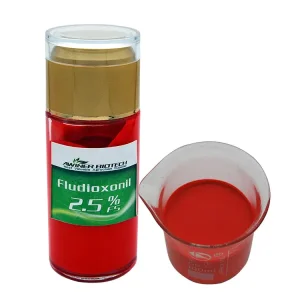
| Fludioxonil + Metalaxyl-M | Group 12 / 4 | Signal transduction interference & RNA Polymerase I inhibition (Seedling Defense). | Damping-off & Root Pathogens | Systemic Seed Treatment | Nursery & Seedling propagation |
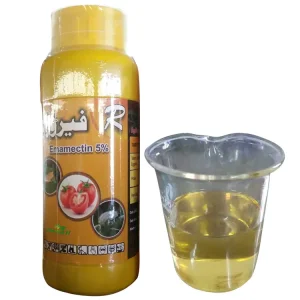
Modern Emamectin Benzoate formulations developed by leading Chinese manufacturers incorporate specialized organosilicone adjuvants and wetters. This design enables rapid leaf cuticle penetration, creating a toxic reservoir within the foliar parenchyma. When young Tuta absoluta larvae feed within leaf mines, they ingest lethal doses without exposing the active ingredient to solar UV degradation.
Combining diamide chemistries (Group 28) with avermectins (Group 6) or pyrethroids (Group 3A) creates dual-mode control. This disrupts the insect nervous system across multiple pathways, eliminating egg hatches while suppressing mobile larvae and adult moth flights in commercial tomato greenhouses.
China's pesticide manufacturing ecosystem represents over 70% of global active ingredient (AI) production capacity. Vertically integrated chemical parks in Hebei and eastern coastal industrial hubs ensure raw material availability, advanced synthesis, and global price competitiveness.
Chinese manufacturing complexes synthesize foundational key chemical intermediates (KCIs) locally. Backward integration shields production schedules from global raw material bottlenecks, ensuring stable lead times for international distributors.
From Water Dispersible Granules (WDG) to Suspension Concentrates (SC) and Flowable Concentrates for Seed Treatment (FS), modern Chinese factories utilize high-shear nano-milling equipment. This achieves particle size distributions under 2 microns, maximizing biological efficacy and spray nozzle suspension stability.
State-of-the-art analytical laboratories equipped with HPLC, GC-MS, and CIPAC suspension testing verify that every production batch matches FAO specifications. This ensures long shelf-life stability under tropical storage conditions.
International buyers require flexible product specifications, tailored concentrations, and customized, secure packaging options to meet local market demands and brand identities.
Factory partners support custom Active Ingredient concentration ratios, including specialized dry granules (Emamectin Benzoate 5% WDG, 30% WDG) and liquid emulsions (Bifenthrin 10% EC, Emamectin Benzoate 2% EC). Tailored adjuvant packages enhance rainfastness, UV stability, and leaf surface penetration.
Complete OEM and ODM packaging capabilities support consumer-ready retail sizes up to industrial bulk drums. Fluorinated HDPE containers, aluminum foil sachets, and anti-counterfeiting holographic seals protect formulation integrity across international transit routes.
Navigating global agrochemical registration requires strict compliance with international food safety standards, FAO specifications, and country-specific Ministries of Agriculture guidelines.
Leading Chinese suppliers provide complete registration packages, including GLP-certified toxicity studies, 5-batch analytical reports, environmental fate data, and product efficacy trial documentation required by regulatory agencies globally.
To serve export-oriented tomato operations bound for the EU, North America, or the Middle East, chemical spray regimes must adhere strictly to established Maximum Residue Limits (MRLs). Expert technical teams provide clear Pre-Harvest Interval (PHI) directions for every product batch.
All crop protection products meet or exceed the specification benchmarks published by the Joint FAO/WHO Meeting on Pesticide Specifications (JMPS), covering physical properties, active content tolerance, and impurity limits.
Different tomato cultivation environments demand tailored spray strategies. Adapting application parameters to open-field farming or controlled environment agriculture (CEA) ensures optimal coverage and economical pest management.
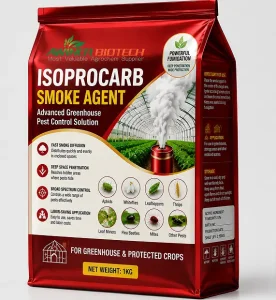
In enclosed greenhouse settings, pest population pressure can multiply rapidly. Thermal fogging and specialized smoke agents (such as Isoprocarb Smoke Agents) clear hidden adults from dense foliage without requiring high water volumes. Low-volume hydraulic booms equipped with hollow-cone nozzles ensure thorough coverage under leaves where Tuta absoluta oviposits.
Open-field tomato crops face rain wash-off and UV degradation of active ingredients. Formulations enriched with UV-protectants and non-ionic sticker-spreaders extend field persistence. Integration with agricultural spray drones (UAVs) allows rapid field treatment after pest outbreak detection.
The global tomato protection industry is undergoing a structural shift toward bio-rational pest control, targeted synthetic chemistries, and AI-driven precision agriculture.
Transition toward eco-friendly actives derived from microbial fermentation, reducing chemical residues while maintaining high mortality rates against target caterpillars.
Emerging gene-silencing technologies designed to selectively target essential proteins within specific caterpillar species without harming beneficial pollinators.
Smart pheromone traps paired with computer vision systems automatically alert farm managers to early pest emergence, optimizing spray timing.
Nano-emulsion and controlled-release capsule technology protects fragile actives from photodegradation, extending residual control periods.
Founded in 2006, Awiner Biotech is headquartered in Shijiazhuang, Hebei Province, near Beijing. Backed by excellent transportation links and robust chemical manufacturing infrastructure, Awiner Biotech focuses on research, formulation development, and global distribution of crop protection products.
Our portfolio spans high-performance insecticides, herbicides, fungicides, plant growth regulators (PGRs), and public health pest control solutions engineered for international commercial agriculture.
We have built strong commercial partnerships across global agricultural markets, including:
Middle East & Asia: Iraq, Iran, Afghanistan, Pakistan, India, Syria, Turkey, Yemen, Kazakhstan, Uzbekistan, Malaysia, Cambodia, Nepal, Myanmar.
Americas: Chile, Bolivia, Mexico, Brazil, Paraguay.
Africa & Europe: Libya, Ukraine, Russia, Nigeria, Djibouti, Rwanda, Somalia.
Technical details and answers to key questions about sourcing caterpillar control formulations for commercial tomato operations.
Explore our full line of agricultural inputs, public health solutions, and high-purity chemical formulations crafted for global export.
 Awiner Biotech