Direct supply from audited Chinese manufacturing facilities for crop protection, weed management, and defoliation requirements.
Comprehensive Agronomic Analysis of Chemical Harvest Aids, Active Ingredients, and Direct Factory Supply Chains
Modern cotton farming relies on 90%+ mechanical harvesting efficiency. Chemical defoliation eliminates green leaf foliage, reducing trash content in raw lint cotton while maintaining color grade and fiber length uniformity.
Leading Chinese chemical factories specialize in high-purity Thidiazuron (TDZ), Ethephon, and Diuron combinations. These act simultaneously to trigger leaf abscission layer development and accelerate boll opening.
China accounts for over 75% of global synthetic capacity for plant growth regulators and harvest aids. Direct factory sourcing provides bulk pricing advantages, customizable concentrations, and stable batch-to-batch quality.
Agronomic Value Insight: Effective cotton defoliation requires precise timing—applied when cotton boll opening reaches 60–70%. Selecting the right Chinese factory formulation ensures zero fiber staining, low foliage regrowth, and maximum seed cotton ginning efficiency.
Understanding the physiological action of active ingredients produced in Chinese agrochemical chemical zones
Thidiazuron (TDZ) is a highly potent substituted phenylurea plant growth regulator. Unlike traditional contact desiccant herbicides that burn foliage leaves, TDZ acts systemically to alter natural phytohormone balances within the plant:
Ethephon acts as an aqueous plant growth regulator that rapidly breaks down into ethylene gas inside target crop tissues:
| Active Ingredient / Mix | Formulation Type | Standard Concentration | Primary Agronomic Function | Optimal Temperature Range |
|---|---|---|---|---|
| Thidiazuron (TDZ) + Diuron | SC / WP / WDG | 360g/L SC (240+120) / 540g/L SC | Defoliation + Regrowth Inhibition + Weed Desiccation | > 18°C (64.4°F) |
| Thidiazuron + Ethephon | SC / Micro-emulsion | 50% WP / 540g/L Combined SC | Simultaneous Defoliation & Accelerated Boll Opening | 15°C - 25°C (59°F - 77°F) |
| Ethephon Standalone | SL (Soluble Concentrate) | 480 g/L SL / 720 g/L SL | Boll dehiscence, rapid maturity, early harvest setup | > 20°C (68°F) |
| Sodium Chlorate / Tribufos | Liquid / EC | 500 g/L EC | Fast contact desiccation for high-density foliage | Wide temperature tolerance |
Industrial scale, Xinjiang precision agriculture integration, and advanced chemical synthesis hubs
Xinjiang produces over 5 million tons of raw cotton annually across 2.5 million hectares. Chinese formulations undergo massive real-world validation under extreme diurnal temperature drops.
Complete upstream chemical integration from basic chemical precursors (triazine derivatives, organophosphorus intermediates) ensures stable pricing uninterrupted by global supply chain shocks.
China leads the world in aerial drone crop dusting. Chinese factories design micro-emulsions and specialized adjuvant surfactants tailored specifically for ultralow-volume UAV applications.
Top-tier factories operate equipped with High-Performance Liquid Chromatography (HPLC) and Gas Chromatography (GC) systems to guarantee active ingredient purity and zero heavy metal impurities.
Adapting cotton chemical harvest management to regional climates, soil moisture, and farming systems
Across major cotton-producing nations—including China, Brazil, India, Australia, Uzbekistan, and Central Asian markets—the global shortage of rural manual labor has accelerated transition toward 100% mechanical stripping and spindle picking. Hand-picking allowed selective harvesting of open bolls; machine harvesting requires total canopy leaf removal.
Consequently, agricultural importers and large commercial farming enterprises now view high-performance defoliants not merely as chemicals, but as essential mechanical harvesting facilitators. Chinese manufacturing quotes reflect optimized bulk packaging (200L drums, 1000L IBC totes) engineered for industrial-scale farming operations.
Field environmental conditions vary drastically across global cotton belts:
Apply only when boll opening reaches 60–70% and the youngest harvestable boll cannot be sliced easily with a sharp knife.
Adjust dosage according to temperature forecasts. Increase TDZ rates by 15-20% if daily minimum temperatures fall below 16°C.
Deploy boom sprayers (200-300L/ha water volume) or specialized UAV agricultural drones with coarse drift-reducing nozzles.
Begin mechanical harvesting 10–14 days post-application when leaf drop exceeds 90% and leaf moisture contents drop below critical levels.
Key parameters for international agrochemical buyers, distributors, and commercial plantation owners
Ensure your Chinese supplier holds ICAMA (Institute for the Control of Agrochemicals, Ministry of Agriculture) production approvals, ISO9001 quality management standards, and complete FAO specification test reports. Valid registration dossiers are crucial for seamless customs clearance and local country product registration.
When requesting quotes for cotton field defoliation products, specify:
Reputable factories offer pre-shipment sample testing and third-party inspection (SGS, BV) verification for active ingredient percentage, suspension stability, wet sieve residue, pH range, and persistent foaming properties to ensure field performance integrity.
Awiner Biotech was founded in 2006, located in the north of China—Shijiazhuang, Hebei Province. The city is close to our capital Beijing, with convenient transportation access to major northern container ports.
Awiner Biotech is committed to researching, producing, and distributing comprehensive agrochemicals. We mainly deal with high-efficacy pesticides, herbicides, fungicides, plant growth regulators (PGRs), and public health vector control solutions.
Up to now, we have won trusted long-term clients across international markets:
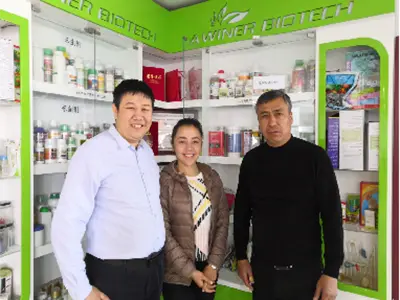
We regularly participate in overseas international agricultural exhibitions in Turkey, Iran, Pakistan, Nigeria, Russia, Cambodia, Malaysia, and Uzbekistan. Our technical teams conduct overseas field inspections to analyze regional agronomic problems, evaluate local crop performance, and optimize custom formulations for our global partners.
Expert answers regarding cotton defoliation active ingredients, quotes, application timings, and factory orders
Explore our complete catalog of chemical active ingredients and agricultural pesticide formulations
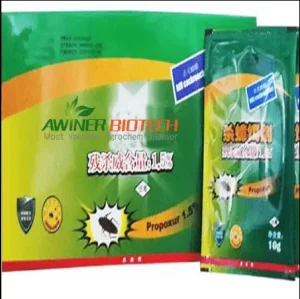
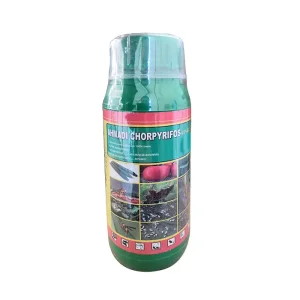
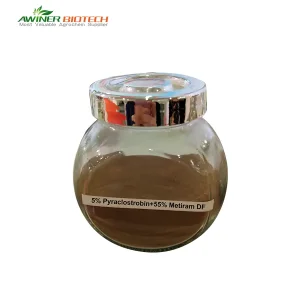
 Awiner Biotech