 Awiner Biotech
1 / 3
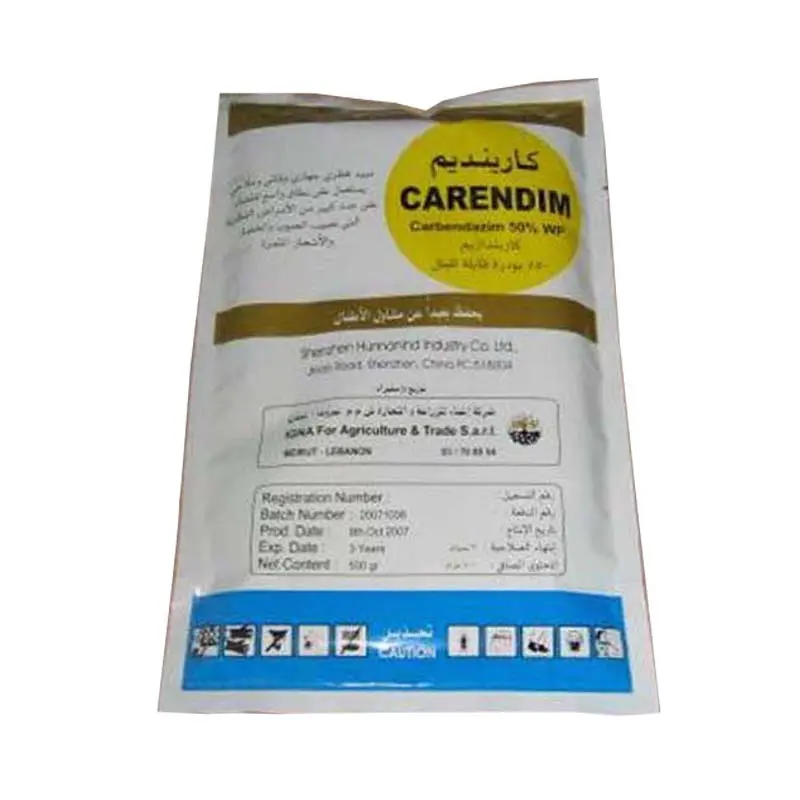
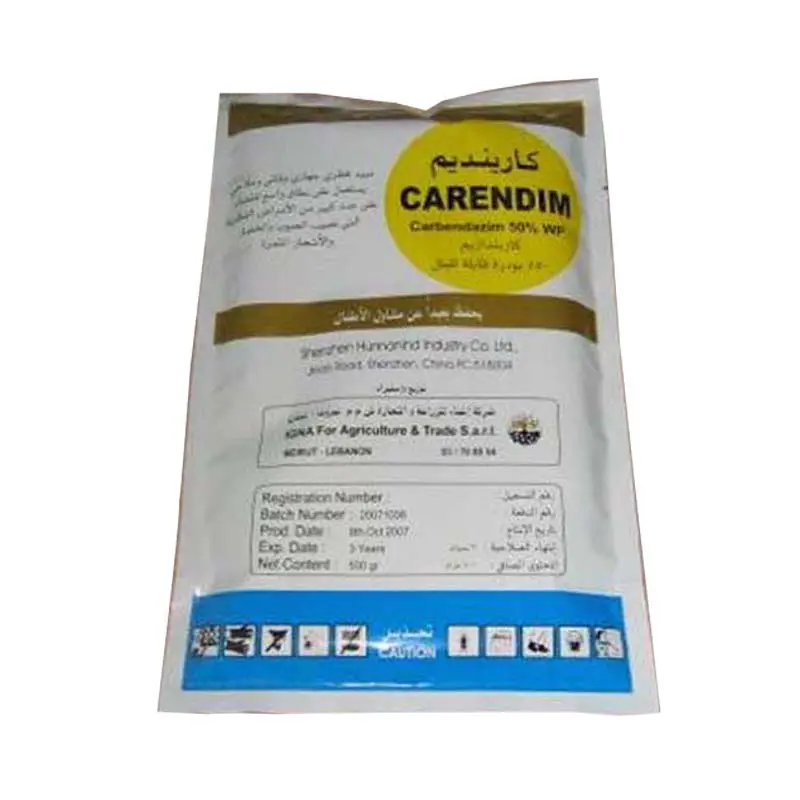
| Product Name | Carbendazim |
| Function | Fungicide |
| Specification | 98%Tech, 500g/L SC |
| Chemical Name | methyl 1H-benzimidazol-2-ylcarbamate |
| CAS No. | 10605-21-7 |
| Empirical Formula | C9H9N3O2 |
| Toxicology |
Oral: Acute oral LD50 for rats 6400, dogs >2500 mg/kg. Skin and eye: Acute percutaneous LD50 for rabbits >10 000, rats >2000 mg/kg. Non-irritating to skin and eyes (rabbits). Not a skin sensitiser (guinea pigs). Inhalation: LC50 (4 h) for rats, rabbits, guinea pigs or cats, no effect with suspension (10 g/l water). NOEL: (2 y) for dogs 300 mg/kg diet, corresponding to 6-7 mg/kg b.w. ADI: (JMPR) 0.03 mg/kg b.w. [1995]. Other: Acute i.p. LD50 for male rats 7320, female rats 15 000 mg/kg. Toxicity class: WHO (a.i.) U. |
Cereals: Control of Septoria, Fusarium, Erysiphe and Pseudocercosporella.
Oilseed Rape: Control of Sclerotinia, Alternaria and Cylindrosporium.
Sugar Beet: Control of Cercospora and Erysiphe.
Grapes: Control of Uncinula and Botrytis.
Tomatoes: Control of Cladosporium and Botrytis.
Pome & Stone Fruit: Control of Venturia and Podosphaera in pome fruit; Monilia and Sclerotinia in stone fruit.
Foliar Spray: Application rates vary from 120–600 g/ha, depending on the crop.
Seed Treatment: 0.6–0.8 g/kg to control Tilletia, Ustilago, Fusarium and Septoria in cereals, and Rhizoctonia in cotton.
Dip Treatment: 0.3–0.5 g/l as a dip against storage diseases of fruit.
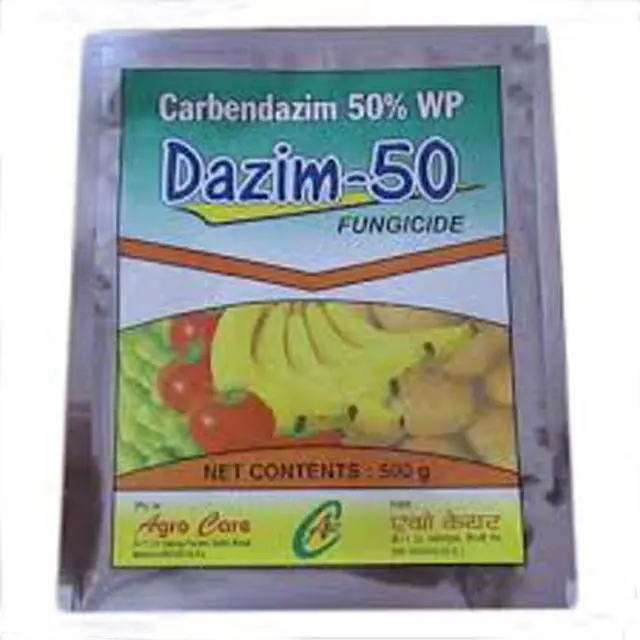
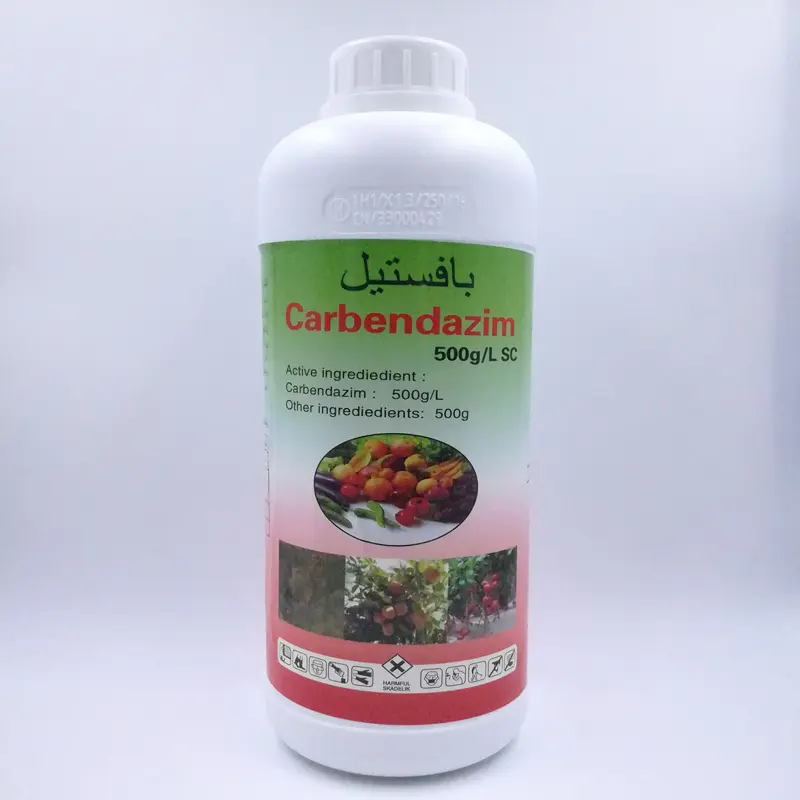
Carbendazim is a broad-spectrum, systemic fungicide with both protective and curative actions. It is absorbed by plant roots and green tissues, working internally to inhibit the growth of fungal mycelia, germ tubes, and appressoria.
Common specifications include 98% Tech (Technical Grade) and liquid formulations such as 500g/L SC (Suspension Concentrate).
It is widely used on cereals, oilseed rape, sugar beet, grapes, tomatoes, pome fruits, stone fruits, and cotton.
Yes, Carbendazim can be applied as a seed treatment at a rate of 0.6–0.8 g/kg to effectively control seed-borne and soil-borne fungi such as Tilletia, Ustilago, Fusarium, Septoria in cereals, and Rhizoctonia in cotton.
Carbendazim has low acute toxicity. Acute oral LD50 for rats is 6400 mg/kg. It is non-irritating to rabbit skin and eyes, non-sensitising to skin in tests, and classified under WHO (a.i.) Toxicity Class U.