Direct supply from premier Chinese manufacturing facilities with international FAO/WHO technical compliance
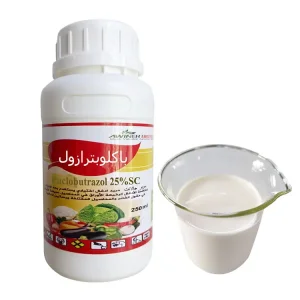
Analyzing chemical pathways, production scale, and global supply chain dynamics from Chinese agrochemical hubs
The transition toward mechanical cotton harvesting across major agricultural zones (such as Xinjiang, North America, Central Asia, and South America) requires strict canopy management. Cotton leaf defoliants serve as essential harvest-aid chemical tools that trigger green leaf separation, suppress juvenile leaf regrowth, and accelerate boll dehiscence.
Without timely defoliation, mechanical spindle pickers collect excessive foliage trash, staining white lint with chlorophyll and lowering cotton grade by up to 2-3 market tiers. Chinese synthesis plants lead the global production of active ingredients like Thidiazuron (TDZ), Diuron, Ethephon, and Carfentrazone-ethyl, capturing over 75% of global market supply.
Effective defoliation is an active physiological process governed by plant hormonal manipulation rather than simple foliage desiccation. Chemical defoliants target the petiole base, creating a specialized layer of parenchymatous cells known as the abscission zone.
A critical operational distinction in modern agronomy lies between true hormonal defoliants (e.g., Thidiazuron) and contact desiccants (e.g., Paraquat or high-dose PPO inhibitors). True defoliants leave petiole scar tissue smooth, causing leaves to drop cleanly under gravity. Desiccants kill tissue rapidly, causing "leaf freeze" where dead leaves stick tightly to branches, dramatically increasing trash content in ginned cotton. Chinese manufacturing standards prioritize precise hormonal formulations (50% WP, 540g/L SC) that ensure leaf dropping prior to mechanical picking.
In-depth technical breakdown of active ingredients synthesized and formulated by Chinese agrochemical manufacturers
CAS No: 51707-55-2 | Type: Cytokinin-type Plant Growth Regulator
Thidiazuron is the benchmark chemical active for cotton leaf abscission. At low dosage rates (150-300g AI/ha), TDZ stimulates ethylene production in petioles while inhibiting auxin transport.
CAS No: 330-54-1 | Type: Photosystem II Inhibitor
When combined with Thidiazuron in pre-formulated ratio blends (e.g., 360g/L TDZ + 180g/L Diuron SC), Diuron acts as a metabolic catalyst that enhances defoliation under cooler micro-climates.
CAS No: 16672-87-0 | Type: Ethylene Releasing Compound
Applied alongside defoliants to force immature cotton bolls to open uniformly. Once absorbed by plant tissue, Ethephon breaks down into ethylene gas at cellular pH above 5.0.
| Formulation Code | Active Composition | Application Rate / Ha | Optimal Thermal Window | Primary Agronomic Target |
|---|---|---|---|---|
| TDZ 50% WP / WDG | Thidiazuron 500 g/kg | 200 - 300 g/ha | 20°C - 35°C (High Temp) | Pure hormonal leaf drop, zero leaf stain |
| TDZ + Diuron 540g/L SC | 360g/L TDZ + 180g/L Diuron | 300 - 450 mL/ha | 15°C - 25°C (Cool/Moderate) | Regrowth inhibition & cool climate drop |
| Ethephon 720g/L SL | 2-Chloroethylphosphonic acid | 1.5 - 2.5 L/ha | 18°C - 32°C | Accelerated carpel opening & boll split |
| Carfentrazone 40% WDG | Carfentrazone-ethyl 400 g/kg | 30 - 50 g/ha | 12°C - 20°C (Late Season) | Fast contact foliage knockdown / desiccation |
Adapting chemical formulations for ultra-low volume (ULV) aerial application platforms
Traditional tractor boom sprayers deploy 200 to 400 Liters of water per hectare. Modern agricultural drones (e.g., DJI Agras, XAG) operate at ultra-low water volumes of 15 to 30 L/ha. This radical volume reduction presents major formulation challenges:
To maximize coverage on waxy cotton leaf cuticles, Chinese suppliers pair defoliant shipments with specialized organosilicone tank-mix adjuvants (polyether-modified trisiloxane).
Unmatched raw material synthesis, continuous flow technology, and global export infrastructure
Chinese chemical clusters in Hebei, Shandong, and Jiangsu produce essential precursor chemicals (such as DCDA, Guanidine, and Triazine derivatives) in-house. This complete integration protects international buyers from raw material price volatility.
Modern manufacturing facilities utilize micro-channel continuous flow reaction systems. This eliminates batch-to-batch variation, maintains exact temperature control during hazardous nitration steps, and delivers 98%+ technical purity.
Leading Chinese producers operate Zero-Liquid-Discharge (ZLD) effluent treatment facilities equipped with MVR evaporators and RTO thermal incinerators, ensuring uninterrupted, year-round production without environmental shutdowns.
Combining local manufacturing strength with robust global delivery networks
Awiner Biotech was founded in 2006, located in the north of China—Shijiazhuang, Hebei Province. The city is close to China's capital, Beijing, benefiting from exceptionally convenient logistics and export transportation infrastructure.
Awiner Biotech is committed to research, production, and international distribution of advanced agrochemicals. The enterprise specializes in high-efficiency pesticides, selective & non-selective herbicides, fungicides, plant growth regulators (PGRs), and public health vector control chemicals.
Our team regularly participates in international agricultural and agrochemical expos, including trade fairs in: Turkey, Iran, Pakistan, Nigeria, Russia, Cambodia, Malaysia, Uzbekistan, and more.
We conduct on-site market investigations in target customer regions, analyzing regional crop characteristics, solving micro-climate agronomic issues, evaluating product field performance, and hosting international client visits at our manufacturing facilities.
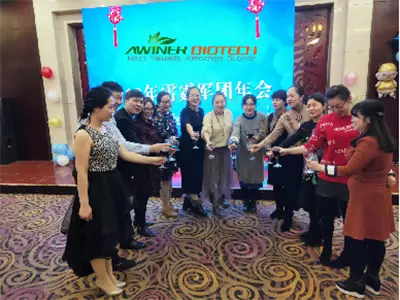
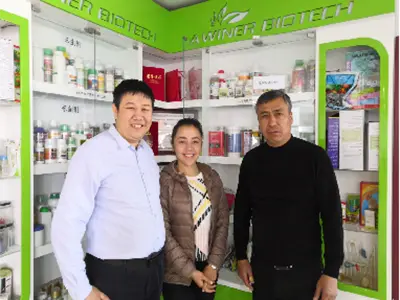
Up to now, we have won trusted long-term partnerships across major global agricultural hubs:
Actionable guidance for bulk importers, agricultural distributors, and contract formulation buyers
Sourcing agrochemicals internationally requires comprehensive regulatory backing to clear national ministry registrations (ICAMA, EPA, MAPA, etc.).
Cotton harvest aid products require specialty packaging to prevent chemical degradation, UV breakdown, or solvent vapor leakage during sea transit.
Cotton defoliation is strictly time-sensitive. A delay of two weeks can ruin harvest timing ahead of seasonal rains or frosts.
Expert solutions to common agronomic, manufacturing, and procurement challenges
Comprehensive portfolio of crop protection, defoliation, and plant health solutions
 Awiner Biotech