Explore our benchmark agrochemical formulations engineered for modern integrated pest management (IPM) standards worldwide.
In global agricultural pest management, fungal pathogens pose a persistent, multi-billion-dollar threat to high-value fruit crops, viticulture, and horticultural enterprise operations. Cyprodinil 75% WDG (Water Dispersible Granules) represents a flagship, broad-spectrum systemic fungicide belonging to the anilinopyrimidine chemical class (FRAC Code 9). Engineered specifically to counter destructive ascomycete species—most notably Botrytis cinerea (gray mold), Venturia inaequalis (apple scab), and Monilinia spp. (brown rot)—this high-concentration formulation provides reliable protective, curative, and systemic translaminar activity.
As regulatory scrutiny tightens across North America, Europe, and East Asia regarding active ingredient residues, spray drift, and worker exposure safety, the transition from traditional Wettable Powders (WP) and Emulsifiable Concentrates (EC) to high-grade Water Dispersible Granules (WDG/WG) has emerged as an industry imperative. Cyprodinil 75% WDG offers distinct advantages: dust-free handling, near-instant dispersion dynamics in cold water, minimal packaging waste, and enhanced shelf stability under challenging tropical storage conditions.
The global demand for high-purity Cyprodinil active ingredients (AI) and end-use formulations has experienced sustained expansion, driven by intensive fruit production in the Mediterranean basin, North American pome fruit corridors, and emerging agricultural hot-spots across Latin America and the Asia-Pacific region. Modern agricultural buyers are increasingly analyzing supply chains through the lens of Total Cost of Ownership (TCO), environmental compliance, and formulation stability.
Historical WP formulations suffered from dusting hazards, high inhalation risk, poor bucket mixing, and potential nozzle clogging. Modern 75% WDG fluid-bed technology creates spherical micro-granules that flow like liquid, completely eliminating worker dust exposure and ensuring rapid wet-out.
Unlike many systemic triazoles or strobilurins whose performance degrades significantly in cold spring conditions, Cyprodinil exhibits exceptional systemic uptake and biological efficacy at temperatures down to 5°C–10°C, making it essential for early-season Venturia control in pome fruits.
Within 2 hours of application, Cyprodinil active molecules penetrate the cuticle membrane into leaf tissue and fruit flesh. This rapid absorption shields the treatment from rain wash-off, safeguarding agrochemical investments against sudden rainfall events.
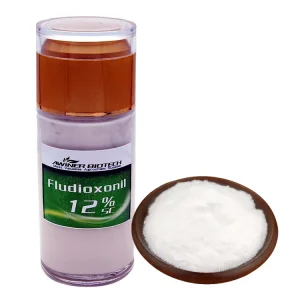
Market trends show a strong shift toward pre-mixed or co-applied tank partners, such as Cyprodinil + Fludioxonil combinations. This dual-action strategy targets both amino acid synthesis and osmotic signal transduction pathways, effectively suppressing multi-drug resistant strains of Botrytis cinerea in commercial vineyards and berry operations.
For international distributors, commercial buyers, and brand owners sourcing China Cyprodinil 75% WDG, technical compliance with Food and Agriculture Organization (FAO) and World Health Organization (WHO) specifications is vital. Sourcing from accredited Chinese manufacturers guarantees chemical uniformity, batch traceability, and compliance with stringent import protocols in overseas jurisdictions.
| Parameter / Quality Index | FAO / International Standard | Awiner Biotech Premium Grade | Test Method |
|---|---|---|---|
| Active Ingredient Content | ≥ 750 g/kg (75.0% w/w) | 752.0 - 758.0 g/kg | HPLC (High-Performance Liquid Chromatography) |
| Appearance | Off-white to light brown granule | Uniform spherical free-flowing granule | Visual Inspection |
| Wetting Time | ≤ 60 seconds | 15 - 35 seconds | CIPAC MT 53.3 |
| Dispersibility / Suspensibility | ≥ 85.0% after 30 min | ≥ 92.0% active in suspension | CIPAC MT 184 / MT 160 |
| Wet Sieve Test (75 μm mesh) | ≥ 98.0% passing | ≥ 99.6% passing | CIPAC MT 185 |
| Persistent Foam | Max 60 mL after 1 min | < 15 mL after 1 min | CIPAC MT 47.2 |
| Moisture Content | ≤ 2.5% w/w | ≤ 1.2% w/w | Karl Fischer / Loss on Drying |
| Accelerated Storage Stability | Stable at 54°C ± 2°C for 14 days | Decomposition < 1.0%; No caking | CIPAC MT 46.3 |
China has established itself as the undisputed manufacturing backbone for technical-grade agrochemicals and advanced formulation technologies. In particular, the chemical industrial clusters located in Hebei Province—anchored by provincial capitals like Shijiazhuang—leverage deep upstream raw material integration, modern environmental infrastructure, and automated continuous processing technology.
Modern Chinese manufacturing facilities have moved away from conventional wet extrusion or pan granulation to advanced closed-loop Fluidized-Bed Spray Granulation Systems. In this Industry 4.0 setup, micronized Cyprodinil technical material (ground to D90 < 5 microns via jet milling) is sprayed into a suspended warm air stream along with specialized polymeric dispersants and wetting agents.
Cyprodinil 75% WDG is registered and widely used across diverse agronomic ecosystems around the globe. Understanding its targeted performance metrics allows procurement officers and agronomists to optimize crop protection calendars.
Target Disease: Botrytis cinerea (Bunch Rot / Gray Mold)
Application Stage: End of flowering (BBCH 69), pre-bunch closure (BBCH 77), and veraison (BBCH 83).
Agronomic Impact: Prevents berry skin breakdown and protects juice quality by avoiding elevated laccase enzyme levels, which can cause oxidation and off-flavors in commercial wines.
Target Disease: Venturia inaequalis (Apple Scab), Venturia pirina (Pear Scab)
Application Stage: Green tip to tight cluster stage.
Agronomic Impact: Offers excellent cold-weather performance when night temperatures fall below 10°C, providing kickback/curative activity up to 48 hours after an infection event occurs.
Target Disease: Monilinia laxa & Monilinia fructicola (Brown Rot / Blossom Blight)
Application Stage: Pink bud, bloom, and pre-harvest harvest window.
Agronomic Impact: Protects blossoms from twig blight and prevents post-harvest storage decay on peaches, nectarines, plums, and cherries during long-distance shipping.
Target Disease: Botrytis cinerea on Strawberries, Tomatoes, Lettuce, and Onions
Application Stage: Vegetative canopy cover and flowering.
Agronomic Impact: Systemic translaminar movement protects dense foliage and lower canopy stem structures where humidity remains elevated.
To maximize efficacy and extend the useful lifecycle of Cyprodinil 75% WDG, proper application protocols and resistance management strategies must be strictly followed by farm managers and commercial applicators.
| Crop Type | Target Pathogen | Recommended Dosage (75% WDG) | Water Volume | PHI (Pre-Harvest Interval) |
|---|---|---|---|---|
| Grapes (Wine & Table) | Gray Mold (Botrytis cinerea) | 500 - 750 g/ha (0.05 - 0.075%) | 600 - 1000 L/ha | 7 to 21 Days (Region Dependent) |
| Apples & Pears | Apple / Pear Scab (Venturia spp.) | 300 - 500 g/ha (0.03 - 0.05%) | 800 - 1500 L/ha | 14 Days |
| Peaches & Cherries | Brown Rot (Monilinia spp.) | 400 - 600 g/ha | 500 - 1000 L/ha | 7 Days |
| Strawberries | Gray Mold (Botrytis cinerea) | 400 - 600 g/ha | 400 - 800 L/ha | 3 Days |
Cyprodinil 75% WDG is physically and chemically compatible with most commonly used insecticides, fungicides, and foliar nutrients. However, applicators must follow standard tank-mix order (WALES rule: Water soluble bags, Wetable powders/WDG, Agitate, Liquid flowables, Emulsifiable concentrates, Surfactants):
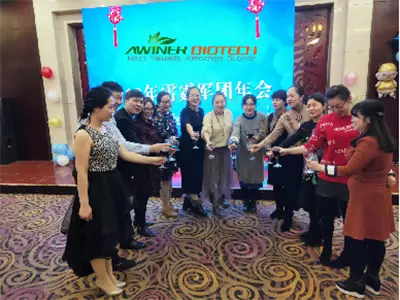
Awiner Biotech was founded in 2006, located in north of China—Shijiazhuang, Hebei Province. The city is close to our capital Beijing, and transportation is convenient. Awiner Biotech is committed to research, produce and distribute agrochemicals, mainly dealing with pesticides, herbicides, fungicides, plant growth regulators, and public health pesticides.
Driven by strict quality control standards and dedicated customer service, Awiner Biotech has grown into a trusted partner for agricultural enterprises, wholesalers, and government procurement agencies across the globe.
Up to now, we have won customers from Iraq, Iran, Afghanistan, Pakistan, India, Libya, Syria, Turkey, Yemen, Ukraine, Russia, Kazakhstan, Uzbekistan, Chile, Bolivia, Mexico, Brazil, Paraguay, Nigeria, Djibouti, Rwanda, Somalia, Malaysia, Cambodia, Nepal, Myanmar and so on.
Exhibition: Our countries participating in agricultural exhibitions include Turkey, Iran, Pakistan, Nigeria, Russia, Cambodia, Malaysia, Uzbekistan, etc.
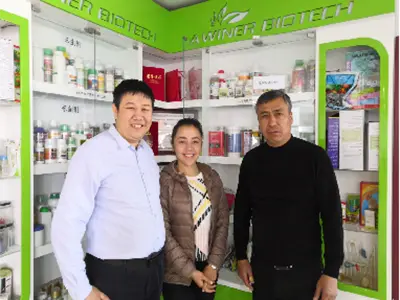
Customer Market Survey: We go to the customer's country to conduct market inspections, analyze and solve problems for them, understand their product usage, and invite customers to visit our state-of-the-art facilities in China.
Discover our comprehensive range of high-performance insecticides, herbicides, and crop health regulators.
 Awiner Biotech