High-efficacy crop protection solutions engineered in state-of-the-art Chinese manufacturing facilities.
Understanding the anilinopyrimidine class mechanism in controlling pear scab (Venturia pirina), gray mold (Botrytis cinerea), and black spot pathogens.
Cyprodinil (CAS No. 121552-61-2) demonstrates rapid translaminar absorption and acropetal translocation within pear foliage. Once absorbed by the cuticle of Pyrus communis or Pyrus pyrifolia, it redistributes evenly across untreated leaf surfaces, delivering robust protection against systemic infection vectors even during wet spring periods.
As a FRAC Group 9 fungicide, Cyprodinil targets the biosynthesis of methionine within fungal cells. By disrupting the secretion of hydrolytic enzymes required for fungal germ tube elongation and appressorium penetration, it prevents fungal hyphae from breaching pear fruit tissues and epidermal leaf layers.
Cyprodinil provides potent protective coverage before ascospore discharge and offers curative activity up to 48–72 hours post-infection. This dual capability allows orchard managers to maintain severe disease control during unpredictable early-season rainfall when pear scab infection pressure peaks.
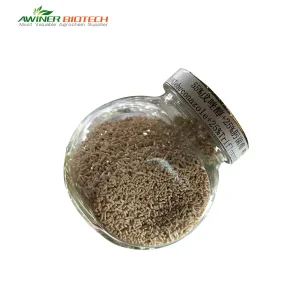
Technical Insight for B2B Procurement: Premium Cyprodinil formulations synthesized in China maintain superior stability across cold storage temperatures and high-pH spray tanks. By integrating specialized wetting agents and surfactant matrices, Chinese chemical plants ensure optimal deposition on the waxy leaves of Asian and European pear varieties.
Strategic application timing synchronized with pear phenological growth stages (BBCH Scale) ensures maximum crop safety and disease eradication.
| Growth Stage (BBCH Scale) | Target Pathogen | Recommended Formulation | Application Rate | Strategic Objective |
|---|---|---|---|---|
| BBCH 53 - 55 (Bud Burst / Green Cluster) | Venturia pirina (Pear Scab) | Cyprodinil 75% WDG | 200 - 300 g/ha | Prevent early overwintering ascospore establishment on emerging green tissue. |
| BBCH 61 - 65 (Early to Full Bloom) | Botrytis cinerea (Gray Mold) / Monilinia | Cyprodinil 50% + Fludioxonil 25% WDG | 400 - 500 g/ha | Protect blossom structures, calyx cavity, and stem attachments from rot. |
| BBCH 71 - 75 (Fruit Set to Fruitlet Diameter 20mm) | Alternaria Rot / Black Spot | Cyprodinil 300g/L SC | 0.4 - 0.6 L/ha | Curative intervention post-rain events to block epidermal lesion development. |
| BBCH 81 - 85 (Fruit Ripening & Pre-Harvest) | Storage Rots (Pencillium, Botrytis) | Cyprodinil 75% WDG | 250 - 350 g/ha | Extend post-harvest shelf life and cold-storage preservation for export pears. |
Awiner Biotech brings over 18 years of technical synthesis mastery, rigorous quality assurance, and global supply stability from Shijiazhuang, Hebei Province.
Awiner Biotech was founded in 2006, located in the north of China - Shijiazhuang, Hebei Province. The city is close to our capital Beijing, with convenient transportation and direct access to major shipping ports like Tianjin. Awiner Biotech is committed to the research, production, and distribution of high-grade agrochemicals. We mainly deal with pesticides, herbicides, fungicides, plant growth regulators, and public health pesticides.
Our state-of-the-art formulation complex leverages automated fluid-bed granulation lines for Water Dispersible Granules (WDG) and advanced wet-milling equipment for Suspension Concentrates (SC), achieving particle size distributions under 2 microns for unmatched leaf coverage.
By securing direct key precursor supplies—such as 2-amino-4-methyl-6-cyclopropylpyrimidine—China's agrochemical manufacturing hubs maintain high cost efficiency and continuous production reliability even during international market disruptions. Partnering with a Chinese Cyprodinil manufacturer provides global buyers with stable pricing, scalable volume flexibility, and dependable delivery schedules year-round.
Ensuring your pear production meets International Maximum Residue Limits (MRLs) for hassle-free cross-border trade.
We provide complete dossiers, including GLP 5-batch analysis reports, acute toxicity studies, environmental fate profiles, and Certificate of Analysis (CoA) records to facilitate seamless localized registration for importers across South America, Eurasia, and Africa.
Export-oriented pear production requires strict adherence to buyer market MRL limits (e.g., EU MRL 2.0 mg/kg, US EPA 1.5 mg/kg, Codex Alimentarius standards). Cyprodinil's controlled degradation profile enables safe pre-harvest intervals (PHI) of 7 to 14 days without residual risk.
To safeguard product chemistry during long-distance maritime transport, our Cyprodinil packages utilize aluminum foil multi-layer moisture-barrier bags, HD-PE fluorinated bottles, and heavy-duty UN-certified outer corrugated drums.
Connecting Chinese manufacturing strength with local agricultural realities across key international markets.
Up to now, we have won customers from Iraq, Iran, Afghanistan, Pakistan, India, Libya, Syria, Turkey, Yemen, Ukraine, Russia, Kazakhstan, Uzbekistan, Chile, Bolivia, Mexico, Brazil, Paraguay, Nigeria, Djibouti, Rwanda, Somalia, Malaysia, Cambodia, Nepal, Myanmar, and so on.
Our global distribution partners benefit from customized localized solutions, responsive technical support, and crop-specific guidance tailored to regional soil compositions and microclimates.
We regularly visit our customers' countries to conduct market inspections, analyze local pest pressures, and work closely with growers to solve application issues on-site. By studying real-world product usage and receiving client visits at our manufacturing headquarters, we continuously refine our active chemical formulations to match evolving farm needs.
Exhibitions: Our teams actively participate in key international agrochemical exhibitions across Turkey, Iran, Pakistan, Nigeria, Russia, Cambodia, Malaysia, Uzbekistan, and beyond.
Evaluating Cyprodinil against traditional chemistry alternatives to optimize your integrated pest management (IPM) program.
| Fungicide Class | Active Ingredient | Mode of Action (FRAC) | Rainfastness | Low-Temperature Efficacy | Resistance Risk |
|---|---|---|---|---|---|
| Anilinopyrimidines | Cyprodinil | Group 9 (Methionine Synthesis) | High (< 2 Hours) | Exceptional (Functions at > 5°C) | Medium (Requires Rotation) |
| DMI Fungicides (Triazoles) | Difenoconazole / Tebuconazole | Group 3 (Sterol Biosynthesis) | Moderate (2-4 Hours) | Moderate (Requires > 12°C) | Medium to High |
| Strobilurins (QoI) | Azoxystrobin / Kresoxim-methyl | Group 11 (Respiration Inhibitor) | High | Moderate | High |
| Dithiocarbamates | Mancozeb | Group M3 (Multi-site) | Low (Washes off easily) | High | Very Low |
Expert technical insights regarding Cyprodinil formulation, application methods, tank mixes, and B2B ordering procedures.
Explore our full line of specialized crop protection chemical products for global agricultural distribution.
 Awiner Biotech