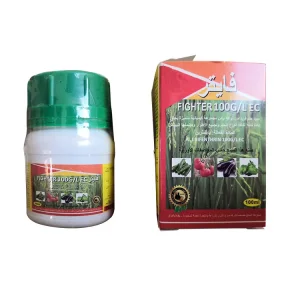
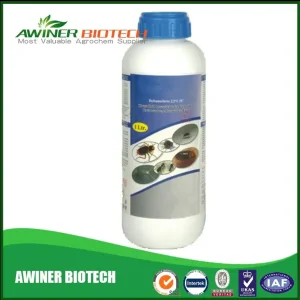
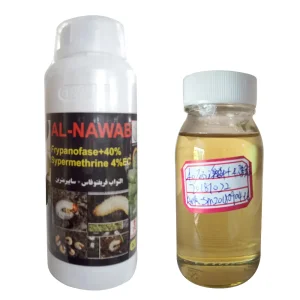
Explore our specialized pesticide formulations, manufactured to rigorous international quality standards for targeted crop protection.
In intensive horticultural systems, fungal pathogens such as Botrytis cinerea (Gray Mold), Alternaria solani (Early Blight), and Cladosporium fulvum represent severe biosecurity hazards capable of causing harvest losses exceeding 60%. Cyprodinil—a broad-spectrum, systemic anilinopyrimidine fungicide—has emerged as a foundational molecule for commercial growers worldwide. By inhibiting the biosynthesis of methionine and secretion of fungal hydrolytic enzymes, Cyprodinil provides both preventive and curative protection.
As global agronomic standards demand lower Maximum Residue Limits (MRLs) and stricter resistance management protocols, identifying reliable, high-purity Chinese Cyprodinil suppliers and manufacturers has become a critical strategic objective for commercial distributors, pesticide formulators, and enterprise-level agricultural operations.
Cyprodinil (IUPAC: 4-cyclopropyl-6-methyl-N-phenylpyrimidin-2-amine, CAS No. 121552-61-2) belongs to the Anilinopyrimidine (AP) chemical class categorized under FRAC Code 9. Its single-site mode of action targets the fungal methionine biosynthetic pathway, specifically disrupting cystathionine beta-lyase functionality.
Without essential amino acid synthesis, germ tubes fail to elongate, appressoria penetration is halted, and intracellular fungal mycelial growth within plant tissue is completely arrested before visible lesions form.
Upon foliar application, Cyprodinil exhibits rapid translaminar penetration across the leaf cuticle. It moves acropetally via the xylem tissue, distributing evenly toward leaf margins and new vegetative growth.
This systemic mobility ensures that dense strawberry foliage and tightly clustered tomato inflorescences receive full coverage, protecting hidden tissue that standard contact fungicides fail to reach, even during adverse weather conditions or overhead irrigation cycles.
The global agricultural micro-fungicide ecosystem has undergone significant transformations over the past decade. Driven by increasing demand for premium fresh produce, strawberry (*Fragaria × ananassa*) and tomato (*Solanum lycopersicum*) production has shifted heavily toward high-tech greenhouse environments and intensive field management. Consequently, the commercial footprint of Cyprodinil has expanded exponentially.
The global Anilinopyrimidine market is projected to expand at a CAGR of 5.8% through 2030, with Cyprodinil commanding over 42% of this segment. Growth is heavily concentrated in North America, Europe, and Asia-Pacific horticultural sectors.
China accounts for over 65% of global technical grade (TC) Cyprodinil production. Chinese synthesis facilities leverage vertically integrated chemical supply chains, securing raw materials such as cyclopropyl methyl ketone to maintain global price competitiveness.
Stringent EU and US EPA regulatory standards require high-purity active ingredients free from toxic isomers and heavy metals. Leading Chinese manufacturers now offer ISO/IEC 17025 certified batch reporting to meet global import standards.
Different crops demand tailored intervention protocols based on plant canopy structures, micro-climates, and pathogen virulence profiles.
| Crop Parameter | Strawberry Application Framework | Tomato Application Framework |
|---|---|---|
| Primary Target Pathogen | Botrytis cinerea (Gray Mold) | Botrytis cinerea, Alternaria solani (Early Blight) |
| Critical Window | Early Bloom (10% flowering) to Full Fruit Ripening | Vegetative Canopy Closure & Inflorescence Development |
| Recommended Dosage (AI) | 250 - 375 g active ingredient / Hectare | 300 - 450 g active ingredient / Hectare |
| Preferred Formulation | 50% WDG or Cyprodinil + Fludioxonil premix | 75% WDG or Cyprodinil + Difenoconazole SC |
| Pre-Harvest Interval (PHI) | 1 to 3 Days (Market dependent) | 3 to 7 Days (Market dependent) |
| Key Environmental Factor | High relative humidity (>85%) in protected tunnels | Warm, humid foliage micro-climates in dense greenhouses |
In strawberry culture, Botrytis cinerea infects senescing floral parts, remaining dormant until fruit maturation. Applications of Cyprodinil 50% WDG during early bloom prevent latent infections. Its low cold-water solubility prevents rapid wash-off during rain events or overhead misting in table-top substrate systems.
In high-density processing and fresh-market tomato production, stem lesions caused by Botrytis following pruning operations can kill entire vines. Targeted sprays of Cyprodinil 75% WDG protect pruning wounds and leaf scars, offering rain-fast control within 2 hours of application.
Modern pesticide performance relies heavily on formulation quality. Advanced Chinese chemical engineering has transitioned from simple Wettable Powders (WP) to high-efficiency Water Dispersible Granules (WDG) and Suspension Concentrates (SC).
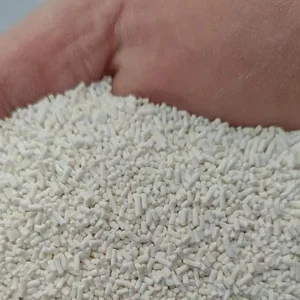
Utilizing fluid-bed granulation technology, our Cyprodinil 50% & 75% WDG formulations feature:
To mitigate resistance risks and expand biological spectra, Cyprodinil is co-formulated with complementary actives:
Repetitive single-site fungicide applications accelerate selection pressure, triggering resistant strains of *Botrytis cinerea*. Implementing structured Integrated Pest Management (IPM) protocols is vital for long-term commercial efficacy.
Never exceed 2 consecutive applications of Cyprodinil per crop season. Rotate with non-cross-resistant mode of action classes such as Succinate Dehydrogenase Inhibitors (SDHI / FRAC 7) or Multi-site Protectants (Mancozeb, Captan).
Adhering to destination country Maximum Residue Limits is crucial for export-oriented agricultural enterprises. European Union standards set strict tolerances for strawberries (typically 3-5 mg/kg) and tomatoes. Our formulation purity ensures clean degradation profiles when applied according to label recommendations.
Cyprodinil WDG demonstrates exceptional physical and chemical compatibility with most commonly used insecticides, acaricides, and foliar fertilizers. Avoid tank-mixing with strongly alkaline compounds (e.g., Bordeaux mixture) which induce hydrolysis.
Awiner Biotech was founded in 2006, located in the north of China—Shijiazhuang, Hebei Province. The city is close to our capital Beijing, ensuring convenient transportation and robust logistics networks. Awiner Biotech is committed to research, production, and distribution of high-grade agrochemicals, specializing in pesticides, herbicides, fungicides, plant growth regulators, and public health products.
Up to now, we have won customers from Iraq, Iran, Afghanistan, Pakistan, India, Libya, Syria, Turkey, Yemen, Ukraine, Russia, Kazakhstan, Uzbekistan, Chile, Bolivia, Mexico, Brazil, Paraguay, Nigeria, Djibouti, Rwanda, Somalia, Malaysia, Cambodia, Nepal, Myanmar, and beyond.
Our team actively participates in major global agricultural protection exhibitions across Turkey, Iran, Pakistan, Nigeria, Russia, Cambodia, Malaysia, Uzbekistan, and other strategic markets.
We perform on-site market inspections in our customers' home countries, analyzing local agronomic problems, evaluating product performance under ambient conditions, and hosting commercial visits at our manufacturing base.
Get expert answers regarding Cyprodinil procurement, agronomic efficacy, mixing procedures, and regulatory compliance.
Cyprodinil targets *Botrytis cinerea* at critical developmental stages: spore germination, germ tube elongation, and plant tissue penetration. Because it inhibits methionine synthesis, it stops latent infections established during early flowering from erupting into active fruit rot during post-harvest transit.
In greenhouse settings, high humidity accelerates stem and foliar blights (*Botrytis* and *Alternaria*). Cyprodinil’s systemic translaminar action ensures complete protection across dense canopy structures where standard contact sprays cannot achieve total surface coverage.
Fludioxonil (FRAC 12) is the industry standard partner for Cyprodinil in dual-action premixes. Difenoconazole or Tebuconazole (FRAC 3) and Boscalid (FRAC 7) are also highly effective rotational or tank-mix options to broaden disease control and manage resistance risks.
We offer flexible packaging ranging from 100g to 1kg aluminum foil bags for WDG formulations, as well as 25kg bulk fiber drums. Liquid formulations (SC/EC) can be filled in 100ml to 200L HDPE containers. Custom OEM brand labeling, co-registration support, and FAO-standard quality certificates are provided.
Cyprodinil absorbs rapidly into plant cuticular layers. It achieves complete rain-fastness within 1 to 2 hours post-application under normal temperature conditions, making it reliable in regions experiencing unpredictable rainfall.
Explore our extended portfolio of commercial fungicides, herbicides, and crop health formulations manufactured by Awiner Biotech.
 Awiner Biotech