Explore our high-purity active ingredients, specialized fungicides, insecticides, and plant growth regulators formulated for global agricultural demands.
An in-depth analysis for global B2B procurement officers, agronomists, and chemical importers.
Cyprodinil (CAS No. 121552-61-2) is a broad-spectrum, systemic fungicide belonging to the anilinopyrimidine chemical class. Introduced as a highly effective agent against a vast array of Ascomycetes and Deuteromycetes fungal pathogens, Cyprodinil has established itself as an essential tool in global Integrated Pest Management (IPM) systems. As a leading China Cyprodinil supplier and factory partner, our synthesis facilities leverage advanced catalytic pathways to deliver technical-grade Cyprodinil (98% TC minimum purity) as well as optimized water-dispersible granule (WDG) formulations such as 50% WDG and 75% WDG.
Biochemical Mechanism of Action: Cyprodinil inhibits the biosynthesis of methionine within fungal cells and disrupts the secretion of hydrolytic enzymes required for fungal penetration into host plant tissues. Designated under FRAC Code 9, it exhibits no cross-resistance to benzimidazoles, dicarboximides, or triazoles, making it invaluable for fungal resistance rotation protocols.
Understanding the fundamental chemical behavior of Cyprodinil is paramount for formulators and global agricultural distributors. It exhibits excellent translaminar movement within leaves and acropetal translocation throughout xylem tissues, ensuring both preventive and curative protection even under high rainfall pressures.
| Parameter | Technical Grade Standard (98% TC) | Formulated Standard (50% / 75% WDG) |
|---|---|---|
| Chemical Name | 4-cyclopropyl-6-methyl-N-phenylpyrimidin-2-amine | Cyprodinil Granular Formulations |
| CAS Registry Number | 121552-61-2 | 121552-61-2 (Active Ingredient) |
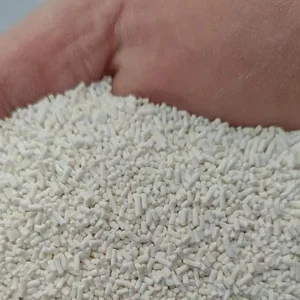
| Appearance | Off-white to fine beige powder | Off-white to light brown free-flowing granules |
| Active Content Assay (HPLC) | ≥ 980 g/kg (98.0%) | 500 g/kg (50.0%) or 750 g/kg (75.0%) |
| Water Content / Moisture | ≤ 0.5% | ≤ 2.5% |
| Suspensibility Rating | N/A (Technical Material) | ≥ 85% to 92% |
| pH Range (1% solution) | 6.0 – 8.5 | 6.5 – 8.5 |
| Persistent Foam | N/A | ≤ 60 mL after 1 minute |
Why leading multinational distributors and agricultural procurement managers choose our production ecosystem.
Our state-of-the-art reaction vessels feature automated temperature and pressure control systems, ensuring minimal impurity profiles, low batch-to-batch variation, and high yield safety.
Utilizing high-efficiency fluidized bed spray drying, our Cyprodinil 50% WDG and 75% WDG products feature rapid disintegration in under 30 seconds and zero dust hazard for operators.
We provide full regulatory assistance, including GLP five-batch analytical reports, toxicological study summaries, MSDS, COA, and ICAMA documentation required for national registrations.
From bulk 25kg fiber drums to localized small packaging (e.g., 100g, 500g, 1kg aluminum foil sachets with water-soluble inner bags), we support complete OEM/ODM brand customization.
By offering synergistic co-formulations (such as Cyprodinil + Fludioxonil or Cyprodinil + Tebuconazole), we help farmers combat multi-drug resistant strains of Botrytis cinerea.
Our factory operates comprehensive waste treatment complexes, recycling solvent streams and reducing carbon intensity per ton of technical active ingredient manufactured.
Analyzing pest spectra, target crops, and regional procurement trends across North America, Europe, Latin America, and Asia-Pacific.
The global demand for Cyprodinil is expanding rapidly driven by intensive viticulture, pome fruit cultivation, and protected greenhouse farming. High-value crops suffer severe economic losses from necrotrophic fungi, particularly Grey Mold (Botrytis cinerea), Apple Scab (Venturia inaequalis), and Brown Rot (Monilinia spp.).
In grape production (table and wine grapes), Botrytis cinerea poses a critical threat during flowering, pre-bunch closure, and veraison. Cyprodinil offers exceptional preventive action by suppressing spore germination and initial germ tube penetration into berry skins. Furthermore, Cyprodinil does not negatively affect fermentation dynamics, wine bouquet, or yeast vitality when applied in accordance with established Maximum Residue Limits (MRLs) and pre-harvest intervals (PHI).
Apple and pear orchards face persistent pressure from Venturia inaequalis and Venturia pirina. Cyprodinil operates reliably at early spring temperatures when other synthetic fungicides exhibit reduced bio-activity. For stone fruits (cherries, peaches, plums), application during bloom guards against blossom blight caused by Monilinia fructicola.
Greenhouse strawberries, tomatoes, and blueberries require precise chemical management due to humid microclimates that favor rapid spore proliferation. Granular formulations of Cyprodinil (50% WDG) leave negligible visible residue on harvested fruits, maintaining visual appeal for premium fresh market retail.
Formulation Synergy Spotlight: Cyprodinil + Fludioxonil
Combining Cyprodinil (a systemic methionine biosynthesis inhibitor) with Fludioxonil (a contact signal-transduction inhibitor) delivers dual-site control. This pre-mix formulation is widely regarded as the global gold standard for Botrytis management, providing enhanced residual control while drastically delaying the development of resistant fungal populations.
Our research and development pipeline focuses on next-generation formulation technologies to enhance active delivery efficiency while reducing environmental loading:
Awiner Biotech: Manufacturing Excellence, International Trade Competence, and Field-Level Agronomic Intelligence.
Awiner Biotech was established in 2006 and is strategically located in Shijiazhuang, Hebei Province, North China. Positioned in close proximity to Beijing, our corporate headquarters and logistics networks enjoy seamless access to major shipping ports (such as Tianjin Port), facilitating swift delivery of crop protection chemicals to international markets.
Awiner Biotech is dedicated to the research, synthesis, formulation, and global distribution of comprehensive agrochemical lines, encompassing insecticides, herbicides, fungicides, plant growth regulators (PGRs), and public health pest management solutions.
Through decades of rigorous quality assurance and customer-centric business practices, Awiner Biotech has established robust partnerships across multiple continents. Our registered market footprint spans over 35 nations, including:
Iraq, Iran, Afghanistan, Pakistan, India, Libya, Syria, Turkey, Yemen, Ukraine, Russia, Kazakhstan, Uzbekistan, Chile, Bolivia, Mexico, Brazil, Paraguay, Nigeria, Djibouti, Rwanda, Somalia, Malaysia, Cambodia, Nepal, Myanmar, and beyond.
Our sales and technical engineering teams routinely participate in major global industry exhibitions across Turkey, Iran, Pakistan, Nigeria, Russia, Cambodia, Malaysia, and Uzbekistan.
Furthermore, we conduct regular on-site agronomic surveys in destination markets to inspect field performance, evaluate local resistance issues, solve grower pain points, and collaborate directly with regional agricultural authorities.
Explore additional high-performance active ingredients and specialized formulations manufactured by Awiner Biotech.
Technical answers to common inquiries regarding Cyprodinil manufacturing, field application, compliance, and ordering logistics.
 Awiner Biotech