Explore our top-tier export grade compounds, crop-specific defoliants, systemic insecticides, and target-driven crop management formulations manufactured under strict quality standards.
An authoritative evaluation of international trade dynamics, chemical synthesis capabilities, and raw material stability shaping modern agrochemical procurement.
The global agrochemical market is undergoing a seismic paradigm shift. As mechanical harvesting, drone-assisted precision spraying, and labor-saving agricultural management become compulsory in modern farming, the reliance on highly targeted chemical solutions—specifically #defoliationchemical compounds and harvest aid additives—has reached unprecedented levels. Modern commercial agriculture demands not only leaf-drop acceleration but also immaculate defoliation precision without compromising crop fiber quality or seed integrity.
China stands at the nexus of global agrochemical production, representing over 65% of global active ingredient (AI) synthesis capacity and robust formulation manufacturing. From the primary synthesis of chemical precursors like Thidiazuron (TDZ), Ethephon, and Diuron to advanced adjuvants that increase leaf cuticle penetration, Chinese manufacturing complexes provide unmatched economies of scale, technical quality control, and export infrastructure.
When enterprise purchasers evaluate China #defoliationchemical quotes and pricelists, the strategic focus must extend beyond unit cost per metric ton. Importers and enterprise farm networks must analyze raw material supply chain transparency, active ingredient concentration compliance (via HPLC analysis), surfactant stability, and thermal storage adaptability for overseas transport across equatorial routes.
Direct access to raw synthesis streams guarantees steady pricing structures even during global chemical precursor volatility and environmental compliance shifts.
Every batch of technical material (TC) and soluble formulation (SC, WDG, EC, SP) conforms strictly to International Food and Agriculture Organization purity specifications.
Seamless multimodal freight routes departing major Chinese ports (Tianjin, Qingdao, Shanghai) direct to Latin America, Middle East, Africa, and Central Asia.
In-depth biochemical analysis of plant growth regulators, cell wall degradation pathways, and thermal-dependent leaf separation systems.
Defoliation chemicals do not merely burn or dry out foliage; true physiological defoliation is an active biochemical process. Modern agrochemistry focuses on stimulating the synthesis of natural endogenic plant hormones—specifically Ethylene and Abscisic Acid (ABA)—while simultaneously inhibiting the reverse polar transport of Auxin (IAA) from the leaf blade down the petiole.
When applied to target crops such as cotton (Gossypium hirsutum), soybean seed production blocks, or chili pepper fields, high-performance chemical defoliants induce premature senescence in the petiolar abscission zone. This causes cells within the abscission layer to secrete cell wall-degrading enzymes—including cellulase and polygalacturonase—allowing the leaf to drop cleanly under its own weight while remaining green or slightly yellowed, preventing leafy trash from contaminating harvested lint or produce.
| Active Ingredient (AI) | Primary Physiological Action | Optimal Temperature Window | Key Target Crops | Commercial Synergist |
|---|---|---|---|---|
| Thidiazuron (TDZ) | Cytokinin mimic; blocks Auxin transport; triggers endogenous Ethylene release. | > 18°C (Night Min > 12°C) | Cotton, Nursery Stock, Hibiscus | Diuron, Ethephon |
| Ethephon | Decomposes directly into ethylene gas inside target tissue; accelerates boll opening. | 15°C - 35°C | Cotton, Tomato, Tobacco, Sugarcane | Thidiazuron, Cyclanilide |
| Diuron | Photosystem II (PSII) inhibitor; generates reactive oxygen species to speed TDZ absorption. | 16°C - 32°C | Cotton, Sugarcane, Citrus | Thidiazuron (TDZ+Diuron SC/WP) |
| Carfentrazone-ethyl | Protoporphyrinogen oxidase (PPO) inhibitor; rapid cell membrane disruption. | 10°C - 30°C (Works in cooler weather) | Cotton, Potato Desiccation, Cereals | Non-ionic Surfactants (NIS), MSO |
Understanding these biochemical modes of action allows commercial farm managers and distributors to select the precise balance of active ingredients based on localized climatic conditions. For example, during late-season harvests where ambient temperatures drop rapidly, pure Thidiazuron formulations experience reduced metabolic uptake. Supplementing or selecting a compound formulation containing Ethephon or a specialized PPO inhibitor ensures continuous leaf drop and rapid boll opening despite cold snaps.
Dissecting the economic variables, raw material pricing matrices, bulk formulation options, and OEM supply contracts for international buyers.
Requesting a bulk quote for agricultural defoliants, systemic pest control compounds, or plant growth regulators requires a granular understanding of chemical market variables. Price quotations fluctuate based on five core criteria:
*Note: The following quotes serve as indicative trade benchmarks. Actual formal quotes vary based on volume, exchange rates, and custom formulation requirements.*
| Chemical Product Category | Standard Formulation | Minimum Order Qty (MOQ) | Indicative Price Range (USD) | Packaging Standard |
|---|---|---|---|---|
| Harvest Aid / Defoliant | Thidiazuron 500g/L SC | 1,000 Liters | $12.50 - $16.80 / Liter | 1L Bottle / 20L Drum |
| Harvest Aid Combination | TDZ 360g/L + Diuron 180g/L SC | 2,000 Liters | $14.20 - $18.50 / Liter | 1L Fluorinated Bottle |
| Ripener / Boll Opener | Ethephon 480g/L SL | 3,000 Liters | $3.80 - $5.50 / Liter | 200L HDPE Drum |
| Broad-Spectrum Herbicide | Glyphosate 360g/L SL | 5,000 Liters | $2.90 - $4.10 / Liter | 1000L IBC Tank / 200L Drum |
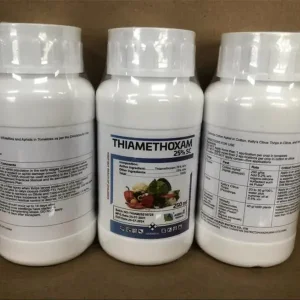
| Systemic Combination Insecticide | Lambda-cyhalothrin + Thiamethoxam SC | 1,000 Liters | $7.50 - $11.20 / Liter | 1L Bottle / 5L Jug |
Founded in 2006, leading the synthesis, formulation, and global distribution of advanced crop protection solutions from North China's chemical hub.
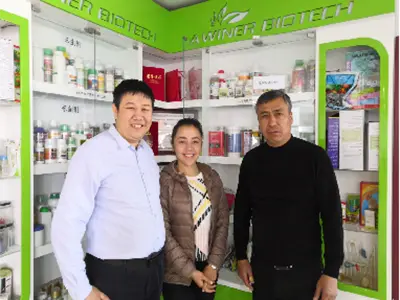
Awiner Biotech was founded in 2006, located in the north of China—Shijiazhuang, Hebei Province. The city is close to our capital Beijing, with convenient transportation networks connecting directly to major sea shipping terminals.
Awiner Biotech is deeply committed to research, production, synthesis, and global distribution of professional agrochemicals. We mainly deal with comprehensive crop protection categories including: Pesticides, Herbicides, Fungicides, Plant Growth Regulators (PGR), and Public Health Pesticides.
Through state-of-the-art laboratory testing (utilizing Shimadzu HPLC and GC-MS platforms), automated formulation lines, and customized packaging engineering, Awiner Biotech ensures every shipment satisfies global regulatory standards. Our agronomic research team works directly with large-scale agricultural enterprises to optimize spray tank mixing, droplet stability, and field efficacy.
Up to now, we have won trusted customers and long-term distribution partnerships across more than 25 sovereign markets worldwide, including:
Middle East & Central Asia: Iraq, Iran, Afghanistan, Pakistan, India, Syria, Turkey, Yemen, Kazakhstan, Uzbekistan, Ukraine, Russia.
Latin America: Chile, Bolivia, Mexico, Brazil, Paraguay.
Africa & Asia-Pacific: Libya, Nigeria, Djibouti, Rwanda, Somalia, Malaysia, Cambodia, Nepal, Myanmar, and beyond.
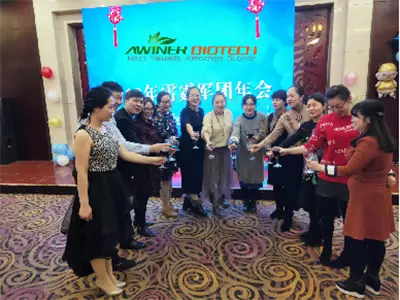
Exhibition & On-Site Support: Our team regularly participates in international agricultural trade exhibitions in Turkey, Iran, Pakistan, Nigeria, Russia, Cambodia, Malaysia, and Uzbekistan. We conduct on-site country market inspections, analyze regional pest/crop challenges, provide localized agronomic solutions, and host client delegations at our manufacturing center.
Translating agrochemical science into field-proven protocols across diverse agricultural zones, climatic conditions, and application machinery.
Applying dual-action TDZ + Diuron formulations 14-21 days before planned mechanical stripping. Achieves 95%+ leaf drop while maintaining lint whiteness, reducing seed cotton moisture below 8%, and eliminating stain risks during ginning.
Deploying non-selective post-emergence broad-spectrum herbicides like Glyphosate 360 SL along orchard rows, non-crop railway corridors, and industrial land. Kills tough perennial rhizomes without leaving toxic residual build-up in soil.
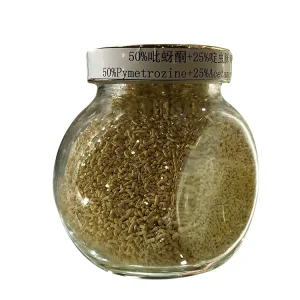
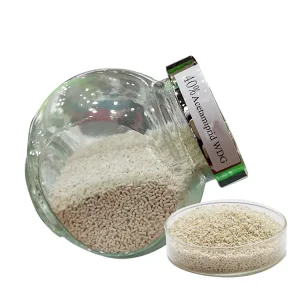
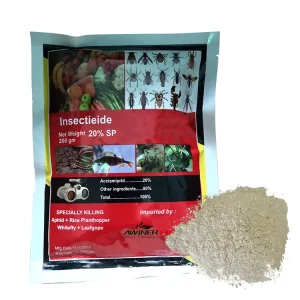
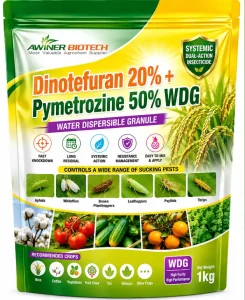
Integrating systemic combination insecticides—such as Pymetrozine + Acetamiprid WDG and Lambda-cyhalothrin + Thiamethoxam SC—in vegetable greenhouse blocks to manage sucking pests (aphids, whiteflies, Tuta absoluta) and vector insect outbreaks.
Rigorous analytical chemistry, toxicology documentation, and global registration assistance ensuring maximum environmental safety and customs clearance speed.
Global regulatory oversight regarding agrochemicals is growing increasingly stringent. National ministries of agriculture require complete dossier support, including GLP Toxicological Reports, Environmental Fate Studies, Residue Dynamics (MRL analysis), and Method Validation Reports. Purchasing chemicals from established Chinese manufacturers with robust compliance records is essential to mitigating import risks.
Responsible defoliant and agrochemical usage demands careful timing to safeguard beneficial insect populations, soil microbial communities, and surrounding water tables:
- Avoid applications when pollinator activity is peak or during high wind conditions (>4 m/s) to eliminate drift.
- Follow precise buffer zone guidelines near natural water bodies when applying non-target herbicides.
- Implement container triple-rinsing procedures and safe disposal in accordance with international environmental standards.
Pioneering Ultra-Low Volume (ULV) drone formulations, nano-emulsion delivery systems, and bio-based defoliation synergists.
Developing specialized anti-evaporation, anti-drift SC and WDG formulations optimized for ultra-low volume (ULV) aerial spraying. Enhances canopy penetration and atomization uniformity under low water carrier conditions (15-30 L/ha).
Reducing droplet particle sizes to the nanometer scale (100-300 nm) to dramatically improve stomatal and cuticular lipid penetration. Allows up to a 20% reduction in active ingredient dosage while maintaining identical defoliation efficiency.
Replacing petroleum-based surfactants with plant-derived methylated seed oils (MSO) and modified organosilicones. Accelerates leaf absorption while completely degrading in soil within 14 days without toxic residue.
Expert responses to critical technical, operational, and commercial questions regarding agrochemical defoliation and bulk procurement.
Explore our extended catalog of plant growth regulators, specialized pest control dusts, systemic insecticides, and broad-spectrum crop protection products.
 Awiner Biotech