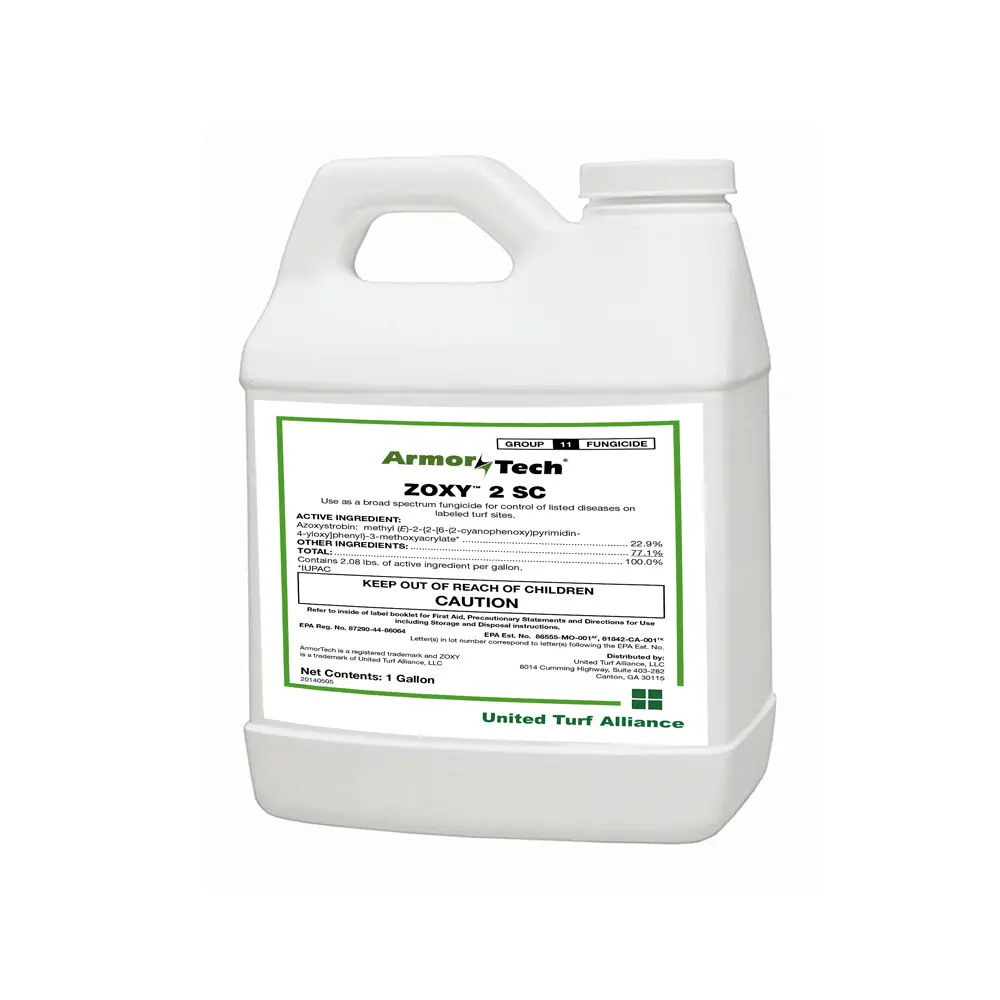
Wholesale fungicide Azoxystrobin 25%SC,50%WDG,80%WDG CAS 131860-33-8 Pricelist, Factories

Product Description

Product Display
fungicide-Azoxystrobin-01
Technical Details
Common Name
Azoxystrobin (CAS: 71751-41-2)
Other Name
AZX, Amistar, Quadris
Molecular Formula
C22H17N3O5
Formulation Type
Technical: 97% TC
Formulations: 25% SC, 50% WDG, 80% WDG

Mode of Action

The mode of action is by inhibition of mitochondrial respiration in fungi. It inhibits spore germination, mycelial growth, and spore production of fungicide. Features protectant, curative, eradicant, translaminar, and systemic properties.

Application & Dosage
Formulation Target Crop Target Disease Dosage Rate
25% SC
50% WDG
80% WDG
Grape Downy Mildew 125 - 250 g/ha
Rice Rice Blast 157.5 - 202.5 g/ha
Banana Grey Leaf 200 - 250 g/ha

Extended Crop & Pathogen Uses

Broad-Spectrum Control (100 to 375 g/ha): Controls Erysiphe graminis, Puccinia spp., Leptosphaeria nodorum, Septoria tritici, and Pyrenophora teres on temperate cereals; Pyricularia oryzae and Rhizoctonia solani on rice; Plasmopara viticola and Uncinula necator on vines; Sphaerotheca fuliginea and Pseudoperonospora cubensis on cucurbitaceae; Phytophthora infestans and Alternaria solani on potato and tomato; Mycosphaerella arachidis, Rhizoctonia solani, and Sclerotium rolfsii on peanut; Monilinia spp. and Cladosporium carpophilum on peach; Pythium spp. and Rhizoctonia solani on turf; Mycosphaerella spp. on banana; Cladosporium caryigenum on pecan; Elsinoë fawcettii, Colletotrichum spp., and Guignardia citricarpa on citrus; Colletotrichum spp. and Hemileia vastatrix on coffee.

Phytotoxicity Note: Demonstrates good crop safety, except on certain sensitive varieties of apple (e.g., McIntosh, Cox).
Frequently Asked Questions (FAQ)
1. What is Azoxystrobin and how does it function?
Azoxystrobin is a broad-spectrum systemic fungicide. It functions primarily by inhibiting mitochondrial respiration in fungi, preventing spore germination, mycelial growth, and spore production.
2. What available formulations exist for Azoxystrobin?
Azoxystrobin is available in technical grade (97% TC) as well as commercial formulations including 25% SC, 50% WDG, and 80% WDG.
3. Which diseases can Azoxystrobin effectively control on major crops?
It effectively controls major fungal diseases such as Downy Mildew in grapes, Rice Blast in rice, Grey Leaf in bananas, as well as Rust, Powdery Mildew, and Blight across various cereal, fruit, and vegetable crops.
4. What is the general dosage range for application?
Depending on the specific crop and disease target, the recommended dosage generally ranges from 100 g/ha to 375 g/ha (for instance, 125–250 g/ha for grapes and 157.5–202.5 g/ha for rice).
5. Are there any phytotoxicity risks associated with Azoxystrobin?
Azoxystrobin demonstrates good safety on most registered crops, but caution should be exercised as it shows phytotoxicity on specific apple varieties such as McIntosh and Cox.

Related Products