Industrial-Scale Semi-Synthetic Bio-Insecticide Synthesis, Advanced Formulation Engineering & Global Agrochemical Supply Resilience
Emamectin Benzoate (CAS No. 155569-91-8) represents the pinnacle of modern macrocyclic lactone bio-pesticide engineering. Derived as a salt of 4"-deoxy-4"-epi-methylamino-abamectin with benzoic acid, it stands out as an exceptionally potent, low-toxicity, and environmentally friendly insecticide designed to target destructive Lepidopteran pests. As a primary China Emamectin Benzoate manufacturer and factory, modern chemical synthesis facilities leverage state-of-the-art catalytic conversion from fermented Abamectin B1 oil to produce high-purity Technical Grade (TC) crystal lines and specialized formulation types.
The physiological mode of action involves the stimulation of gamma-aminobutyric acid (GABA) release and the activation of glutamate-gated chloride channels in nerve cells. This leads to an irreversible influx of chloride ions into neuromuscular junctions, causing immediate cessation of pest feeding, irreversible paralysis, and eventual mortality within 24 to 48 hours. Unlike traditional neurotoxic chemistries, Emamectin Benzoate exhibits remarkable translaminar activity—rapidly penetrating leaf tissue to form a long-lasting reservoir of active material inside the foliage, protected from photodegradation.
| Parameter | Technical Grade (90%/95% TC) | 5% Water Dispersible Granules (WDG) | 1.9% / 5% Emulsifiable Concentrate (EC) |
|---|---|---|---|
| Active Ingredient Content | ≥ 90.0% / ≥ 95.0% | 5.0% ± 0.5% | 1.9% ± 0.2% / 5.0% ± 0.4% |
| Appearance | White to off-white crystalline powder | Light brown extruded micro-granules | Clear pale yellow homogeneous liquid |
| pH Range | 5.0 – 7.5 | 6.0 – 9.0 | 4.5 – 7.5 |
| Dispersibility / Wetting Time | N/A | Dispersibility ≥ 85% | Wetting < 60s | Emulsification Stability Grade A |
| Moisture / Water Content | ≤ 1.0% | ≤ 2.5% | ≤ 0.5% |
High-performance formulations engineered for commercial farming, public health, and crop protection systems worldwide.
The global bio-pesticide market is undergoing a structural paradigm shift driven by stringent regulatory policies on organophosphates and synthetic pyrethroids. Global agricultural buyers, B2B distributors, and multinational formulators are increasingly transitioning toward macrocyclic lactones due to their high specificity, micro-dose efficiency, and rapid biological degradation.
The transboundary spread of Fall Armyworm across Sub-Saharan Africa, Latin America, South Asia, and Southeast Asia has catalyzed exponential demand for targeted insecticides. Emamectin Benzoate has emerged as the global benchmark standard for Fall Armyworm mitigation, demonstrating over 92% mortality rates within field applications.
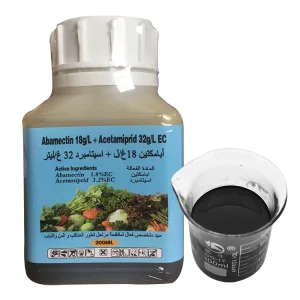
To counteract pest resistance build-up, premier manufacturers focus on binary formulations. Blending Emamectin Benzoate with complement modes of action—such as Chlorantraniliprole, Indoxacarb, Lufenuron, or Acetamiprid—delivers dual-action knock-down alongside ovicidal and larvicidal controls.
Regulatory mandates in the EU, Brazil (MAPA), and North America demand reduced volatile organic compounds (VOCs). China's leading factories have pioneered the scale-up of solvent-free Water Dispersible Granules (WDG) and Micro-emulsions (ME), replacing traditional benzene-based EC solutions.
As the epicenter of global agrochemical synthesis, China controls over 80% of the worldwide supply chain for macrocyclic lactone active ingredients. Modern production parks in northern China (such as Hebei Province) provide an integrated ecosystem ranging from biological fermentation of Streptomyces avermitilis to automated chemical derivatization into Emamectin Benzoate.
Direct access to large-scale bio-fermentation bases guarantees stable supply of Abamectin raw substrate. This upstream integration insulates international buyers from global market price spikes and material shortages.
Implementation of continuous flow chemical synthesis minimizes thermal energy consumption, optimizes reaction yields beyond 98%, and eliminates batch-to-batch variation in technical-grade purity.
Advanced effluent treatment plants (ETP), zero-liquid discharge (ZLD) installations, and closed-loop carbon capturing guarantee uninterrupted manufacturing year-round without environmental shutdown risks.
Every production batch undergoes analytical testing using High-Performance Liquid Chromatography (HPLC) and Gas Chromatography-Mass Spectrometry (GC-MS) to ensure strict adherence to FAO/WHO specifications.
Emamectin Benzoate's extraordinary versatility allows it to function effectively across diverse climates, soil ecosystems, and crop protection requirements. Chinese manufacturing facilities customize particle sizes, surfactant systems, and carrier formulations based on target regional pest pressure.
Primary Targets: Spodoptera frugiperda in yellow corn, Helicoverpa gelotopoeon in soybeans, and Heliothis virescens in cotton.
Recommended Solution: Emamectin Benzoate 5% WDG with rain-fast organosilicone adjuvants to withstand heavy tropical rainfall during the rainy season.
Primary Targets: Yellow Stem Borer (Scirpophaga incertulas) in rice, Diamondback Moth (Plutella xylostella) in brassica vegetables.
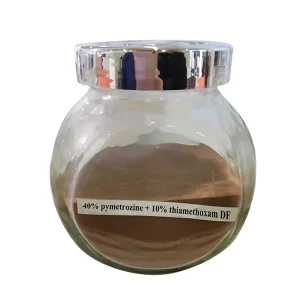
Recommended Solution: Emamectin Benzoate 1.9% EC and tank-mix combinations with Nitenpyram or Pymetrozine for concurrent sucking pest control.
Primary Targets: Tomato Leafminer (Tuta absoluta), Cotton Bollworm, and orchard leafrollers.
Recommended Solution: Ultra-low dose Emamectin Benzoate 5% ME micro-emulsions optimized for drip irrigation systems and dry desert climates.
Founded in 2006, Awiner Biotech is located in Shijiazhuang, Hebei Province, northern China—strategically positioned near China's capital city, Beijing, with convenient logistics access to major international shipping ports such as Tianjin Port. Awiner Biotech is dedicated to the scientific research, precision manufacturing, and international distribution of advanced agrochemicals.
Awiner Biotech specializes in five core product categories: Agricultural Pesticides, Herbicides, Fungicides, Plant Growth Regulators (e.g., Forchlorfenuron CPPU), and Public Health Pest Control formulations.
Up to now, Awiner Biotech has successfully partnered with importers, distributors, and agrochemical dealers across Iraq, Iran, Afghanistan, Pakistan, India, Libya, Syria, Turkey, Yemen, Ukraine, Russia, Kazakhstan, Uzbekistan, Chile, Bolivia, Mexico, Brazil, Paraguay, Nigeria, Djibouti, Rwanda, Somalia, Malaysia, Cambodia, Nepal, Myanmar, and beyond.
Awiner Biotech routinely participates in major international agricultural exhibitions in Turkey, Iran, Pakistan, Nigeria, Russia, Cambodia, Malaysia, and Uzbekistan. The engineering team conducts on-site market inspections to solve agronomic challenges and optimize localized product delivery.
Explore our extended chemical catalog for integrated pest management and plant growth regulation.
 Awiner Biotech