Explore our certified active ingredients and targeted formulations engineered for high efficacy against persistent agricultural pests and diseases.
Understanding why thrips (*Thysanoptera*) represent one of the most destructive agricultural pests worldwide and how modern chemical engineering from Chinese manufacturers provides scalable solutions.
Beyond direct tissue scarring from rasping-sucking mouthparts, species like Western Flower Thrips (*Frankliniella occidentalis*) and Onion Thrips (*Thrips tabaci*) vector devastating Orthotospoviruses such as Tomato Spotted Wilt Virus (TSWV) and Iris Yellow Spot Virus (IYSV), leading to 100% crop loss in severe outbreaks.
Under favorable temperature conditions (25°C to 30°C), a single thrips generation completes in just 10–14 days. Female adults lay eggs inside plant leaf tissue, shielding offspring from contact insecticides and accelerating target-site mutation rates.
Thrips populations have developed documented resistance against classic organophosphates, carbamates, and synthetic pyrethroids. Modern control requires targeted novel Chemistry, synergistic combination formulations, and strict rotation regimes.
Effective thrips management hinges on IRAC (Insecticide Resistance Action Committee) group rotation. Combining systemic action with contact knockdown prevents target resistance build-up.
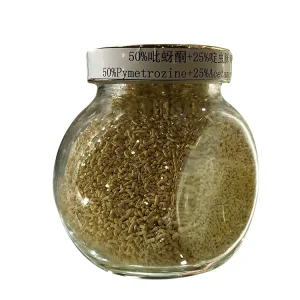
Agronomic Advisory: Never apply the same IRAC Mode of Action group for more than two consecutive applications. Synergistic co-formulations (such as Pymetrozine + Acetamiprid WDG or Abamectin + Thiamethoxam SC) break resistance mechanisms by simultaneously targeting distinct physiological pathways.
| Active Ingredient (AI) | IRAC Group | Primary Mode of Action | Translaminar / Systemic | Optimal Crop Target |
|---|---|---|---|---|
| Abamectin | Group 6 | Glutamate-gated chloride channel (GluCl) allosteric modulators | Strong Translaminar | Greenhouse Vegetables, Citrus, Ornamentals |
| Acetamiprid + Pymetrozine | Group 4A + 9B | Nicotinic acetylcholine receptor (nAChR) competitive modulators & Chordotonal organ modulators | Systemic & Acropetal | Fruiting Vegetables, Cotton, Tea Plantations |
| Thiamethoxam | Group 4A | Nicotinic acetylcholine receptor competitive agonist | High Systemic (Root & Leaf) | Corn, Soybeans, Tubers, Soil Drench |
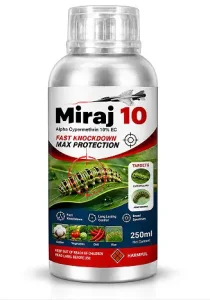
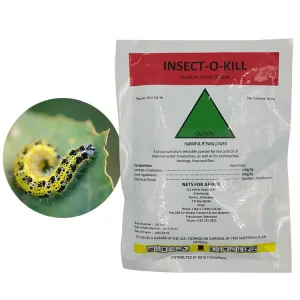
| Alpha-Cypermethrin | Group 3A | Voltage-gated sodium channel modulators (Rapid Knockdown) | Contact & Stomach | Field Crops, Public Health, Barrier Treatments |
| Fipronil | Group 2B | GABA-gated chloride channel antagonists | Contact & Moderate Systemic | Rice, Turf, Industrial Pest Management |
Understanding the pricing architecture of Chinese agrochemical manufacturers enables global buyers, importers, and agricultural distributors to optimize procurement budgets while ensuring regulatory compliance.
Below is an indicative market price range for contract manufacturing and bulk export. (Note: Actual pricing varies by raw material market indexes, volume order size, and packaging specs).
• Abamectin 1.8% / 3.6% EC: $8.50 - $16.80 / Liter
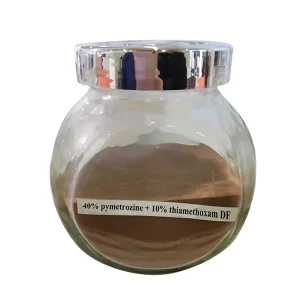
• Pymetrozine 50% + Acetamiprid 25% WDG: $14.20 - $22.50 / Kg
• Thiamethoxam 25% WDG / 70% WS: $11.00 - $28.00 / Kg
• Alpha-Cypermethrin 10% EC / 5% WP: $4.20 - $8.90 / Liter
• Fipronil 5% SC / 80% WDG: $18.50 - $45.00 / Kg
Optimizing chemical delivery to target thrips hiding in leaf axils, flower buds, and underside canopy spaces across different agricultural systems.
Target Crops: Peppers, Tomatoes, Cucumbers, Strawberries.
Protocol: Early morning or dusk application when thrips are active. Combine translaminar Abamectin EC with low-toxicity Pymetrozine + Acetamiprid WDG to preserve beneficial predators like *Orius* bugs and *Amblyseius* mites.
Target Crops: Cotton, Onions, Garlic, Tobacco.
Protocol: Utilize systemic seed dressings or early soil drenches with Thiamethoxam, followed by foliar sprays of high-concentrate WDG formulations integrated with organosilicone spreaders for deep sheath penetration.
Target Crops: Citrus, Table Grapes, Mangoes, Avocado.
Protocol: Apply multi-action tank mixes prior to bloom and immediately after petal fall to protect delicate young fruits from scarring silver blemishes that reduce commercial export grade value.
Awiner Biotech upholds stringent FAO/WHO specifications, empowering global partners with seamlessly compliant registration packages, lab test documentation, and batch consistency.
We supply ICAMA certificates, GLP toxicological data, field efficacy trial reports, physical-chemical property documentation, and COA analysis required by Ministries of Agriculture worldwide.
Every export production batch undergoes rigorous High-Performance Liquid Chromatography (HPLC) and Gas Chromatography (GC) testing to guarantee target active concentration and sub-ppm impurity limits.
Hazardous material (HAZMAT) certified shipping containers, anti-corrosive inner liners, and reinforced export cartons ensure zero leakage during maritime transit across international trade routes.
Pioneering smart release active micro-capsules, reduced chemical load per hectare, and climate-adaptive pesticide delivery systems.
Polymeric nano-shells encapsulate volatile active ingredients, protecting them from rapid UV degradation under tropical sunlight while providing a slow, continuous lethal dose over a 21-day residual window.
Integrating entomopathogenic fungal spores (*Beauveria bassiana*) with ultra-low dose synthetic actives creates dual physiological stress, overcoming severe multi-gene pesticide resistance in local insect strains.
Awiner Biotech was founded in 2006, located in north of China-Shijiazhuang, Hebei Province. The city is close to our capital Beijing, transportation is convenient. Awiner Biotech is committed to research, produce and distribute agrochemicals. Mainly deal with pesticides, herbicides, fungicides, plant growth regulator and public health pesticides.
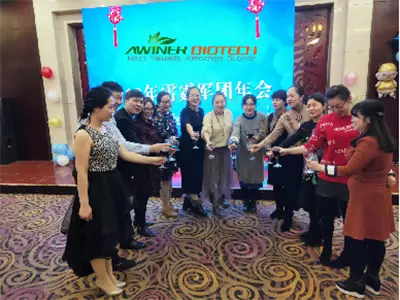
Up to now, we have won customers from Iraq, Iran, Afghanistan, Pakistan, India, Libya, Syria, Turkey, Yemen, Ukraine, Russia, Kazakhstan, Uzbekistan, Chile, Bolivia, Mexico, Brazil, Paraguay, Nigeria, Djibouti, Rwanda, Somalia, Malaysia, Cambodia, Nepal, Myanmar, and so on.
Our countries participating in the exhibition are Turkey, Iran, Pakistan, Nigeria, Russia, Cambodia, Malaysia, Uzbekistan, etc. We regularly meet our distribution partners face-to-face to refine agronomic solutions.
We go to the customer's country to conduct market inspections, analyze and solve problems for them, understand their product usage, and customers will also visit our manufacturing plants in Shijiazhuang.
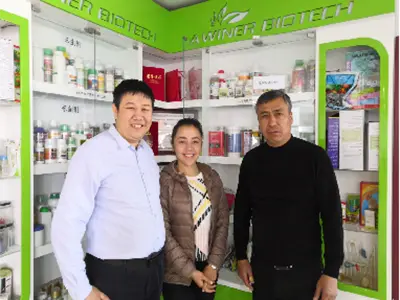
Through tailored local formulations, reliable shipping logistics, and custom OEM packaging solutions, Awiner Biotech bridges high-grade Chinese agrochemical production with localized farming requirements across South America, Eurasia, the Middle East, and Africa.
Detailed answers to vital technical and procurement queries asked by agricultural engineers, B2B buyers, and farm management enterprises.
Explore additional high-grade agricultural products engineered by Awiner Biotech for holistic crop yield optimization.
 Awiner Biotech